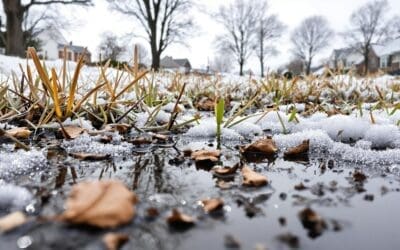
What you need to know: deicers reach lawn edges by meltwater, splashed brine, plow piles and thrown crystals, so don’t let salt sit or run into turf. Pick lower‑chloride products, shovel first and spot‑treat, keep a 12–18″ untreated buffer and a 2–4 ft gravel strip or berm to trap runoff, and rinse edges with deep water cycles come spring to leach salts. Repair with aeration, gypsum if needed, and salt‑tolerant seed — progress over perfection. Learn more practical steps next.
Some Key Takeaways
- Create a 12–18 inch untreated buffer and a 2–4 foot gravel strip along pavement edges to intercept salt spray and runoff.
- Grade edges with a 1–2% slope away from turf and install edge drains or mulch berms to divert salty meltwater to drains.
- Use lower‑chloride or acetate-based deicers, apply sparingly with a handheld/push spreader, and keep treatments centered on pavement.
- Avoid piling plow snow on lawns; place plow piles on gravel or nonvegetated areas and use temporary barriers to block splash.
- In spring, sweep up residues, flush affected turf with repeated deep irrigations, test soil salinity, and amend or reseed after leaching.
What Homeowners and Groundskeepers Need to Know About Salt Damage

Quick heads-up: salt will sneak up on your lawn faster than you think, and it’s usually the edges that take the hit. What you need to know is simple: deicing products can stress turf, sodium chloride hurts most when it’s really cold, so lean toward calcium or magnesium chloride and cut chloride near grass. Leave a 12–18 inch buffer between pavement and turf, hit only walking lanes, and shovel early so you use less. If edges look rough in spring, test and flush the soil with several inches of water, or apply gypsum then leach, before you reseed. Consider gravel strips or salt-tolerant plants to catch spray and runoff. You’ll make steady gains, not overnight miracles. For best long-term results, consider using paver sealer on adjacent hardscape to reduce freeze-thaw damage and salt penetration.
How Deicers Reach Lawn Edges: Runoff, Splash, Plow Piles, and Spray
How deicers get into your lawn is usually pretty simple: meltwater and runoff wash dissolved salt into the turf where pavement slopes toward the grass, plow piles sit on the edge dumping concentrated grit and chlorides as they melt, and passing plows and spreaders fling crystals and brine a few feet into your lawn. You’ll see the damage show up first along that strip nearest the pavement, where repeated thaw–refreeze cycles and overapplication create salty pockets in the topsoil. Don’t worry — once you know where the salt is coming from, you can take small, steady steps to reduce exposure and protect those edges. Consider installing simple drainage solutions like edge drains to divert runoff away from vulnerable turf and keep patios and lawn edges drier.
Runoff Into Lawns
Runoff from driveways and sidewalks is the main way deicers reach your grass, and once you see a white crust or browned band along the edge, that’s usually where the salt has concentrated and stressed the turf. Heading off salt runoff starts with noticing where meltwater flows, especially near driveway edges and low spots, since sodium chloride from heavy use can build up fast and hurt roots. You can choose salt-tolerant grass in tough zones, but smarter grading, a gravel buffer strip, or a narrow planting strip will slow and filter water before it hits the lawn. Watch for splash from cars or pushed snow, reduce single heavy applications, and remember small changes add up — progress over perfection. Consider adding a gravel buffer strip to help filter and redirect runoff before it reaches turf.
Plow Pile Transfer
You’ll want to keep an eye on those snow piles at the ends of driveways, because when plows or shovels push snow onto the lawn they’re also dumping concentrated deicer right where the grass grows, and as that mound melts it can leach a salty, root‑killing brew straight into the turf. Plow piles collect salt-packed snow from the edge of your driveway, then as thawing produces heavy runoff it funnels concentrated brine into nearby grass, raising the risk of soil salinization over time. If crews or you move piles onto beds, you’re depositing salt directly in the root zone, often causing white crusts and dead patches. Take small steps: avoid piling on turf, spread piles on gravel, and rinse affected spots when possible. Progress over perfection. Consider diverting melt and choosing placement over directly on lawns to protect grass health and proper paver base can also help manage runoff around patio edges.
Splash And Spray Drift
You’ve already seen how plow piles and runoff concentrate salt at the lawn’s edge, and another common culprit is the tiny, salty spray that gets kicked up or tossed during spreading, which can reach several feet into your turf and leave little hot spots that kill grass over time.
Splash and spray happen when cars or spreaders flick salty droplets off pavement, and those droplets become salt spray that lands on the edges of your driveway or in low spots, then runs into the soil. You can slow it—create a buffer zone, use handheld spreaders, aim for a slight slope away from lawns, and add gravel or edging to intercept runoff. It’s not perfect, but small habits save your grass. Evaporative cooling systems can help protect outdoor green spaces by lowering surface temperatures and reducing stress on turf, especially near patios and driveways where salt drift accumulates; consider patio cooling as part of an integrated approach.
Choose Safer Deicers: Why Calcium- and Potassium-Based Products Beat Rock Salt
Want to cut down on lawn damage without turning your sidewalks into skating rinks? Choose safer deicers that still work. You’ll like calcium chloride for fast melting, it shines in deep cold, but remember it has chloride so use it sparingly near turf and keep a clear buffer from grass. Potassium chloride is kinder to plants, good for most winter days, though it fades out at extreme lows. Calcium magnesium acetate, and other acetate options, are the gentlest on roots, they cost more but they really protect your lawn. Blend small amounts with sand or a traction aggregate to lower total salt, apply toward pavement centers, and aim for progress over perfection. Small habits add up. Consider using river rock accents around patio edges to help with runoff and protect nearby turf.
How to Apply Deicers Correctly to Minimize Turf Contact
How you spread deicer matters more than you think, so measure a handful (about a cup) per 250 sq ft and use a handheld or push spreader to avoid dumping piles that run onto the grass. Aim for the center of the pavement and keep a 12–18 inch buffer from the lawn edge, then sweep up any excess grit in spring so grit and chemicals don’t build up where roots live. Shovel or plow first so you can spot-treat icy patches instead of broadcasting salt everywhere — progress over perfection, one smart pass at a time. Consider using hardscape-friendly products and proper border edging to help protect adjacent lawn and patio areas.
Measure Salt Carefully
Start by measuring and spreading salt with intention, since a little goes a long way and sloppy piles at the turf edge will do more harm than good. Measure out roughly a handful, about a cup per 250 sq ft, and apply deicer sparingly so your lawn doesn’t pay the price. Keep a 12–18 inch buffer zone, aim for the center of the walkway, and don’t dump piles at the grass line. Use a handheld spreader for even coverage, make one light pass, and you’ll avoid overdosing corners. Prefer lower-chloride products near turf, sweep up grit in spring, and remember to shovel early and often to cut salt needs. You’ll get better results with small steps, not perfection. Consider pairing careful salting with durable polymeric sand on adjacent patio joints to reduce winter infiltration and protect surrounding turf.
Target Hard Surfaces
You’ve already got the right idea measuring salt and keeping piles off the grass; now focus on hitting the hard surface and keeping the turf out of the equation. Target the center of walkways and drives, keep a 12–18 inch buffer zone from edges, and use a handheld or push spreader so you can apply sparingly and aim at trouble spots, not the lawn. Shovel before applying to cut how much deicers you need, then use about a handful per 250 sq ft or follow the label—less is better. Near planted beds choose lower-chloride options, and remember, careful placement prevents runoff and stressed grass. You’re doing the right thing, small steps add up. For best long-term results consider installing edging products to protect turf and define hard surfaces.
Sweep Up Residue
Sweep up the leftovers — sooner rather than later — and you’ll cut down how much salt ever reaches your lawn, which means less browning and fewer headaches come spring. Think of it as simple neighborhood stewardship: when you use a handheld or push spreader, aim for the center of the path and keep a 12–18 inch buffer from lawn edges so runoff won’t creep onto grass. After ice melts, sweep up visible deicer granules and any sand, don’t push it onto turf, and dispose of residue properly. If you need deicer near plants, choose lower-chloride products and apply sparingly, measuring with a scoop. Little habits add up — progress over perfection. Consider pairing these practices with stylish privacy screens to protect your outdoor living areas and reduce foot traffic on treated surfaces.
Physical Barriers That Block Salt Spray and Runoff at Lawn Edges
When winter brings salt and slush, a few well-placed barriers can keep most of that mess from reaching your lawn, and they’re easier to set up than you might think.
Physical barriers
Start with a 2–4 foot gravel buffer along driveways and sidewalks, it soaks up salty meltwater before it hits turf. Plant a dense row of salt-tolerant shrubs 1–3 feet from pavement, they catch splash and lower salt levels. For stormy nights, erect snow fences or 3–4 foot burlap windbreaks to block airborne spray and drifting slush. Add a 6–12 inch mulch berm at the turf edge to trap residues, then rake it out in spring. Finish with edging—timbers or stones—sloped inward to steer water toward drains or the gravel strip. Small steps help.
Landscape Design Tweaks to Keep Salt Away From Vulnerable Turf and Beds
Landscape design can do a lot of the heavy lifting so you don’t have to wage a yearly battle with salted meltwater; start by thinking of edges as lines you can shape and slope to your advantage, then add buffers that actually catch and divert salt before it reaches roots. You can shape an edge slope of 1–2% away from lawns, add edging or curbs, and funnel salt runoff to drains, which makes maintenance simpler and gives you peace of mind. Create a 2–4 foot gravel buffer and a 12–18 inch untreated mulch strip at pavement edges, or build a raised berm 6–12 inches high so meltwater passes by. Plant a 3–6 foot row of salt-tolerant shrubs to absorb spray. Progress over perfection.
Short-Term Fixes After a Salted Event: Flushing, Sweeping, and Snow Removal

Got a salty mess along your lawn edge? Short-Term Fixes: First, sweep or shovel hardened salt and slushy piles off sidewalks and away from turf, so you remove deicer and salt before it dissolves and runs into grass. When the ground thaws, flush the affected turf gently, aiming to leach soluble salts out of the root zone with 1–2 inches of water, repeat a couple times over days. Don’t cause pooling; direct water toward a gravel strip or drain so salts leave the lawn. Rake out dead grass and contaminated mulch, then topdress and overseed only after you’ve leached the soil. If winter keeps coming back, use temporary boards as a barrier when shoveling — small wins add up.
When and How to Use Gypsum, Soil Tests, and Professional Lab Analysis
When you’re ready to move beyond quick flushing, start with a spring soil salinity test (EC) so you know if salts are still high and need more than watering. If lab numbers show high EC or SAR, gypsum can help replace sodium and, with heavy watering, push salts below roots—it’s not a cure-all, and it’s worth testing first so you don’t waste time or money. Ask the lab or a pro for a written interpretation and a clear gypsum-and-irrigation plan, then follow that plan, adjust as you go, and don’t expect overnight fixes.
When To Test
Usually you’ll want to test your soil as soon as the ground thaws in early spring, because that’s when salt damage from winter de-icers shows up in the root zone and when moisture conditions let you take meaningful samples and start fixes. When to test: do a soil salinity test measuring electrical conductivity, take composite soil samples from the top 3–6 inches at several spots along the damaged edge, and send them to an accredited lab for Na, Ca, Mg, K and chloride analysis. If EC is above about 4 dS/m, you’ve likely got root‑zone salt damage and need remediation. If tests show only surface chloride accumulation, try repeated flushing before adding amendments. Call a pro for very high sodium or big pH shifts.
Gypsum: Pros And Cons
Gypsum can be a real help, but it’s not a magic fix — think of it as one useful tool in your salt‑damage toolkit, something that can free up calcium to push sodium off clay particles so the salt can be washed away, if you follow through. Heading: When to ponder gypsum. If a soil test or professional lab analysis shows high sodium on clayey turf, gypsum can supply calcium to convert sodium into more leachable forms, then leaching with lots of water moves it out. Heading: How to use gypsum. You’ll typically apply about 20–40 lb per 100 sq ft as a guideline, but follow soil test recommendations, make certain good drainage, and plan substantial leaching. It helps, when used right.
Reading Lab Results
You’ve seen how gypsum can help, but before you reach for a bag, let’s look at what the lab numbers actually tell you so you don’t spend time or money on the wrong fix. Reading lab results starts with a soil chloride test in spring on affected edges; values above 100–200 mg/kg Cl– mean you’ve got real buildup, not just surface residue. Ask the lab for a full salinity panel—EC, chloride, sodium, SAR/ESP, and pH—so you can spot high exchangeable sodium versus foliar salt. Apply gypsum only if ESP or SAR are elevated, then follow with heavy leach irrigation, about six inches, to wash converted sodium below roots. For small spots, confirm results first, consider targeted soil removal or frequent flushing. Progress over perfection.
Repair Options for Salt-Stressed vs. Salt-Killed Lawn Areas
If your lawn looks scorched along the edges, don’t panic—salt damage usually falls into two clear camps, and what you do next depends on which one you’ve got.
Salt-stressed turf can often be saved, so start by leaching soil salts with repeated deep watering, aim for multiple one- to two-inch applications totaling several inches, then core aerate when crowns look alive, and overseed with salt-tolerant mixes, using a potassium-rich starter if you can. If plants are salt-killed, rake out dead sod and thatch, test the soil, and don’t be shy—remove contaminated soil if salts stay high, replace with clean topsoil, then seed or sod. Apply gypsum to sodium‑affected spots before flushing, it helps, and patience wins. Progress over perfection.
Plant and Turf Choices That Tolerate Roadside Salinity
Choosing the right plants for a roadside lawn can save you a lot of heartache later, since salt from winter roads doesn’t just burn blades, it changes the soil chemistry where your grass and garden have to live. Plant choices matter: for cool climates you’ll want grasses with strong salt tolerance, like perennial ryegrass and tall fescue, they handle moderate salinity better than Kentucky bluegrass. In warm areas, pick Bermudagrass or seashore paspalum. Think about a planted buffer of salt‑tolerant shrubs, like bayberry or certain hollies, to intercept spray and runoff before it hits turf. If you’ve got room, add a 2–4 foot gravel strip with native, salt-tolerant groundcovers, it helps trap and dilute chloride, and keeps edges healthier over time.
Maintenance Habits That Reduce Long-Term Salt Buildup and Recurring Damage
Maintenance habits make a bigger difference than most people think, especially after you pick salt‑tolerant plants and set up a buffer—those choices lower the risk, but what you do during and after winter really keeps salts from coming back year after year. Start by shovel or plow early and often so you only need a light, targeted application, and keep a 12–18 inch untreated buffer zone along hard edges, applying deicer to the center of pavement with a push spreader. When spring arrives, sweep up any excess sand or salt, remove contaminated mulch, and flush the lawn edges with deep watering—several cycles of 1–2 inches—so salts leach below roots. Replace rock salt with lower‑chloride alternatives, and be steady, not perfect.
Some Questions Answered
Can Salt From Pet Urine Cause Similar Lawn Edge Damage?
Yes — urine salinity can cause similar lawn edge damage, contrasting bright green grass beside brown rings, showing localized corrosion from concentrated salts. You’ll want to check pet diet and hydration, since saltier urine pools, especially with urine pooling, and stresses roots, burns blades, even harms synthetic turf fillers over time. Take small steps: water spots, change diets with your vet, rotate spots, and accept progress over perfection. You’ve got this.
How Long After Deicing Should Children or Pets Avoid Treated Lawns?
You should wait 24–48hrs after deicing before letting kids or pets play on treated lawns, rinse areas where they walked or sat if you can, and remove footwear right away to avoid tracking salt indoors. Supervise pets at first, use barrier fencing if spots look wet or salty, and hose off paws later. It’s about small steps, not perfect rules, so do what you can and you’ll protect them and your yard.
Can Mulch Types Influence Salt Accumulation Near Plant Roots?
Yes — mulch type can change how salt builds near roots, like a sponge or sieve for your soil. Heading: How mulch matters. Organic mulch soaks and slowly releases salts, wood chips hold moisture and dilute impact, pine needles let water through but can concentrate salts beneath, straw mulch breaks down fast and mixes salts in, rubber mulch sheds salts to the surface. Action: pick mulch to match drainage, tolerate limits, adjust often.
Do Deicing Salts Harm Underground Irrigation or Utility Lines?
Yes — deicing salts can harm underground irrigation and utility lines, because they raise corrosion risk, increase pipe permeability over time, and speed equipment deterioration. You’ll want to check electrical grounding, watch for subtle signs, and prioritize leak detection, since small problems grow. Practical steps help: rinse exposed areas, replace vulnerable materials, and inspect annually. Progress over perfection — a little maintenance goes a long way, honestly.
Are There Effective Natural Plants That Actively Remove Soil Salt?
Yes — you can use plants to pull salt from soil, and they’ll help over time. Think halophytic grasses, salt tolerant shrubs, phytoremediation species like certain willows and poplars, halophyte groundcovers, even boron accumulating plants, they’ll all chip away at salinity if you plant wisely, water properly, and replace poor soil. Start small, monitor salinity, give it seasons, and don’t expect perfection — progress counts.