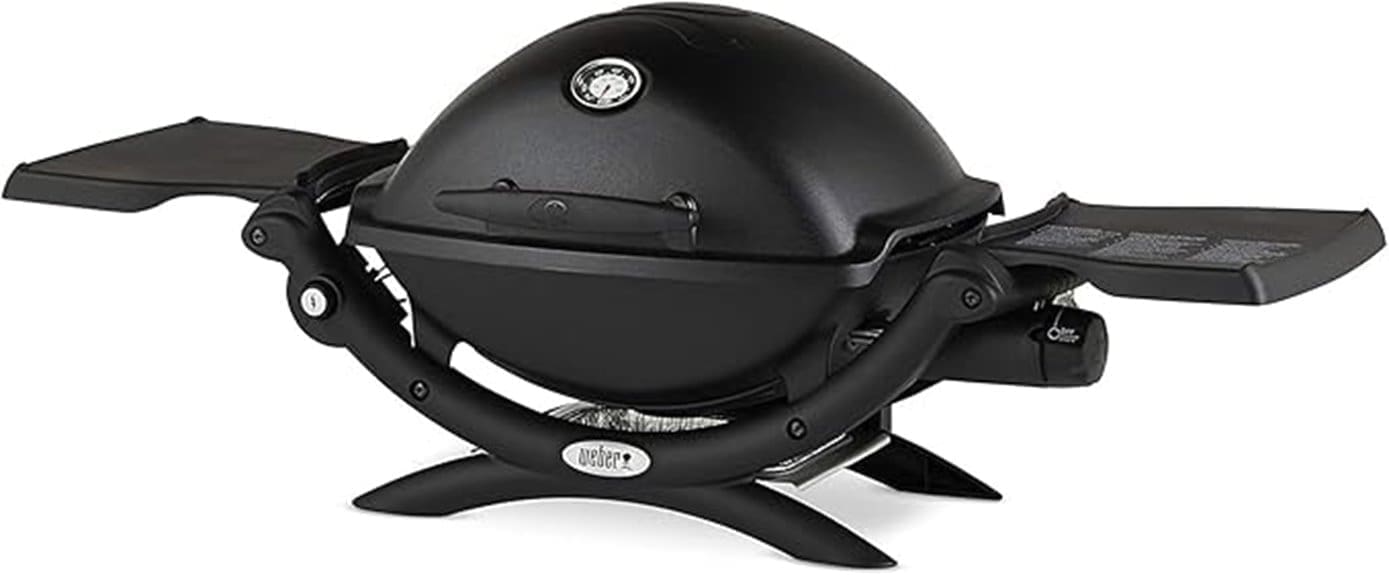
Prep your space: shovel a two-foot clear zone, lay sand for traction, and set the grill 10+ feet from the house, sheltered from gusts but open above. Protect fuel and regulators by keeping tanks off frozen ground, wrapped and ventilated, with a full spare on hand. Preheat longer, trust probes over knobs, and avoid opening the lid. Check hoses, batteries, and vents for ice, dress in layers, use heat-resistant gloves—progress over perfection, and there’s more practical troubleshooting and tips ahead.
Some Key Takeaways
- Clear snow and ice two feet around the grill and create a slip-free, well-lit path before cooking.
- Keep propane tanks elevated, sheltered, and insulated; carry a full spare because cold reduces usable pressure.
- Protect regulator and hoses with weatherproof covers, tape, or neoprene and check for frost or cracks before lighting.
- Preheat longer (add 5–10+ minutes), use indirect zones, and trust probe thermometers over knob settings.
- Dry and clear vents, burners, and igniter after each cook, and keep remote monitoring and heat-resistant gloves on hand.
Prep Your Grill and Workspace Before the First Winter Cook

Prep your grill and clear your workspace before you fire up for the first winter cook — it makes everything safer and less frustrating. You’ll want to clear perimeter snow and ice at least two feet around the grill, lay down sand or ice melt on the path, and position the grill with the back to the wind so you’re not fighting gusts. Remove snow from the lid, vents, and shelves, and preheat your grill a bit longer than usual, especially below 40°F, so temperatures stabilize. Keep an extra propane tank stored outdoors in a sheltered spot, and when you’re cooking, keep the lid shut as much as possible to hold heat, cut fuel use, and keep things cozy and doable. Consider using a stylish grill cover to protect your grill when it’s not in use.
Protect Fuel, Tanks, and Ignition Systems From Cold and Moisture
Protecting your propane, tanks, and ignition systems in winter starts with smart placement — keep tanks off frozen ground and sheltered outside so pressure stays usable, and stash a full spare because cold eats fuel faster. Wrap regulators and hoses with weatherproof tape or a neoprene cover, wipe down burners and the igniter after each cook to stop ice and corrosion, and check for cracks or frost before you light up. If the ignition hiccups in the cold, try a warm (not hot) tank swap and a regulator reset (off, wait 30 seconds, reconnect slowly) — small steps that make winter grilling way more reliable. Also consider storing tanks on a level surface and in a ventilated spot to reduce the risk of accidental tipping and ensure safe pressure behavior.
Protect Propane Tank Placement
When winter shows up, treating your propane tank like a little outdoor appliance instead of just a metal cylinder makes a big difference, so keep it off frozen ground—set it on a wooden pallet or concrete block to avoid lost vapor pressure and sluggish flow. Placement matters: set the propane tank so its valve and regulator face away from prevailing wind, keep it level with the grill, and leave it in a sheltered, ventilated area, not the garage. Wrap a spare in an insulating blanket made for outdoor use, and check fuel levels before long cooks—below 30% can mean trouble. Wipe valves and connections dry, watch for ice, and if regulator bypass happens, shut off, wait thirty seconds, then reopen slowly. You’ve got this. For more on choosing the right tank and accessories for patio use, see Perfect Propane Picks.
Shield Ignition Components
You’ve already handled tank placement and the basics, so now turn a little attention to the parts that actually make the grill light up — the regulator, hoses, burners, and the ignition module — because cold and moisture will knock them out faster than you expect.
Shielding those parts helps everyone keep cooking, so start by wrapping exposed regulator and hose connections with weatherproof tape or a regulator cover to Protect against freezing and condensation, which chokes gas flow. Check the electronic ignition and battery compartments, tuck in desiccant packs, and swap batteries before winter, because a weak spark ruins a night. Use a waterproof cover over the igniter area when idle, clear snow off burners before lighting, and remember, small steps now save big headaches later. Consider keeping a set of essential grill tools handy to make maintenance and winter cooking easier.
Prevent Moisture And Ice
Cold weather and damp will sneak into the parts that matter, so take a few simple steps now and you’ll cut down on no-start nights and fiddly repairs later. Heading: Prevent Moisture And Ice — Treat fuel and fittings like they’re part of the family, because they are. Keep propane tanks off frozen ground in a sheltered, ventilated spot, and don’t bring them indoors. After each cook, clear snow and ice from the lid, burners, valves, and hose area, then dry with a towel so ignition ports don’t clog. Store extra pellets and charcoal in a dry, elevated bin, tuck a desiccant pack in hoppers or storage, apply lubricant to seams and regulator connections, and check seals often. Progress beats perfection. Consider adding a nearby covered firewood rack to keep kindling and starters dry and accessible.
Adjust Preheat, Burner Settings, and Placement for Cold-Weather Performance
Adjusting your preheat time and where you park the grill makes a big difference in winter, so plan to give it an extra 5–10 minutes (or more if it’s under 40°F) with the lid closed to fight heat loss. Point the grill perpendicular to the wind, with the back facing into the gusts, and you’ll stabilize temps and spend less time chasing heat. It’s not perfect every time, but small moves like longer preheat and smart placement will cut cook time surprises and make winter grilling way more reliable.
Longer Preheat Time
When the thermometer dips, expect your grill to take a bit longer to wake up, so plan for patience and a couple of smart tweaks: preheat times will often run 5–10 minutes longer in cold weather, and if you’re tackling a big roast add roughly 3 extra minutes per pound to make up for heat loss, so don’t rush the lid or skimp on fuel — each time you open it you can set yourself back another 5–7 minutes.
You’re not alone if winter grilling feels slower, it’s normal. Preheat your Gas Grill with the lid closed, keep an eye on temps, and give it extra time. If it’s well below freezing, boost burners briefly, then settle back. Bring spare fuel, and accept patience wins. Consider keeping essential grill accessories nearby to help maintain steady performance.
Wind-Oriented Placement
Wind can make winter grilling feel like a battle, but you can tip the odds in your favor by thinking about which way it’s coming and where your grill sits. Wind-oriented placement matters: position the grill with its back facing prevailing winds, or turned perpendicular to gusts so the solid rear blocks most of the chill. Preheat a little extra—add 5–10 minutes and crank temp briefly higher—then lower to cook. If gusts are strong, bump burners one notch and use indirect zones to avoid burnt exteriors. Create a simple windbreak two feet away, don’t block vents, and keep the lid closed, using a probe to watch temps. You’ll protect heat, reduce stress, and still enjoy great winter meals. Choosing quality patio gear and accessories designed for gas grills helps make winter grilling more comfortable and effective.
Monitor Temperatures and Use Tools to Avoid Opening the Lid Unnecessarily

You’ll want to rely on thermometers more than instincts, because in cold weather every time you lift the lid you lose heat and add minutes to the cook, and nobody wants tough, overcooked meat. Friendly reminder: monitor the grill temperature with an ambient probe near the food, and trust readings over knob positions, since cold air drags temps down fast.
Use a probe meat thermometer for the food, set up remote monitoring so you can check doneness from inside, and expect longer preheat time, add 5–10 minutes. If you must open the lid, do it fast and at key milestones only. Position the grill to cut wind, and remember, small adjustments beat panic. Consider keeping a spare grill brush on hand to maintain clean grates between cooks.
Troubleshoot Common Cold-Weather Problems (Weak Flame, Regulator Bypass, Long Cooks)
Cold weather and gusts can turn a routine cook into a troubleshooting session, so expect hiccups and know they’re fixable — you’re not doing anything wrong. Troubleshooting basics: if your grill shows a weak flame, often a yellowish flicker, Cold air or a near-empty tank is usually to blame, so warm the tank off frozen ground and swap to a full one if it stays weak. For regulator bypass, turn off burners and tank, disconnect the hose for 30 seconds, reconnect, open the tank slowly, then relight. Long cooks are normal in winter, add about 5–10 minutes preheat and roughly 3 minutes per pound, use a probe thermometer, keep vents clear, minimize lid openings, and stock extra fuel. Progress over perfection. Keep your grill spotless with regular cleaning to extend its life and performance grill cleaning tools.
Safety, Clothing, and Site Setup: Keep Clear Paths and a Sheltered, Ventilated Cooking Area
Site setup matters as much as the cook itself, so clear a two-foot-wide, slip-free path to the grill and shovel away nearby snow and ice so you can move fast and steady with hot tools. Safety starts with placement: set the grill at least 10 feet from your house, away from trees or awnings, never under an overhang, and pick a sheltered location that blocks gusts but stays open to the sky for ventilation. Dress for the job—layered clothing that fits close to the body, and heat-resistant gloves, not bulky mitts—so you stay warm and nimble. Keep two feet of clearance around the grill, good lighting, and extra fuel and tools inside reach. Take it slow, you’ve got this. Perfect Patio offers a range of smoking gear designed for outdoor home enjoyment.
Some Questions Answered
Is It Okay to Leave a Gas Grill Outside in Winter?
Yes, you can leave a gas grill outside in winter, you just need to baby it a bit. Think of propane storage, cover materials, rodent proofing, paint protection, ignition maintenance, and possible grill relocation. Keep it covered, clear vents, store tanks outdoors, check hoses, and seal gaps against critters. You’ll protect finishes and performance, and with steady care you’ll grill through cold nights—progress, not perfection.
What Does Rubbing an Onion on a Grill Do?
Rubbing an onion on your hot grates helps remove residue, neutralize odors, and act as a simple deodorizer, while its juices give a mild non toxic scrub that can help clean grates and reduce sticking. You’ll loosen stuck bits, add a faint savory scent, and, while it won’t prevent rust long-term, it helps tidy the surface between deep cleans. Use tongs, toss the onion, and don’t skip proper maintenance.
Does Cold Weather Affect Gas Grills?
Yes — cold weather hits your grill’s cold performance pretty hard. Remember when your car took longer to warm up? Same deal: propane pressure drops, ignition reliability can falter, and heat retention suffers, so cooks take longer, and fuel efficiency worsens. Keep the lid closed, face the grill from the wind, check burners for corrosion, and use a probe thermometer. It’s not perfect, but you’ll get steady, tasty results.
How to Prepare a Gas Grill for Winter?
Prepare your gas grill by inspecting burners and hoses, cleaning the driptray, and sealing vents so cold and moisture don't sneak in. Shield propane tanks, keep an extra full one outside but covered, and cover tightly when you’re done, it really helps. Store tools dry nearby, check regulators and reset if flames are weak, and preheat longer in freezing temps. Progress over perfection—small steps keep meals going all winter.