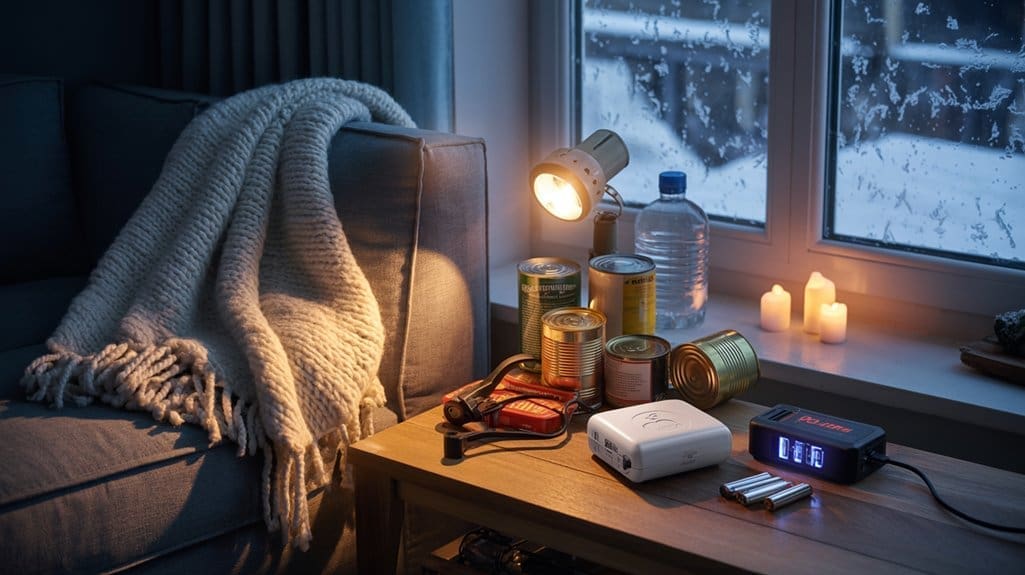
What to pack first: you’ll want a three-day (aim for two-week) stash of nonperishable food and water, manual can opener, meds and important papers in a waterproof bag, plus a NOAA radio and two power banks. Backup power: a small generator or large power bank with a solar panel helps, and LED lanterns beat candles. Stay warm safely: layer clothes, seal one room, never run combustion devices indoors, and keep a CO detector. Keep going to get practical how-tos and gear tips.
Some Key Takeaways
- Store at least two weeks of nonperishable food, a manual can opener, and a three-day ready kit as a minimum.
- Keep one gallon of water per person per day, rotate every 6–12 months, and have bleach for disinfection.
- Maintain portable power: 20–30k mAh power bank, solar-capable charger, and two spare batteries for lights and radios.
- Have a 2000–4000W portable/inverter generator with proper ventilation, fuel plan, and transfer switch if powering home circuits.
- Prepare winter safety: layered clothing, sealed warm room, working CO detector, and approved indoor heating only.
What to Pack First: Core Emergency Kit Items for Extended Outages

You’ll want an emergency kit that covers food, water, warmth, and safety, so start with a three-day stash of non-perishable food, a manual can opener, and water per person per day, aiming for two weeks if you can. Add two portable power banks, a NOAA weather radio, and spare batteries for light and info. Pack extra clothing, hats, wool socks, thermal blankets or a sleeping bag for warmth and shelter. Include a first-aid kit, a carbon monoxide detector, important meds, and copies of documents in a waterproof bag. Small steps protect everyone — you’re not alone. Consider keeping an emergency radio specifically designed for home safety and comfort to stay informed and powered during outages.
Backup Power and Lighting: Choosing Generators, Power Banks, and Solar Options
Think about backup power and lighting the way you think about insurance — you hope you never need it, but when the lights go out you want reliable, simple options you can actually use. Backup basics: a portable generator or inverter generator sized 2000–4000 watts will run essentials, but install a transfer switch and plan fuel storage to avoid chaos; propane stores longer than gasoline, and always run generators outdoors, at least 20 feet from openings to prevent carbon monoxide. Keep a 20–30k mAh power bank in your go-bag, and a solar charger with a 10–20W panel plus battery for slow, steady top-ups. Use LED lanterns and a battery-powered radio indoors, and remember rechargeable USB lanterns can double as phone power. Progress, not perfection. Also consider keeping a small selection of household tools like pipe wrenches for emergency plumbing repairs during extended outages.
Heating, Clothing, and Indoor Safety: Staying Warm Without Risking CO or Fire
When the heat goes out, keep your focus on simple steps that actually work and don’t make the problem worse—layer up, seal off a small room, and use safe indoor heaters if you have them. Heading into winter, you’ll wear layers—wicking base, warm mid-layers, windproof shell, hat and mittens—so you hold heat without risky flames. Close doors, hang blankets, stuff towels to concentrate warmth, and keep only one occupied room. Use approved indoor heaters, never a generator or portable combustion inside, and run a working CO detector on the sleeping level—carbon monoxide is silent and deadly. If you use a wood stove, vent and clear the chimney, keep a fire extinguisher nearby, and watch for hypothermia signs. Progress beats perfection. Consider improving your home’s energy efficiency with weatherstripping basics to help retain heat longer.
Food, Water, and Refrigeration Strategies for 72+ Hours
Now that you’ve got warmth and indoor safety sorted, let’s talk about food, water, and keeping things cold for the first 72-plus hours—because being warm isn’t much comfort if you run out of safe food or clean water. Heading into a 72-hour outage, plan for water per person per day, at least one gallon of water, so a family of four needs 12 gallons, rotated every 6–12 months. Stock nonperishable food for three days, grab a manual can opener, aim for calories. Before power loss, set fridge cold, freeze containers of water to extend chill—refrigerator safe up to 4 hours, full freezer 48 hours. Use an insulated cooler with frozen bottles, disinfect with household bleach if needed, and keep a portable power bank handy. Consider adding a whole-home dehumidifier to protect stored food and indoor air quality during and after winter storm events.
Medical, Communications, and Pet Needs: Meds, Radios, Chargers, and Evacuation Go-Bag

Medical, communications, and pet needs all matter just as much as blankets and food, so start by treating them like essentials you can’t afford to forget. You’ll want a 14‑day supply of prescription medications, kept in original containers with a paper list of dosages and prescriber contacts in a waterproof bag, because phones die. Pack a go-bag per person with a battery-powered radio or hand-crank NOAA radio, two power banks (one solar-capable), charging cables in waterproof pouches, and a small medical kit with antiseptics, bandages, thermometer, and extra prescriptions if you can. For evacuation, include pet supplies—two weeks of food, meds, records, carrier or leash, and a photo. Redundant backup communication matters; it keeps you connected, calm, and ready. Consider including stylish shelving in living areas to keep essential supplies organized and easy to access.
Some Questions Answered
How Do I Safely Store Fuel for a Generator Indoors?
You shouldn’t store fuel for a generator indoors, but if you must, pick approved containers, keep them sealed, labeled, childproofed, and tucked where temperature control’s steady, away from living spaces. Ventilation requirements mean a window or fan, and carbon monoxide monitoring’s essential. Use stabilizer, practice spill prevention and refill procedures outdoors, keep a fire extinguisher nearby, and check labeling protocols often, progress over perfection—stay cautious, you’ve got this.
Can I Use Solar Panels During Heavy Snowstorms?
Yes, you can use solar panels during heavy snowstorms, but expect reduced output and plan maintenance. Heading: What helps you stay powered — keep tilt angles steep, do gentle snow removal to protect glass, and watch output monitoring so you know when panels are shaded. Consider microinverters, bypass switches, and battery heating for cold efficiency, check roof load and winter warranties, and use energy forecasting to shift use. Progress over perfection.
What Items Should Children or Elderly Specifically Have in Their Kit?
You should pack child safe snacks, comfort items, medication organizers, activity kits, and nighttime lighting, plus extra clothing and blanket packs for warmth. For elders, include hearing aids, clear emergency contacts, and easy-grip medication organizers, and sensory toys or quiet comfort items for calm. Keep things familiar, rotate supplies, and label kits so everyone feels seen and safe. Small steps add up. You’ve got this.
How Do I Prevent Pipes From Freezing Without Running Water Constantly?
You stop pipes freezing by trapping heat and reducing cold exposure: open cabinet doors under sinks, use pipe insulation, heat tape or thermal wraps on vulnerable runs, and keep basement pipe areas warmer with temporary heating, while checking attic ventilation to avoid cold pockets. Set a smart thermostat to maintain a low steady temp, know water shutoffs, and consider drip alternatives like timed trickles. Progress matters — small steps protect pipes.
Are There Legal Restrictions on Using Backup Generators in Urban Areas?
Yes, you can often use a generator, but you’ll need to follow rules: check noise ordinances, emission regulations, permit requirements and zoning restrictions, plus installation codes and property easements. Keep fuel storage safe, watch carbon monoxide risks, and expect insurance liability questions, curfew exceptions sometimes apply. Start by calling local officials, document approvals, install properly, and test it. Do what you can, when you can—progress beats perfection.