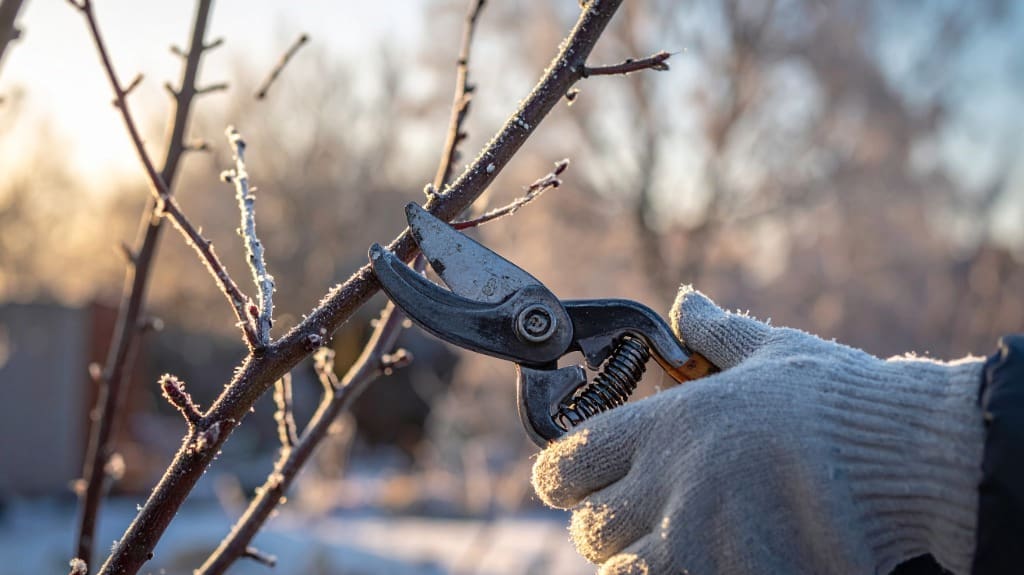
Winter pruning quick tips — what to cut now: You can hard‑prune shrubs that bloom on new wood, like butterfly bush, smooth and panicle hydrangeas, potentilla and spirea, on a mild, dry late‑winter day before bud swell; coppice tough responders to the ground for fast renewal, and shape roses and summer‑fruiting canes while dormant. Avoid cutting spring bloomers like lilac, forsythia and old‑wood hydrangeas until after they flower. Take it slow, disinfect tools, progress over perfection, and keep going to learn more.
Some Key Takeaways
- Prune shrubs that bloom on new wood (buddleia, panicle and smooth hydrangea, spirea) in late winter before bud swell.
- Avoid heavy cuts on spring‑flowering shrubs (lilac, forsythia, azalea, hydrangea macrophylla); prune them immediately after flowering.
- Coppice or hard‑prune vigorous resprouters to 6–12 inches or ground level to rejuvenate and encourage big summer blooms.
- Remove dead, diseased, or crossing branches while dormant and disinfect tools between plants to reduce disease spread.
- Choose a mild, dry late‑winter day above freezing and expect variable recovery; follow up with formative pruning over 2–3 seasons.
Summer‑Blooming Shrubs to Hard‑Prune
Start by picking a mild, dry late‑winter day and give yourself permission to be a little bold — these summer‑blooming shrubs respond well to hard pruning, and cutting them back will usually reward you with vigorous spring shoots and bigger summer flowers. Heading into the garden, you’ll see buddleia (butterfly bush) and panicle hydrangea that benefit from decisive cuts, because they bloom on new wood, so shaping now boosts next season. For buddleia, hard prune stems to about 6–12 inches, or coppice to the ground if you want a fresh start, knowing flowering might be delayed a season. With panicle hydrangea, remove a third to half of last year’s stems or cut to strong buds to encourage larger panicles and vigorous growth.
New‑Wood Hydrangeas Safe to Cut Now
If you’ve got smooth or panicle hydrangeas, late winter is actually one of the best times to get out there and prune them back, because these varieties bloom on new wood and will thank you with bigger, healthier summer flowers; you can cut smooth hydrangeas nearly to the ground and remove a third to a half of panicle stems to shape them without sacrificing this year’s blooms.
You’ll want to prune on a mild, dry late winter day before bud swell, make clean cuts just above a healthy bud, and remove dead or crossing stems so air flows and vigor returns. Cutting back new wood encourages stronger shoots that will carry next summer’s blooms, so don’t worry about being tidy — progress beats perfection. Many homeowners find that adding stylish outdoor planters can enhance the look of their refreshed shrubs and patio space.
Roses and Other Woody Perennials to Shape in Late Winter
When the air’s still crisp and your roses and woody perennials are still resting, it’s a great time to get in there and shape them up so spring growth comes in strong and tidy, not congested and weak.
Roses and company: prune roses while dormant, remove dead branches, cut crossing canes to four or five healthy buds, and open the center for air, you’ll thank yourself come bloom. For woody perennials that bloom on new wood—buddleia, panicle and smooth hydrangeas—late winter pruning means hard cuts to encourage big summer flowers, and you can even do rejuvenation pruning, coppicing a few stems to ground level, knowing one season’s delay in bloom. Make clean angled cuts at outward buds, disinfect tools, and pick a mild, dry day. Progress over perfection. Growing a trellis can also help manage and display pruned climbers and shrubs on your patio trellis panels.
Fruiting Shrubs and Small Fruit Trees to Prune Before Budbreak
Roses and big perennials look great once you’ve shaped them, but don’t stop there—your fruiting shrubs and small fruit trees need a little winter attention too, and doing it before the buds swell will pay off with healthier growth and better harvests. In late winter, prune before budbreak to remove dead diseased branches, thin crowded growth, and open the canopy so light and air reach fruiting wood. For apples and pears, trim moderately, cut above outward-facing buds, and remove suckers to direct energy. With canes, take out old canes on currants, and cut fall-bearing or single-crop canes of summer-fruiting raspberries to the ground. For peach pruning, shorten last year’s vigorous shoots and keep scaffold branches low. Progress over perfection—you’re doing great. Refresh outdoor surfaces with durable concrete paint to protect and brighten your patio.
Tough Rejuvenation Candidates for Coppicing or Hard Cutting
When you’re deciding which tough shrubs to coppice or hard-cut back this winter, think timing first — late winter into early spring is your sweet spot, when plants like buddleia, smooth hydrangea, and many spireas are still dormant and ready to shoot. Pick candidates that flower on new wood or that’ve leggy, woody centers (buddleia, hydrangea arborescens, spirea, potentilla, caryopteris, smoke bush, Nepeta), and be honest about the recovery time — some will roar back the same season, others may need a year or two. Use a clean, decisive cut low to the ground for coppicing, or prune hard to about one-third for plants like potentilla, and remember, it’s progress over perfection — you’ll have healthier structure and better blooms if you act now. Consider adding pergola accessories like outdoor cushions to make the rejuvenated garden a cozy place to enjoy.
When To Coppice
You’ll want to think of coppicing as a reset button for the overgrown, leggy shrubs you’ve been avoiding—cut them down hard in late winter and they’ll usually come back with fresh, vigorous shoots that flower on the new wood. When to coppice: choose a mild, dry day in late winter while plants are fully dormant, prune dormant stems to a few inches above the soil, and focus on fast summer-blooming shrubs like Buddleia, the butterfly bush, Nepeta, and some Spirea that reliably sprout again. Expect to lose one season’s flowers on old-wood bloomers, so save hard cuts for species known to flower on new wood, or when size and long-term health matter more. Progress, not perfection. Consider using attractive, durable retaining wall blocks to create tidy edges around coppiced shrubs for a finished look and easier maintenance with retaining wall blocks.
Selecting Rejuvenation Candidates
Sizing up candidates for a hard cut starts with a clear look at what you’ve got and what you want it to do next—think of it as triage for shrubs, not punishment. Start by checking which shrubs are deciduous shrubs that resprout from the base, because coppicing and shrub rejuvenation work best on plants that make new wood after a cut. Know which bloom on old wood and avoid those, you’ll lose next season’s flowers. In late winter, when dormancy’s deep, you can decide between cutting a portion out over years or choosing to cut to ground for a full reset. Look for butterfly bush, hydrangea arborescens, spirea, nepeta and similar tough types — they’ll thank you. Progress beats perfect. Consider adding a privacy screen to elevate the space around rejuvenated shrubs and create a finished outdoor room.
Coppicing Techniques And Timing
Think of coppicing as a reset button for tough, scrappy shrubs — you cut hard now while the plant’s fully asleep, and you’ll get a flush of vigorous new shoots in spring, usually restoring flowers within a season or two. Heading: Why coppice in late winter — do it while dormant, and wound stress is low, new-wood bloomers rebound fast, and you’ll avoid summer shock. Action: choose targets like butterfly bush (Buddleja) or smooth hydrangea (H. arborescens), cut stems cleanly to soil level or a good basal bud, remove all debris to cut disease risk. Aftercare: watch for suckers, remove weak shoots early, and give 2–3 seasons of formative rejuvenation pruning to shape strong frameworks. Progress over perfection. Patio planter boxes can help contain and display rejuvenated shrubs in small outdoor spaces, making maintenance and winter protection easier — see patio planter ideas.
Evergreens and Structural Pruning for Winter
Start by taking a slow walk around your evergreens, looking for dead, diseased, or broken limbs you can safely remove while the plants are dormant, since late winter is when sap flow is low and cuts stress the tree least. Heading into structural pruning of evergreen shrubs, focus on thinning cuts at the branch collar to keep natural shape and strong leaders, don’t shear the outer shell. Remove low, crowded branches to boost air circulation and light, which helps health and reduces pests. Prune on a mild, dry day, and disinfect tools between plants—70% isopropyl alcohol works well. If a big limb needs removal, call an arborist; for low work, use long‑reach tools and take it slow. Progress over perfection. Adding a wood pergola can create a cozy, sheltered spot to admire your winter-pruned evergreens and extend outdoor enjoyment to early spring, especially when paired with natural wood finishes.
Shrubs to Avoid Pruning Now and Timing Exceptions
Shrubs that bloom on old wood — like lilac, forsythia, and many hydrangeas — shouldn’t be shortened in winter, because you’ll be cutting off next year’s flowers and feeling the loss come spring. You’ll also want to avoid heavy cuts on fruit trees prone to winter diseases, and wait on early-flowering trees and shrubs until after they bloom, since frost and winter wounds can invite pathogens or reduce fruiting. Think selective thinning now, delay major rejuvenation on old-wood bloomers, and remember, a little patience usually means better blooms and less heartache later.
Spring-Blooming Shrubs
Because spring bloomers set their flowers on last year’s growth, you’ll want to avoid heavy pruning in late winter—cutting now can remove the buds that would give you that show of color. Spring-flowering shrubs like forsythia, lilac, azalea, rhododendron, witch hazel and many hydrangea macrophylla bloom on old wood, so protect bloom buds by waiting. If a branch is clearly dead or diseased, make minimal corrective cuts, but plan shaping for later. The rule: prune after flowering, within two weeks if you can, so the plant has time to grow new stems that will hold next year’s buds. When in doubt, wait until spring and check species guidance — progress over perfection, you’ve got this.
Disease And Frost Risks
You’ve already learned to hold off on heavy cuts for spring bloomers, and that same careful mindset helps with disease and frost risks—timing matters as much as technique. When you prune in winter, think about flower buds, old wood, and the weather, because cutting at the wrong time can remove next season’s blooms or invite freeze injury and pathogens. Don’t shear spring-flowering shrubs or trees until after they bloom, and if you see swelling buds or winter flowers, only remove dead or diseased branches. In regions with wound diseases, avoid winter pruning on stone fruit, save major cuts for a safer season, and wait for mild, dry days above freezing. Progress over perfection—protect plants, learn from each season, and you’ll get better.
Some Questions Answered
What Shrubs Can Be Cut Back Now?
You can cut back summer-flowering shrubs that bloom on new wood, like buddleia, panicle and smooth hydrangeas, caryopteris, potentilla, and most roses.
Start by removing dead wood, thin stems to open the crown so light and spring regrowth can flourish, watch soil moisture to avoid root damage, disinfect tools for tool sanitation to limit plant diseases, and be mindful of wildlife habitat. Progress over perfection—you’ve got this.
When Should Shrubs Be Cut Back for Winter?
Cut them back in late winter, before bud swell, when leaf drop signals are clear and soil moisture checks show workable ground. You’ll favor frost hardy varieties, protect roots with winter mulching strategies, and time cuts to avoid late season pests. Start by removing dead wood, disinfect tools between plants with tool disinfection routines, and remember root protection beats panic pruning. Progress over perfection—do a bit, you’ll learn.
What Is the 1/2/3 Rule of Pruning?
The 1/2/3 rule is a simple pruning plan: you’ll remove up to half a shrub for rejuvenation, cut vigorous new shoots back by two-thirds, and shorten flowering stems by about one-third to shape blooms. Timing matters, pruning timing in dormancy helps regrowth patterns and shrub vigor, branch selection and cutting technique protect plant health, and tool sanitation prevents disease. Progress over perfection — take it slow, you’ve got this.
Is It Okay to Trim Shrubs in October?
Yes — you can trim shrubs in October, but be gentle. Fall cleanup should focus on dead wood, light shaping, pest scouting, and protecting roots, not heavy cuts that raise freeze risk or stress soil moisture. Leave structural pruning for late bloomers and late winter, disinfect tools between plants for tool sanitation, and mulch to aid root protection. Progress over perfection — small tidy steps now keep plants healthier come spring.