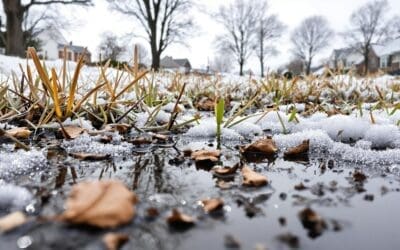
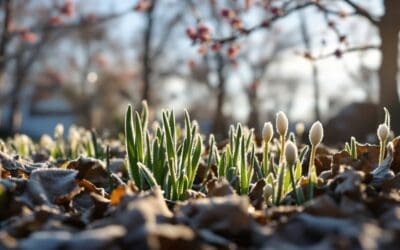
What’s happening beneath the snow: your grass isn’t dead, it’s sleeping. As soil temps fall below about 10°C, blades brown and growth slows, while crowns and roots divert sugars into starch for winter survival, keeping meristems alive under the soil. Light snow insulates and steadies temps, but ice, compacted piles, and salt can smother crowns or invite snow mould. Be patient, avoid heavy work until soils warm, and you’ll likely see green return in spring—keep going to learn what to check first.
Some Key Takeaways
- Cool‑season grasses enter dormancy when soil temps drop below ~10°C, browning aboveground blades while crowns and roots stay alive.
- Plants redirect sugars into crowns and roots, slowing leaf growth and storing starch for spring regrowth.
- Light snow insulates soil and crowns, reducing freeze–thaw cycles and protecting root survival.
- Compacted snow, ice layers, or piled snow reduce oxygen, encourage snow mould, and increase crown damage risk.
- After melt, gently rake matted turf, avoid heavy work until soils warm (~7–10°C), and plan aeration/overseeding for thin areas.
An Explainer for Homeowners About Winter Lawn Dormancy
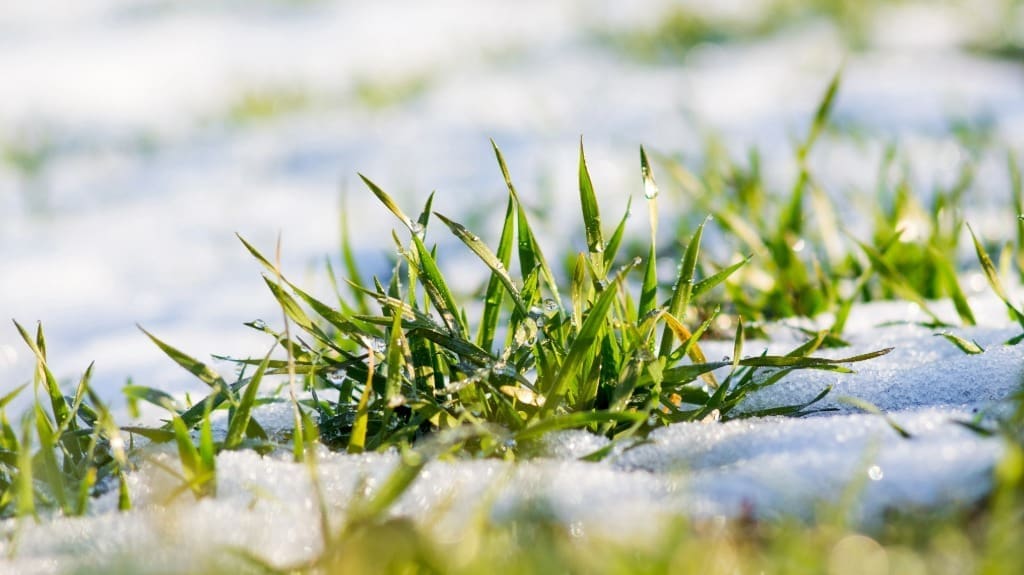
If you’re worried when your lawn turns tan and looks “dead,” don’t panic—cool‑season grasses are usually just going dormant when soil temps drop below about 10°C, they slow leaf growth and tuck energy into their crowns and roots so they can survive the cold. Heading: What you’re searching for — This explainer helps you, a homeowner, understand winter lawn dormancy, why soil temperatures matter, and what’s normal. Heading: The reality — Under snow, a snow insulating blanket keeps crowns and roots steadier, limits freeze–thaw cycles, and lowers stress, though microbes slow down, not stop. Heading: What to watch — Heavy traffic, piled snow, ice or salt can hurt crowns and roots, and invite snow mold. Progress over perfection: protect spots, don’t panic. Kentucky bluegrass also benefits from proper fall care to build stronger crowns and root reserves for dormancy, including overseeding and fertilizing at the right times to support winter survival.
What Lawn Dormancy Actually Means for Cool‑Season Turf
You’ve already seen how soil temps and snow influence the lawn’s winter life, so let’s talk about what dormancy actually means for the grass you care about.
What dormancy looks like: Your blades may tan or brown and seem dead, but crowns and roots stay alive, holding carbohydrate reserves to start spring growth. Snow cover helps—think of it as a blanket that steadies soil and crown temps, cutting freeze–thaw stress. Roots can still tick along if soil stays above freezing, so late‑fall care matters.
What you can do: Avoid heavy foot traffic and packed snow piles, don’t salt willy‑nilly, and be gentle with compaction. Small steps now help prevent permanent patches. Progress over perfection.
If you use pre-emergent herbicides as part of your lawn care routine, timing and correct product selection can protect new spring growth and reduce weed pressure next season—see our guide to pre-emergent selection.
How Dropping Soil Temperature Redirects Energy to Roots and Crowns
How soil cools below about 10°C, you’ll notice the grass tops slow way down and the plant quietly shifts its focus underground, sending sugars into roots and the crown to hunker down. That crown, the little growth center at soil level, becomes the main storage site and guardian for meristem cells, so even though things look sleepy, reserves are being banked for spring. Keep in mind, if cold stays brutal for too long or freeze–thaw cycles keep hitting, those stores can get drained and the crown can suffer, so aim for steady care now rather than perfection. Homeowners who enjoy their outdoor spaces should also inspect and maintain their lawn and landscape tools to make post-winter recovery easier.
Energy Moves To Roots
As soil temps dip below about 10°C (50°F), your grass quietly shifts gears, slowing leaf growth and sending the carbs it’s made down into the roots and crowns where they’ll do the most good over winter. Energy Moves To Roots — you’ll notice tan blades aboveground, but that doesn’t mean failure. Your cool-season grass is protecting its root system and building carbohydrate reserves in crowns and roots, so it can survive cold and come back. When soil temperatures fall, root respiration eases, metabolism focuses on crown meristems and starch storage, and late fertilizer taken while soils are still warm helps stock those reserves. Even under snow roots sip nutrients, so think long-term care. Small steps now pay off in spring. Winter lawn care tools and winterizer fertilizers help homeowners support those reserves.
Crown Survival Strategy
Pivoting from how energy moves down into roots, let’s look closer at what the grass does with that energy at the crown — the short, squat stem right at soil level that holds the growing points. You’ll notice, as soil temps drop below about 10–12°C, the grass redirects sugars into the crown and roots, boosting carbohydrate reserves instead of leaf growth, and that fuels root growth come spring. The crown stays quietly active, protecting meristems, while starches and sugars act as cryoprotectants to limit freeze damage. Water and nutrients keep moving until soil freezes, so a late fall feed helps. Focus on building deep roots and dense crown tissue in autumn; small, steady steps now mean stronger crown survival and a faster, kinder spring green‑up. Consider also testing soil pH and using appropriate amendments to support those roots and crowns with pH test kits.
What Happens to Chlorophyll, Blades, and Visible Color in Winter
When chilly nights and shorter days roll in, your lawn doesn’t die off so much as it hits the pause button—chlorophyll production slows or stops, the blades lose their green pigment and take on tan or brown tones, and it can look pretty bleak from the driveway, but most of the life is tucked down in the crown and roots where energy’s been redirected for survival. What’s happening beneath the surface matters: chlorophyll fades so blades look brown, but dormancy keeps crowns and roots viable, ready to rebound. Frost or drying can make individual blades brittle without meaning root death, and snow cover might hide color changes while also insulating crowns. True death shows as patchy, pull-up turf and no spring regrowth. Trust the cycle. Proper seasonal care, like adjusting nitrogen fertilizer applications and using appropriate tools, helps lawns emerge healthier in spring.
Soil Processes Under the Snow: Roots, Microbes, and Nutrient Cycling
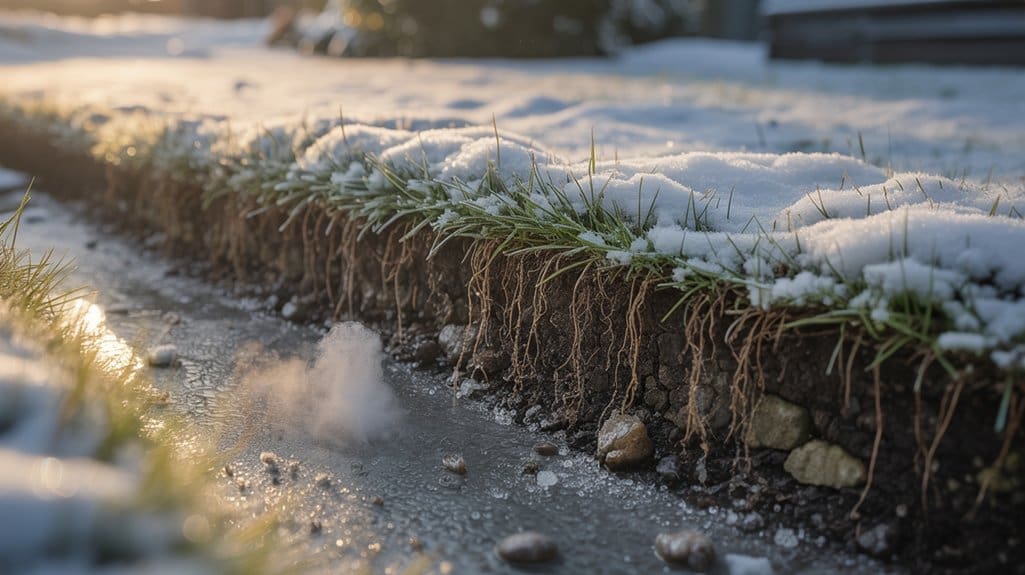
Under a blanket of snow, your lawn isn't dead—it's quietly doing the work it needs to survive, with roots holding life and microbes chipping away at organic matter so nutrients are ready when spring comes. What’s happening below is gentle but important: during winter dormancy, cool-season grass roots keep low metabolic activity until soils dip near 0–2°C, so they’re poised to green up fast. Soil microbial activity slows, not stops, breaking down bits of litter and releasing small nitrogen pulses that feed nutrient cycling at thaw. Snow cover keeps soils steadier, cutting harsh freeze-thaw swings that stress crowns. Watch for compacted ice layers though, they choke oxygen, raise root stress, and invite problems. Small steps now pay off later. Cordless mowers and other battery-powered tools can make spring cleanup easier by reducing prep time and equipment maintenance battery-powered tools.
Snow’s Dual Role: Insulation and Risk Factors (Types of Snow That Help vs. Harm)
You’ve already seen how snow can keep roots and microbes cozy beneath the surface, but not all snow plays the same role, and knowing the difference helps you protect your lawn.
What helps: light, fluffy snow makes great snow insulation, trapping air and steadying soil temperatures, so crowns stay protected from harsh winds and deep freezes. When that blanket’s consistent, you’ll often see better spring bounce-back.
What harms: heavy snow compacts turf and soil, cutting oxygen and inviting snow mould under long, wet cover. Crusty refrozen layers cause freeze–thaw stress, and artificial snow piles hold moisture and salts, delaying green‑up. So aim for even cover when you can, clear problem piles where practical, and remember—small steps beat waiting for perfection.
Also consider winter care tools like rotary sprinklers and other equipment from sprinkler suppliers to help manage moisture and reduce problem areas.
Localized Winter Stresses: Ice, Compaction, Snow Piles, and Salt Damage
Local patches of ice, compacted snow, and salt-streaked edges can turn a mostly hardy winter lawn into a few sad strips come spring, but you don’t have to panic — small, timely fixes will get you back on track. Signs and causes: ice sheets block crown gas exchange, cutting off root oxygen and risking turf death, while deep snow piles hold moisture and heat, prolonging low-oxygen conditions that invite snow mould and smothering. Compaction from foot traffic or sledding crushes crowns and frozen soil, delaying spring green-up. Road salt concentrates at dumps and edges, drawing moisture from roots and leaving brown strips. What to do: aerate and overseed compacted spots, move snow piles, flush salty zones with water when safe — progress, not perfection. For gardening, consider installing raised planting beds and proper drainage solutions to reduce surrounding lawn moisture and runoff.
Winter Diseases to Watch After Snowmelt: Grey and Pink Snow Mould Explained
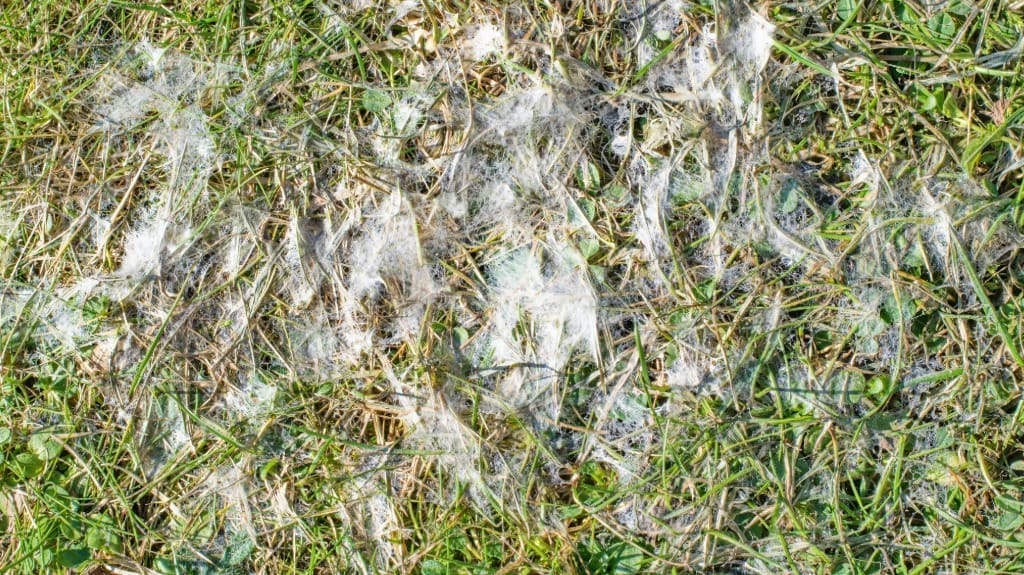
When snow finally melts, you might find matted, straw‑colored circles or even salmon‑pink fuzz on your lawn, and while that sight can make your stomach drop, it’s usually something you can handle without panic.
What you’re seeing: grey snow mould often shows as circular, matted patches after snowmelt, and usually stops spreading as turf dries and temps rise. Pink snow mould can show salmon‑pink hyphae, it’s more aggressive, and may keep damaging crowns in weak spots. Causes are familiar: long snow cover, thick thatch, poor drainage, leaf litter, or thin, stressed turf entering winter. Quick steps you’ll take: gently rake matted areas to improve airflow, remove debris, let turf dry, and note places where crowns died so you can address them later. Progress beats perfection. It’s also a good time to consider moss control and other lawn-care tools to help prevent recurring problems.
What to Do Now and What to Expect in Spring: Preparation, Recovery, and Remediation
Heading into spring, think of your lawn like a sleeping teammate that needs a gentle wake-up: don’t rush it, but do check in, clean up matted spots, and plan repairs where crowns or roots got crushed over winter. Your winter lawn looked dead aboveground, but roots stay alive below, so wait until soil thaws and warms to about 7–10°C before heavy work. If you applied a winterizer in fall, those sugars will fuel spring green‑up. Lightly rake frozen grass and matted areas, assess for snow acts like compression or salt damage, and hold off on big fertilizers until active growth. Plan aeration and overseeding to fix thin spots caused by compaction or piled snow. Progress over perfection — steady steps win.
Some Questions Answered
How Long Can Grass Survive Under Snow?
You can expect grass to survive under snow for about 2–4 months, sometimes longer if snow insulation keeps soil mild and root respiration continues. Headline: watch for ice encasement that causes oxygen depletion, and avoid packed snow or salt exposure. Action: clear heavy drifts where possible, let slow thaw happen, be gentle in spring. Progress over perfection — a few browned patches aren’t the end, they’ll often recover with care.
Are You Supposed to Leave Your Grass Long or Short for Winter?
Short and smart: aim for about 2.5–3.5 inches for winter height.
Friendly framing, practical plan: with a sharp blade length you’ll do fall mowing that trims enough to prevent matting but keeps an insulating canopy to protect crowns, support turf density, and resist snow load. Cut after the last big growth, remove leaves, don’t scalp, and remember, steady care beats perfect timing. You’ve got this.
How to Wake up Dormant Grass After Winter?
Start by evaluating soil, do a soil testing kit, then lightly rake and use spring aeration to loosen compaction so crowns breathe, and overseed thin spots once soil’s warm. Apply targeted fertilization after thaw, add lime application only if test shows need, and treat grubs or fungal treatment promptly if signs appear. Minimize foot traffic while it recovers, be patient, progress over perfection — your lawn will come back.
Should You Put Grass Seed Down Before It Snows?
Yes — but only sometimes. Picture a flip phone moment: if you do fall seeding with good soil preparation, proper seed selection, and timing considerations — at least 4–6 weeks before hard freeze — you’ll give seedlings a chance to root. If snow’s imminent, wait or protect seed with mulch/erosion fabric, manage moisture carefully, and don’t skip pre winterfertilization where appropriate. Progress over perfection, you’ve got this.