Winter Foot Traffic — quick steps you can use now: steer people onto a few marked, durable paths, like compacted gravel, paver strips, or temporary plywood/mats, so fragile crowns don’t get crushed; avoid walking on frost or ice because frozen blades and crowns crack and make long-lasting footprints; stagger routes and rotate play areas to spread wear, shovel deep snow instead of piling it on the lawn, and plan spring aeration and overseeding for spots that look thin — keep it simple, progress over perfection, and there’s more practical fixes ahead.
Some Key Takeaways
- Avoid walking on frosted or frozen grass because brittle blades and crowns can crack and create lasting footprints.
- Route people to durable paths or temporary walkways (plywood, rubber mats, or compacted gravel) to keep traffic off turf.
- Designate and concentrate play or exit zones on mulch, gravel, or raised surfaces to protect surrounding lawn.
- Use low-chloride deicers or sand sparingly, shovel snow off turf promptly, and avoid piling snow on the same spots.
- Inspect worn areas in spring, probe for compaction, then aerate and overseed as needed to restore damaged turf.
Prioritize Routes: Map and Mark Safe Walkways to Keep Traffic Off Vulnerable Turf

Think through your yard the way you’d plan a shortcut — spot the places people naturally cut across, mark them clearly, and steer traffic onto sturdier paths before winter sets in. You’ll sketch a simple map showing mailbox, driveway, shed crossings so everyone knows where not to tramble the lawn, and you’ll celebrate little wins together when kids follow it. Put up visible markers, stakes with flagging or temporary mats, and, where it helps, lay down removable walkways like rubber mats or gravel strips to take the weight off fragile crowns. Tell your household the rules, rotate routes after thaw/freeze cycles, and extend paths if wear shows. It’s about small, steady steps, protecting grass now so spring feels like a fresh start.
Avoid Walking on Frost or Ice: Why Frozen Turf Is Fragile and When to Wait
You’ve already mapped routes and put down temporary mats to keep people off the soft spots, but there’s one more thing to watch for as temperatures drop: walking on frost or ice-covered grass can do real harm.
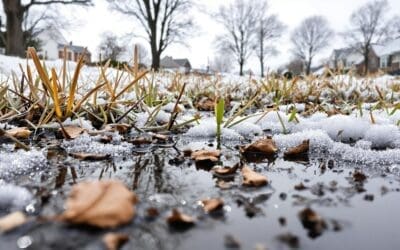
Why it matters — when you walk on frost, frozen leaf blades and crown tissues can crack, footprints linger, and that bruise becomes a thinning or dead spots you’ll see come spring. Dormant turf can’t repair itself in winter, so even one trip across a frozen lawn can start a problem.
What to do — avoid sidewalks and lawns at near-freezing mornings, wait until frost melts and grass bends, or if you must cross, vary your path and step on cleared areas. Small patience, big payoff.
Consider also improving surface runoff with simple drainage solutions to help reduce ice buildup on patios and lawns.
Use Temporary Surfaces: Mulch Mats, Plywood, or Rubber Walkway Runners for Short-Term Protection
Temporary surfaces are an easy, low-drama way to keep people off vulnerable grass without turning your yard into a construction zone, and they work because they spread weight and cut down on direct blade and crown damage. Think of plywood or OSB sheets over worn paths, they help distribute weight so you don’t compact the soil further, and they stop repeated cold-step crushing. Lay a light layer of mulch or bark — 2–4 inches — under temporary seating or play areas, but edge it away from crowns so you don’t smother grass. Rubber runners or interlocking mats give traction and shed snow, reducing blade abrasion. Anchor everything with pins or sandbags to avoid gaps, remove coverings after thaw, then inspect and repair in spring. Progress over perfection. Consider using durable outdoor products like polymeric sand-compatible mats to protect edges and minimize long-term wear on walkways.
Stagger and Vary Paths: Distribute Weight to Prevent Repeated Compaction in One Line
Stagger your usual routes and rotate play or exit areas each week, so pressure isn’t focused in a single strip and the turf gets a chance to recover. Try zig-zag or diagonal steps, move sledding exits or pet spots to a different corner, or lay a temporary gravel or mat and shift it every few weeks—small changes add up. It won’t be perfect, but spreading the wear keeps more grass alive come spring. Consider adding temporary protective edging or mats from Perfect Edge to define paths and protect vulnerable turf.
Alternate Walk Routes
Alternate your walking lines across the yard, shifting a few feet each trip so you don’t wear one single groove into the grass and compact the soil beneath it. Heading out, think stagger and vary winter walking routes, and imagine the lawn as a shared floor that needs gentle rotation; move diagonally or curve your steps, and you’ll spread weight away from the same crowns. Mark a few visible edges or set a temporary mat, then rotate high-use corridors weekly so pressed spots get a break. Tell family and guests, make it a small habit, it saves you work in spring. You’ll see fewer footprints, less bare striping, and the grass will recover better — progress over perfection, one step at a time. Consider using interlocking pavers in very high-traffic zones to protect grass and provide a stable, attractive pathway.
Rotate Play Areas
You’ll want to rotate play areas regularly — aim for weekly or after any big day of sledding or games — so you’re not driving repeated weight over the same crowns and compacting the soil into long-term damage. Think of your winter lawn as something you share, so stagger walking paths by a few feet each time, move the sled run over, and shift where kids play. Designate a single winter play zone on mulch or gravel and rotate it seasonally, that way the turf gets long rests. Encourage friends, kids, and pets to use driveways or cleared walkways when possible, and when the grass does see heavy use, plan spring aeration and overseeding on those spots. Progress over perfection — small moves, big payoff. You can also protect edges near patios and walkways by stabilizing them with paver sand to reduce runoff and avoid turf wear.
Manage Snow and Ice Smartly: Clear Deep Snow, Avoid Concentrated Snow Piles, and Choose Low-Chloride Deicers
When heavy snow comes, get it off the lawn as soon as you can—shoveling or blowing deep drifts away prevents long-lasting ice that can smother grass crowns and invite snow mold—so don’t let big piles sit and bake a problem into spring. Heading: Smart clearing and deicing. You’ll want to shovel or blow deep snow off turf promptly after heavy storms to reduce prolonged ice encasement that can suffocate crowns and promote snow mold,calcium magnesium acetate is a gentler deicer choice. Don’t stack cleared snow in the same spots, because repeated piles concentrate salt and moisture and create freeze/thaw damage. When you must treat ice, use minimal low-chloride deicer with sand for traction, then rake compacted melt in spring. Progress, not perfection. Adding protective measures like using deck sealers on nearby wood surfaces helps prevent winter damage to outdoor spaces.
Protect High-Use Zones: Create Durable Play Areas, Mulch Pads, or Paved Shortcuts for Frequent Traffic
Protect High-Use Zones: Create Durable Play Areas, Mulch Pads, or Paved Shortcuts for Frequent Traffic — think about converting your sled run, pet spot, or shortcut into a sturdy surface like compacted gravel, pavers, or a 2–3 inch mulch pad so people stop trampling the lawn. Place these durable strips along the desire lines people already use, make them wide enough for feet or wheelbarrows, and add plywood or snow boards temporarily where kids gather to spread the load. Keep them clear of ice with sand or a pet-safe deicer, and you’ll see less rutting and crown injury on the grass, even if things aren’t perfect right away. Consider protecting any nearby outdoor furniture with sectional covers to keep patio seating dry and prolong its life.
Durable Play Surface Options
Think ahead and mark the spots where people tend to cut across the lawn or gather for sled rides, because a little planning now will save you a lot of spring reseeding and sore shoulders. Durable play surface options help you protect grass and keep everyone happy. First, designate high-use winter play zones and cover them with 2–4 inches of engineered wood or recycled rubber mulch to absorb impact and prevent crown damage. For pets or toddlers, add an artificial-turf patch or raised play surface that stands up to winter traffic without needing spring fixes. Use ground protection mats or interlocking turf grids for seasonal events, they spread loads and stop soil impressions. A paved or compacted gravel shortcut channelizes traffic, reducing random wear. Progress over perfection—start small, tweak as you go. Consider using a proper paver base for any permanent paved shortcuts to ensure a stable, long-lasting surface paver base that resists frost heave and settling.
Designated Mulch And Pavers
Designate a few spots now for the things that always happen on your lawn—shortcuts, sled runouts, and the spot kids gather—so you can steer traffic onto mulch pads or a paved strip and save the rest of the turf. Think like a neighbor who’s been there: mark play zones and install a 2–4 foot–wide paved shortcut along worn paths, using permeable pavers or compacted gravel over geotextile to keep water moving and avoid ice pockets. Add 3–6 inch deep mulch pads under play or dismount spots to absorb impact and cut soil freeze–thaw stress. Keep everyone on the durable surfaces, skip heavy salt near edges, and use sand for traction. Small changes, less damage. You’ll thank yourself in spring. Consider integrating planter boxes around durable zones to define edges, add visual interest, and provide low-maintenance greenery year-round.
Quick Fixes for Winter Damage: Assessing Footprints, Decompaction, and Spring Repair Steps
Before you rush to re-seed or blame the dog, take a calm look: frozen-footprints and worn spots often stick around through early spring because the cold literally sliced through the plant’s vascular system, so crowns can’t push up new blades while they’re still dormant. Quick check: walk the lawn, note footprints and wear, probe suspect areas with a screwdriver; hard resistance means compaction. If soil’s firm, plan core aeration once growth resumes to pull plugs, loosen hardpan, and restore air and water flow. For shallow depressions, lightly topdress or roll to improve crown contact before seeding. Save overseeding for mid–late April, keep new seed moist, and skip preemergent herbicides. Progress over perfection — you’ll mend it, step by step. Consider using a leveling compound to smooth shallow depressions and improve surface drainage for healthier turf leveling compound.
Seasonal Prevention Checklist: Final Mow, Winterizer Timing, Topdressing, and Homeowner Rules to Minimize Winter Wear
You’ve already done the walk‑through and noted where frost, compaction, or crisp footprints left the lawn looking tired — now let’s set up a simple seasonal checklist that keeps those problems from coming back. Final step: schedule your final mow in early December for cool‑season turf or November for warm‑season, cutting to about 2–2½ inches, and avoid using overly short cuts that invite stress. Time your winterizer for cool lawns with a near 1:0:1 N:K mix, warm turf gets only potassium. Lightly topdress with a thin compost‑sand‑topsoil mix to protect crowns, don’t smother them. Clear leaves, aerate in fall, remove toys and furniture, and direct play to one spot. Progress beats perfection — small actions pay off.
Some Questions Answered
How to Protect Grass From Foot Traffic?
Protect grass by steering people onto planned pathways design, and use temporary matting where shortcuts form, so you protect fragile turf without policing friends. Lay a clear path, clear snow, and add mulch or gravel at entrances, you’ll cut wear and keep things tidy. Don’t park or stack heavy items on lawns, it compacts soil and kills grass. If damage happens, wait till spring to aerate and overseed — progress, not perfection.
What Is the 150 Rule for Lawns?
The 150 Rule says you should keep cumulative crossings over the same lawn area under about 150 steps per season to avoid soil compaction and lasting damage, especially when grass is dormant. You’ll change traffic patterns, move play or pets to hard surfaces, and vary routes so one spot doesn’t take all the wear, and if you can’t, plan spring fixes. Progress over perfection—do what you can.
What to Put on Dormant Grass?
Like a warm blanket smoothed over tired shoulders, you can cover dormant grass with winter mulch or light seed cover to protect and prep it. Use straw or wood chips on high‑use spots, keep heavy items off, and avoid salts — they’ll dry and burn turf. If seeding, use a thin seed cover, then wait for spring to aerate and overseed more broadly. Progress over perfection; small steps help.
How to Protect Grass During Winter?
You protect grass by limiting traffic, using winter mulching around vulnerable areas, and installing snow fencing to steer people and pets away, so roots stay intact. Clear leaves before snow, don’t park or stack heavy stuff on turf, and concentrate play in one durable spot, maybe with a mulch pad. If traffic’s unavoidable, aerate in fall and apply a potassium-rich winterizer, you’ll help recovery come spring. Progress over perfection.