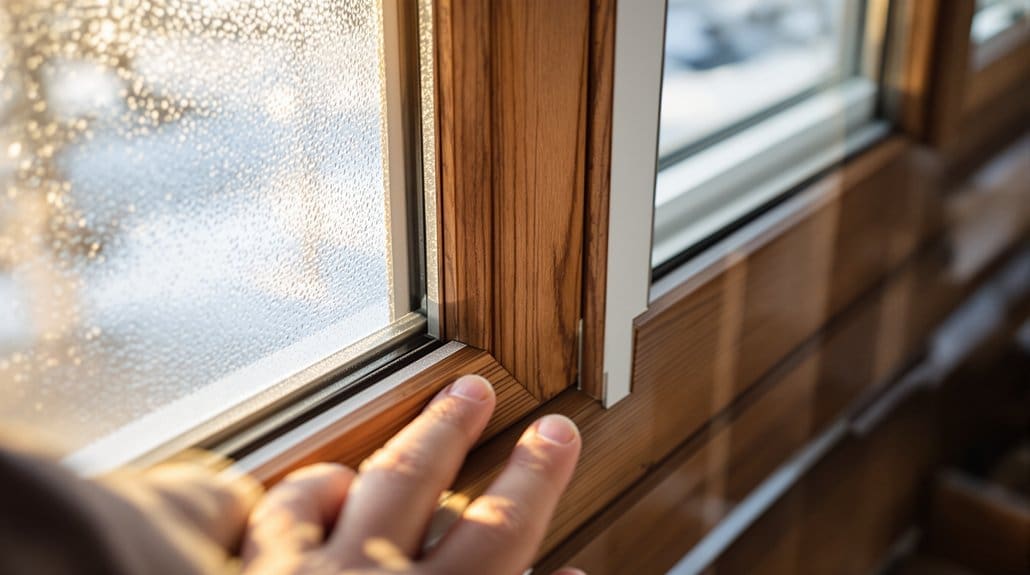
Quick check: look for daylight at edges, rising bills, or cold spots, then do a quick smoke test with an incense stick on a windy day to find leaks. Clean frames with alcohol, measure gaps, and pick foam tape, V‑seal, or an EPDM sweep sized to compress without binding. Apply adhesive strips, trim corners neat, and test the door closes smoothly; do a final smoke check and tweak. Stick with simple fixes first—more details ahead.
Some Key Takeaways
- Prioritize quick fixes: install adhesive foam tape, V‑seal, or a door sweep in under an hour to stop major winter drafts.
- Do a smoke test with an incense stick on a windy day to locate and prioritize the worst leaks.
- Clean surfaces with isopropyl alcohol and apply weatherstripping at 50–70°F for best adhesion and lifespan.
- Size and compress seals correctly: foam compress 10–25%, V‑seal 20–40%, sweep should drag lightly without binding.
- Recheck with a smoke test after installation and replace foam every 1–3 years, V‑seal every few years as needed.
How to Tell If Your Doors and Windows Need New Weatherstripping
If you’ve ever felt a sneaky draft or noticed your energy bill creeping up, you’re probably closer to needing new weatherstripping than you think. How to check: stand inside on a bright day, look for visible daylight around edges or under the door—if you see it, the seal’s gone. Follow up with an incense test on a windy day, watch steady smoke drift or flicker to find air leaks, and feel for drafts at jambs, sills, and sash. Check door sweeps, foam tape, and other strips for flattened, cracked, or compressed material, loose adhesive, or moisture at thresholds. Rising energy bills, cold rooms near entrances, or persistent condensation all point to replacing strips. You’ve got this—progress over perfection. Weatherstripping can transform your home by improving comfort and lowering heating costs.
Quick Wins: Mid-Winter Fixes You Can Do in an Hour
Grab a cup of something warm and let’s tackle a few quick fixes that’ll make your place feel cozier fast, without a toolbox full of fancy gear. Quick check: do a smoke test with an incense stick on a windy day, trace horizontal smoke drift to spot the worst air leaks, and prioritize those spots. Clean surfaces with isopropyl alcohol, work between 50–70°F, and add 5–10% extra material when buying. Apply adhesive-backed foam tape or V-strip to sash and jamb gaps, compressing per specs so things still close. Fit or adjust a door sweep and threshold so the bottom seal drags lightly, not tight. For drafty single-pane windows, install shrink window film for fast energy savings. Progress over perfection. Consider installing door sweeps to keep warmth in and drafts out.
Pick the Right Weatherstripping for Each Gap (Doors, Sashes, and Thresholds)
Picking the right weatherstripping comes down to matching the gap, not just slapping on whatever’s handy—you’ll save time and skip redoing things. Think about where air leakage shows up: vertical sash gaps call for a V‑strip, it’s thin, flexible, and lasts 5–10 years without gumming up your operation, while uneven stops work great with adhesive foam tape that compresses slightly so the sash closes cleanly. At the threshold, choose an EPDM or reinforced rubber bulb or a quality door sweep, they hold up in cold and seal under the door. For sliding door tracks, pile seal or fin/brush seals keep friction low. Combine types on tricky doors, you’ll cut drafts and boost energy savings. Progress, not perfection. Our site also shows several stylish ways to use electrical tape for quick, temporary fixes and cosmetic touch-ups around doors and windows, including color-coded repairs that blend with your trim.
Step-by-Step: Installing Tape, V-Seal, and Foam on Window Sashes
Prepare the sash and frame by wiping them with isopropyl alcohol and letting them dry, then measure the perimeter and cut your foam tape a bit long so you’re not wrestling with gaps later. Press the V-seal into the sash stop so the springy edge compresses about a quarter to a third when closed, and use metal or heavy-duty strips where the window gets the most wear. Peel and apply the adhesive foam along the bottom sash in moderate temps, avoid over-compressing it so the window still slides smooth, trim corners neatly, seal joints with a little paintable latex caulk, and test for drafts — progress beats perfection. Keep your home cozy and secure by choosing window sensors that work with your weatherstripping for better overall home protection.
Prepare Sash And Frame
Before you stick anything down, clean the sash and frame with isopropyl alcohol and let everything dry—this makes the adhesive actually stick, and saves you a lot of redoing later. Prep steps: wipe both sash and frame until clean surfaces look and feel free of dust and oil, then measure perimeter and add 5–10% for waste before you cut self-adhesive foam or V-seal. For narrow gaps use adhesive-backed closed-cell foam, plan to compress it 10–25% so the sash seals without binding. Decide where V-seal will sit, plan mitered corners, and pick metal for heavy use. After you install, do a smoke test with an incense stick, note any drift or light, and adjust until the seal feels snug. Progress, not perfection. Selling window insulation kits can help you tackle these tasks with the right materials for cozy home improvements.
Apply V‑Seal Correctly
When you’re ready to fit V‑seal to a sash, think of it like tailoring a suit: you want it to close neat and move easy, not squeeze or snag, so measure the gap, pick a width that will deform just enough, and plan your cuts before you stick anything down. Start by measuring sash gap, usually 1/8–3/16 in, and choose a vinyl seal or metal V-seal that gives the right compression percentage, about 20–40% when closed. Clean sash and frame with alcohol, trim to length, peel the self-adhesive backing or seat the metal strip, and apply one continuous run, butting corners tight. Do a smoke test, re-trim if it drags, and replace every few years. Our store carries a range of silicone caulk and related sealing products to help finish the job with a neat, durable result, including primers and applicators for a professional touch silicone caulk.
Install Foam Tape Carefully
Start by cleaning the sash and frame with isopropyl alcohol and letting everything dry so the tape can actually stick—this small step saves you headaches later, trust me. Heading: Prep and measure. Measure the gap length, pick foam tape thickness that compresses about 10–25% when closed, and plan for 5–10% extra material. Step: apply. Cut adhesive-backed foam tape to length, peel backing, and press one continuous strip along the sash stop or mating surface, firmly rolling with your thumb for full contact. For corners, trim at 45° so seams sit neat. Use foam tape where gaps are uneven, add V-seal for springy edges, install at moderate temperatures, and replace every 1–3 years if adhesion or operation falters. Consider proper base preparation for related outdoor projects like patios to keep surrounding areas tidy and durable, especially when working near pavers or other hardscape elements and using paver base maintenance to prevent mess and erosion.
Step-by-Step: Installing Door Jamb Seals, Door Sweeps, and Thresholds
You’re going to make this door feel like it actually belongs in your house, not an open window to the outdoors, so let’s walk through fitting jamb seals, a sweep, and a threshold that work together. First, measure gaps around the closed door, pick a door jamb seal—EPDM rubber or V‑strip sized to compress—and clean with isopropyl alcohol. Cut adhesive weatherstrip to length, peel backing, press along sides and top to insulate. At the door bottom, fit a door sweep that lightly contacts the threshold, trim or adjust so it drags, not resists. If you replace the threshold, match its height to your sweep and fasten per instructions, shim if needed. Finish with a smoke test to find leaks, then tweak seals or caulk. Progress beats perfection. Adding properly installed window locks can increase overall home security and complement your weatherproofing efforts.
Common Installation Mistakes and How to Avoid Them (Fit, Prep, and Wear)
Getting the fit, prep, and wear right isn’t tricky, but a few small mistakes will turn a good weatherstrip job into an annoyance you’ll revisit every season. Common slip-ups and fixes: pick foam or pile weatherstripping that lets the door close without binding, don’t overdo compression — too much forces wear, too little leaks. Surface prep matters — clean off old adhesive and oils with alcohol so adhesive-backed foam and vinyl weatherstripping actually stick. Install one continuous strip per side, seal corners, don’t leave gaps that invite drafts. Match materials to the frame — use nailable metal strips on sturdy jambs, flexible vinyl on flat, clean surfaces, and pay attention to door bottoms. Small care now saves headaches later. Reinforcing your door and jamb can further improve long-term performance door reinforcement.
Maintenance, Replacement Schedule, and When to Call a Pro
When you check your doors and windows yearly—ideally before winter hits—you’ll catch small problems before they become expensive headaches, and that routine inspection is the single easiest thing you can do to keep drafts out and energy bills down. Maintenance: inspect annually, look for flattened or cracked weatherstripping, gaps at corners, a dragging door sweep, or water at the threshold after rain, and do a smoke test for drafts. Replacement schedule: adhesive-backed foam lasts 1–3 years, door sweep about 3–5, V-strip 5–10, EPDM rubber 7–12, so replace as needed, but stick adhesive work to warmer days. When to call a pro: persistent drafts after replacement, warped frames, rot, or preservation-sensitive work — professional installation costs about $150–$400 per door. Secure ladders and stabilizers reduce the risk when working on exterior weatherstripping and window frames, so always use proper ladder safety.
Some Questions Answered
How Does Weather Stripping Save Energy?
How it saves energy: you block air infiltration around windows and door thresholds, cutting heat loss from pressure differentials, and reducing strain on ducts and HVAC systems. You’ll shore up insulation gaps, limit moisture migration and thermal bridging, and pick materials with good R values for longer seal longevity. Start small, prioritize obvious drafts, fix worn seals, and know that steady progress beats perfection — you’ll feel the difference.
What Is the Cheapest Way to Seal Windows for Winter?
Cheapest way: plastic film or shrink wrap on the interior, it’s cheap and works fast. You can press rope caulk into gaps, tuck tubular foam into sashes, or stick magnetic seals on metal frames, and add cardboard inserts, reflective film, or window quilts and insulating curtains for extra warmth. Thermal blinds help too. Take small steps, you’ll feel the change, and remember—progress over perfection; start with one window, then do more.
Does Weather Stripping Save Money?
Yes — weather stripping cuts air leakage, lowers utility bills, and boosts thermal comfort, so you’ll see an insulation ROI, especially after an energy audit points out leaks. Start with draft detection, pick durable materials, allow proper installation time, and follow weatherproofing codes if relevant, and you’ll preserve home resale value too. It’s simple work that pays back fast, so don’t wait — small fixes really add up.
What Can I Put Over My Windows to Keep the Cold Air Out?
Put insulating window film or plastic shrink film over the frame, and add DIY cellular shades or fleece window coverings, they really help. Use thermal curtain liners or temporary storm windows, and stick on foam magnetic strips or window sash seals to stop drafts. Try reflective window panels or magnetic window panels for extra bounce-back heat. It’s not perfect, but small steps add up—progress over perfection, you’ve got this.