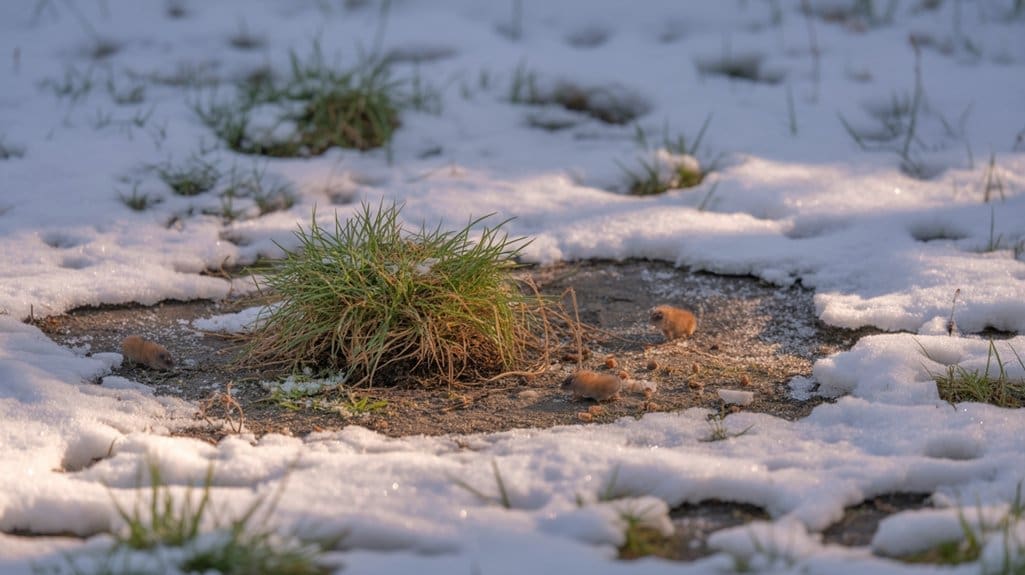
Quick ID and fix: you’ll spot voles by meandering shallow runways, small round entrance holes, and neat parallel tooth-grooves on low bark, not the deep ridges moles make. Keep grass short, clear brush and mulch, fit snug tree guards and bury 1/4–1‑inch mesh 6–12″ deep, and set a couple snap traps in fresh runways. These steps cut winter damage fast, they’re low-effort, and they work together—stick with them and you’ll learn practical next steps to finish the job.
Some Key Takeaways
- Keep grass short (1.5–2 inches) and remove brush, mulch, and ground debris to reduce vole shelter before snow.
- Create a 12–18 inch clear, weed‑free ring around trunks and shrubs and trim low branches to break runways.
- Install fine wire‑mesh tree guards or bury 1/4–1‑inch hardware cloth 6–12 inches around vulnerable stems and shrubs.
- Set small snap traps along active surface runways found after fresh snowmelt and use covered stations to protect non‑targets.
- Repair spring damage by raking runways, topdressing and overseeding when soil warms to about 50°F, then protect newly seeded areas.
How to Tell Vole and Rodent Damage From Mole Tunneling

Often you’ll notice tracks and damage after the snow melts, and that’s actually a good thing — it makes it easier to tell who’s been partying in your yard. How to read the signs: mice and voles leave shallow, meandering runways, matted grass, and criss-cross paths about 1–2 inches wide, with small one-inch holes where they peek in to nibble bulbs. If you see parallel 1/4-inch grooves on bark near the ground, that’s vole teeth, not a mole. Moles, by contrast, push up ridges or crescent mounds from deep tunneling, heaving your turf but rarely chewing bark or leaving surface trails. You’ll feel better knowing the difference, because once you ID the culprit, you can take steady, doable steps to protect your lawn. Many homeowners also enhance their yard’s appeal and safety with cozy outdoor features like fire pits that encourage proper yard maintenance and deter pests.
Why Voles Tunnel Under Snow and When Damage Appears
Why voles take to tunneling under snow makes a lot of sense once you picture their world: the snow acts like a warm, cloaking blanket where they can build surface runways to move, feed, and hide from predators, so they stay active all winter instead of hunkering down. You’ll want to know that those runways form in the insulating snow layer, letting voles nibble grass blades, roots, bulbs and low bark without exposure. Expect the damage to show up at spring melt as meandering dead grass trails, stored clumps, and small entrance holes, especially after mild winters or boom years. Think of this as manageable — learn the signs, steady your approach, and take small steps each season. You’re not alone. Secure your ladder and other gear to protect your property with ladder stabilizers for safer winter maintenance.
Quick Visual Signs: Runways, Chew Marks, and Entry Holes
Take a slow walk around your yard after the snow melts, and you’ll start spotting the telltale signs voiles leave behind—meandering 1–3 inch wide runways where they moved and fed under the white cover, small round entry holes about an inch across, and clumps of dried grass stashed along those paths that mark nests or caches. Quick Visual Signs: Runways, Chew Marks, and Entry Holes — you’ll notice meandering surface runways crisscrossing the lawn, paths that mean activity beneath the snow. Look for small round entry holes near bulbs or lawn edges, and chewed bark low on young stems with shallow parallel grooves. These clues tell you voles are present, they feed and cache, so you can plan gentle, steady steps to protect plants.
Immediate Steps to Protect Young Trees and Shrubs This Winter
Immediate steps are simple: slip a light-colored, loose-fitting tree guard or tube up around the trunk—tall enough to stay above snow—and pile a little soil or rocks around the base so it keeps working when snow shifts. You’ll also want to clear grass to 2–3 inches, pull back brush and extra mulch in a 10–15 foot circle, and bury a fine wire-mesh skirt 6–12 inches deep if you can, because less cover means fewer voles. Check trunks after big snows, set a couple snap traps where you see fresh chew marks, and remember, a few quick fixes now can keep a young tree from getting girdled later. Natural gas heaters can help keep patios usable in winter and reduce time spent tending yard issues by making outdoor maintenance more comfortable, including monitoring vulnerable trees and shrubs; consider outdoor heating as part of a winter plan.
Protect Trunks With Guards
Protecting trunks with guards is one of the simplest, most effective things you can do to keep young trees and shrubs alive through a long winter, and you don’t need fancy tools or a big budget to get it right. Think of a guard as affordable armor, light-colored or spiral plastic about 18–24 inches tall, rising above expected snow so voles can’t nibble at the bark. Bury the bottom edge 2–4 inches or mound soil/rocks against it, and choose guards with gaps so they won’t rub as trunks grow, then check and loosen in spring. For shrubs, wrap the lower 6–12 inches with fine wire mesh or heavy wrap. Clear nearby brush so your guards actually work. Progress matters. Adding durable landscape fabric around the base can help suppress vole-attracting vegetation and protect roots from rodent damage.
Clear Ground Coverings
Clear away the stuff at ground level you don’t need—shrubs, thick mulch rings, low brush and any tall grass—so voles don’t get cozy under the snow and start gnawing at trunks and stems. Heading: Clear Ground Coverings. You’ll want to remove ground cover around young trees and shrubs, keeping a 2–3 foot radius tidy, mulch pulled back 2–3 inches, and grass short under 3–4 inches. Action: install light-colored tree guards 18–24 inches tall, bury or flange the bottom 2–3 inches, and wrap shrubs with 1/4–1‑inch hardware cloth that extends 6–12 inches below grade. Add a predator perch nearby to invite raptors. These steps aren’t perfect, but together they cut nesting spots and runways, and that means less winter damage. Consider placing a nearby patio fountain to encourage wildlife habitat and enhance outdoor enjoyment, especially around serene patio fountains.
Yard Sanitation and Landscaping Changes That Reduce Winter Runways
Yard cleanup is one of the simplest, most effective things you can do, so start by removing ground-level debris like brush, wood, and rock piles that give voles winter hideouts. Keep your grass cut short, clear leaf litter, and trim shrubs up a few inches to break the sheltered corridors they use, and you’ll see fewer runways appear under the snow. Don’t worry about perfection—small, steady changes now make your lawn a lot less inviting to rodents by next season.
Remove Ground-Level Debris
You’ve probably noticed how a few hidden piles of brush or that old wood stack can turn a tidy lawn into a vole highway, and luckily, you can cut that off at the source with a few steady moves. Heading: Remove Ground-Level Debris. First, remove woodpiles, brush, rock piles, and stacked mulch from the lawn edge; they hide and warm voles, they’re basically winter homes. Action: clear under feeders and ornamental beds, sweep away spilled seed and old thatch, and smooth bare patches so tunnels don’t form. Replace heavy mulch near shrubs with gravel or low plants, and keep a 12–18 inch clear ring around trunks. Progress over perfection—do a bit today, more next weekend, and your yard will feel safer, together. Consider using a stylish, covered firewood holder to keep woodpiles tidy and less inviting to rodents.
Maintain Short Grass
Maintain your lawn a little shorter going into winter, and you’ll make it a lot harder for voles to hide and build those surface runways under the snow. Heading into fall, mow to about 1.5–2 inches so stems don’t trap snow and create sheltered paths, and rake out dead grass and thatch so the ground isn’t cushioned for tunnels. You’ll also clear brush piles and loose debris along edges, which cuts off nesting spots and travel corridors. Do what you can, when you can, reseed thin patches in spring so grass fills in before the next cold, and keep feeders tidy to avoid attracting them. Small steady steps reduce problems big time. Consider improving soil drainage and compaction with proper paver base techniques to reduce sheltered vole habitat and surface runoff paver base maintenance.
Trim Shrubs Up
Trim up the lower branches and skirt the bases of shrubs so voles don’t get a free covered highway under the snow. When you trim shrub bases 6–12 inches up, you break that tunnel, and voles lose the protective cover they need for winter runways and nests. Walk the yard each fall, thin dense groundcovers and low evergreens within 2–3 feet of trunks and beds, and you’ll see fewer hidden paths. Keep grass under three inches through late fall, clear brush and woodpiles, and clean spilled seed under feeders — these steps all cut shelter and food that boost vole numbers. It’s not perfect overnight, but steady trimming and cleanup really add up. You’ve got this. Adding large planters can also help define and organize outdoor spaces for better vole management and seasonal maintenance, especially when placed to reduce dense groundcovers near shrub bases.
Barrier Options: Mesh, Buried Fencing, and Ice/Edge Techniques
When you’re planning barriers to keep voles and other small rodents out, think of it like building a layered defense — each piece helps, even if none is perfect on its own. Barrier basics: install fine wire mesh, about 1-inch or smaller openings, along fence bases and bury it 6–12 inches, or 2 feet for extra peace of mind, because vole damage often starts at ground level. Add mesh skirts pinned flat or buried to stop digging under fences, seal gaps around posts, and replace chicken wire with hardware cloth. For winter, pack snow into temporary ice barricades along edges and wet to freeze, and use tall, light-colored tree guards buried or mounded at the base to protect bark. Progress, not perfection. Also consider incorporating stylish drainage grates to help manage runoff around vulnerable areas.
Trapping, Baiting, and Safe Pesticide Use for Winter Vole Control
You’ve got the physical barriers in place, and now it’s time to add active control tools that actually reduce vole numbers under the snow — trapping, baiting, and careful pesticide use can be part of a sensible winter plan. Heading into action, check active runways before placing small snap traps, baited with peanut butter and set in covered stations or under boards, so you protect pets and field mice. If you use toxic bait, follow the label exactly, keep bait in tamper‑resistant stations, and prefer a certified applicator for big jobs, since many rodenticides pose serious non‑target risks. Time efforts smartly, focus where activity shows, combine with sanitation and buried mesh, and know small, steady steps win. Consider also improving yard drainage to reduce habitat suitability by preventing long‑lasting wet patches and compacted snowmelt patio drainage.
Repairing and Reseeding Lumpy Turf After Spring Snowmelt

After the snow melts and you’re staring at a bumpy, brown carpet that used to be your lawn, don’t panic — most lawns bounce back if you take it step by step. Quick reality check: voles and other critters can cause damage, so fix access first—remove cover, add buried wire or tree guards—then reseed. Rake dead grass, break up runways, and expose soil before overseeding. For small low spots, topdress 1/4–1/2 inch of topsoil or compost, seed with a cool-season mix, and keep it moist. For deep, sunken patches, loosen soil 2–3 inches, level, seed, and use light mulch or netting to hold moisture. Seed when soil hits about 50°F, water daily until established, then taper. Progress over perfection, you’ve got this.
Some Questions Answered
How to Prevent Winter Vole Damage?
About 30% of yards get vole activity each winter, so you’ll want to act now. Habitat modification helps most: mow short, clear brush and woodpiles, and rake bare spots, so they’ve nowhere cozy to nest. Bury mesh around trees and fence lines, set traps along runways, and add owl boxes to invite predators. You’ll reduce damage, slowly but surely—progress over perfection, we’ve got this together.
How to Repair Lawn From Vole Damage?
Turf restoration starts with cleaning damaged spots, raking dead grass, and leveling runways, then you’ll overseed or lay sod, lightly topdress with compost, and keep seedlings moist until established. Protect repairs with straw or mulch, remove nearby cover to prevent reinvasion, and consider traps if voles persist. You’ll do this step by step, it takes time, and progress beats perfection — you’ll get your lawn back, promise.
What to Put on a Lawn Before Snow?
Put down a balanced pre snowing fertilization and tidy-up routine, and you’ll sleep easier knowing the lawn’s set. Picture your yard like a quilt, seams smoothed; rake clippings, remove woodpiles, mow under three inches, trim shrubs, and install tree guards where trunks meet snow. Lay buried mesh along fences, add a raptor perch or owl box to invite predators, and remember: progress beats perfection, one step at a time.
Do Voles Burrow Under Snow?
Yes — you’ll find voles making Subnivean Tunnels under the snow, they use that insulated space to run, eat grass and roots, and hide from predators. You can protect your lawn by keeping mulch tidy, trimming groundcover, and checking for runways in spring, because clearer yards give them fewer hiding spots. Don’t beat yourself up if damage shows up; small changes now reduce problems later, one season at a time.