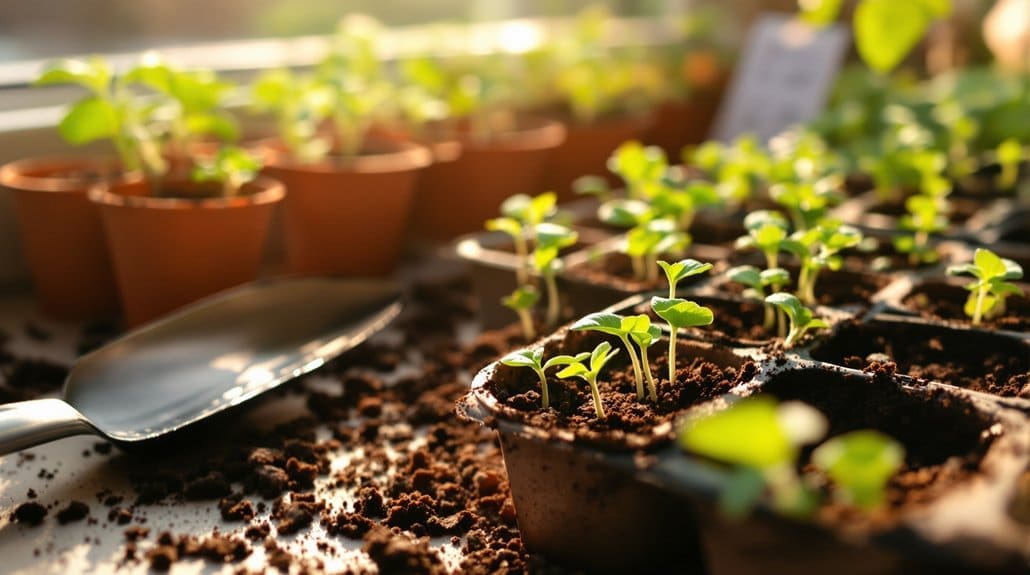
What’s Your Goal and Last-Frost Date? Pick your goal, find your average last-frost date, then count back from it to set sow dates—warm-season crops (tomatoes, squash) about 6–8 weeks, peppers and eggplant 8–10, brassicas 4–6, and leave roots and quick greens for direct sowing. Use a soil thermometer or heat mat for germination, run lights 14–16 hours, and harden off 7–10 days before transplanting. Progress over perfection—keep going to learn the finer timing tips.
Some Key Takeaways
- Use your average last-frost date as the anchor and count back the seed-packet recommended weeks to set indoor sowing dates.
- Start long-season warm crops earlier: peppers/eggplants 8–12 weeks, tomatoes 6–8 weeks before last frost.
- Sow brassicas 4–6 weeks (or 8–10 weeks for larger fall transplants) so seedlings are sturdy at transplant.
- Direct-sow roots and fast crops (carrots, radishes, peas, cucurbits) outdoors once soil reliably warms.
- Harden off seedlings 7–10 days before transplant and only move them outside when soil and night temperatures are suitable.
What’s Your Goal and Last-Frost Date?
Want earlier tomatoes or just to try a new pepper variety? You’ll first decide your goal—earlier harvests, bigger transplants, or access to a special cultivar—because that tells you how many weeks before last frost to start seeds indoors. Find your last average frost date from extension or an Almanac, then use the seed packet recommendation to count back and set your schedule. Remember germination temperature matters; warm-season crops need soil at 60–75°F, so check a soil thermometer or wait to heat your bench. Plan hardening off for 7–10 days, then seedling transplanting after last frost, or a bit later if soils are cool. It’s okay to tweak timing, you’re learning together, progress over perfection. Consider giving seedlings room to grow in large planters to improve root development and make transplanting to the patio easier.
Which Vegetables Need Indoor Starts and Which to Direct-Sow?
Deciding whether to start seeds indoors or drop them straight into the soil comes down to a few simple trade-offs, and once you get the hang of it you’ll be making choices that match your climate, time, and taste. Heading: Which to start indoors versus direct-sow. If you want long-season success, start seeds indoors for tomatoes, peppers, and onions so they flower and fruit before the season ends; brassicas also benefit from indoor starts 4–6 weeks before transplanting. For ease, direct-sow most root vegetables—carrots, beets, parsnips—plus quick greens, radishes, peas, and cucurbits like squash and cucumbers; they hate root disturbance and germinate fast once soil warms after last frost. Tip: focus on seedling transplanting only where it clearly helps. Progress, not perfection.
Count Backwards: Sowing Windows by Crop and Weeks Before Last Frost
Think of your last average frost date as the anchor for your whole seed-starting schedule—count back the weeks listed on the packet and you’ll know when to pop seeds into trays, whether you’re giving peppers an extra long head start or barely fussing over quick greens; most warm-season crops do well started about six weeks before frost, peppers and eggplants usually want eight to ten (sometimes up to twelve), brassicas are happy at four to six for spring or eight to ten for big fall transplants, and fast growers can be started three to four weeks out if you’ll transplant tiny seedlings. Heading: plan by crop. You’ll check the seed packet for weeks before last frost, then set sow dates. Action: factor germination time, use heat mats for peppers, harden off seedlings 7–10 days, and match transplant timing to your last frost date for steady success. Many gardeners also set up a comfortable outdoor seating area near their garden so they can relax and keep an eye on seedlings while enjoying the patio atmosphere.
Use Soil Temperature and Microclimate to Fine-Tune Sow Dates
Checking soil temperature and noticing your yard’s little quirks will make your sowing dates much more reliable than just counting back calendar weeks, so grab a soil thermometer and start paying attention now—soil heats and cools differently than air, and a sunny south-facing wall, a sheltered bed, or a chilly night can change things by several degrees. Think of seed starting as teamwork between you and your microclimate: measure the potting mix or garden soil at planting depth, match the seed’s germination range, and only sow warm-season crops when media stay in their warmer range. If nights stay cool, delay transplanting seedlings even after your last frost date; cool-season crops tolerate cooler root temps. Small adjustments beat guesswork. Progress over perfection. Consider using travertine pavers to create warm, sheltered microclimates around planting beds that can gently raise nearby soil temperatures.
Schedule Practical Steps: Sowing, Bottom Heat, Lights, and Hardening Off
Starting your indoor schedule is mostly about timing and small adjustments, so you’ll feel better if you set a simple backward calendar from your average last‑frost date and slot each crop where the seed packet says—tomatoes 6–8 weeks, peppers 8–10, brassicas 4–6—then tweak for your soil temps and microclimate. Plan to sow seeds indoors on that seed-starting schedule, keep trays on bottom heat to hold seed germination temperature steady, and watch for sprouts. Set grow lights 3–6 inches above, run 14–16 hours, and lift them as plants grow. When seedlings true leaves appear, pot up into bigger cells so roots can spread. Start hardening off 2–3 weeks before transplant timing, add a bit more sun daily, and protect nights. Progress over perfection. Secure furniture and other heavy items in planting spaces with furniture anchors to reduce tipping hazards while you tend seedlings.
Some Questions Answered
When to Start Seeds Indoors for Spring Planting?
Start seeds based on timing calculators and your last frost, counting back by variety selection, while checking soil temperature so seeds actually germinate. Use proper seed depth, keep moisture control steady, maintain tray sanitation and air circulation, and run germination tests if unsure. Light requirements matter once seedlings pop, and hardening off prepares them for transplant. Take it slow, stagger sowings, and remember progress over perfection.
What Are the Common Mistakes in Spring Planting?
Common mistakes? You’ll overwater seedlings, cause soil compaction, or run into poor light and crowded trays that make plants weak, and you’ll plant at the wrong seed depth or use old seed that won’t sprout. Ignoring hardening off, skipping pest checks, and subjecting seedlings to inconsistent temperatures or late fertilization just adds stress. Take small steps, fix one thing at a time, and remember: progress beats perfection.
Is October Too Late to Transplant?
Sometimes — it depends. You’ll watch soil temperature, frost hardiness, daylength effects and microclimate variation to decide, and you’ll harden off seedlings to limit transplant shock and root disturbance. In mild zones or with cold frames you can transplant in October, but timing adjustments matter, watch seasonal pests, pick fast varieties, plant on cloudy afternoons, and cover plants if nights dip. Progress over perfection.
How Long to Start Seeds Before Transplanting?
You’ll usually start seeds 4–12 weeks before transplanting, depending on crop. Think about soil temperature before planting, light requirements for seedlings, proper seed depth and moisture control for good germination rate, and potting up as they grow. Hardening off for 7–10 days helps survival, while seed longevity, pest prevention, and a labeling system keep you sane. Progress over perfection — you’ll learn by doing, honest.