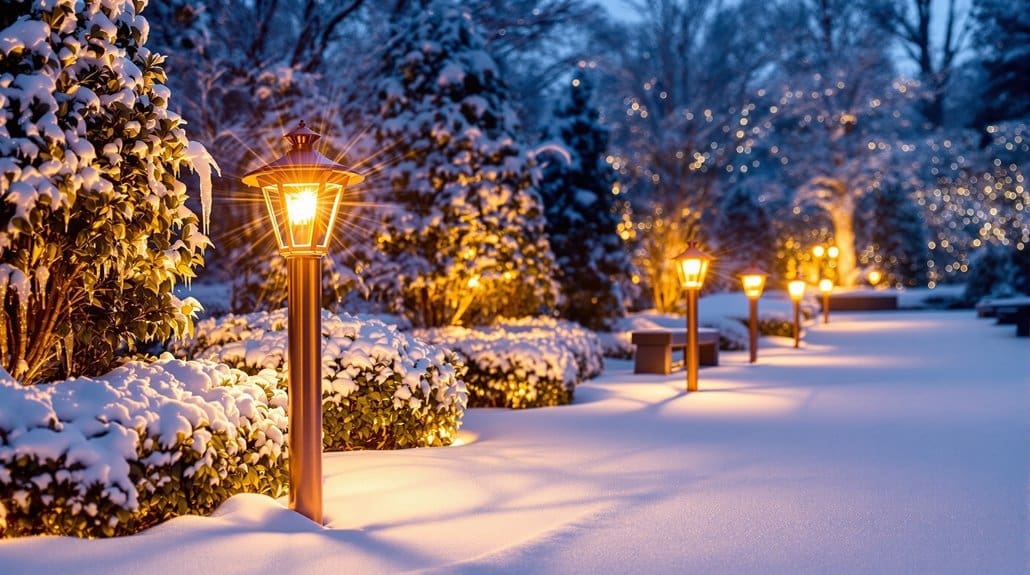
Pre-Winter Checklist: give fixtures a quick wipe, check gaskets, and mark shallow cables so frost won’t pull them loose; Power-Off Safety: switch the transformer off, verify with a tester, then briefly re-energize to check timers; Clean & Salt Care: rinse salt spray, dry metal, and avoid de-icers near lights; Protect Wiring: use gel-filled or heat-shrink connectors and leave service loops; Aim & Fixes: re-anchor shifted stakes, tweak beam angles, and reseal corroded splices—keep going and you’ll get simple step-by-step fixes next.
Some Key Takeaways
- Clean lenses and fixtures regularly to restore 10–30% lost light from dirt, salt, or mineral films.
- Inspect and reseal housings and gaskets to prevent moisture intrusion and condensation.
- Power down at the transformer, verify with a tester, and tag before opening fixtures or connectors.
- Use waterproof connectors, leave 6–12″ service loops, and rebury shallow cable to prevent freeze-thaw damage.
- Avoid de-icing salts within 5–10 feet of fixtures; use sand for traction and rinse salt spray promptly.
Pre-Winter Checklist: What to Inspect Before the First Freeze
Get ahead of the cold by doing a quick walk-around before the first freeze — you’ll thank yourself come the first snow. Pre-Winter Checklist: What to Inspect Before the First Freeze feels doable when you break it into steps, and you’ll feel proud afterward. Wipe lenses so light’s efficient, inspect housings and rubber gaskets for cracks, and reseal or replace any damaged seals, because moisture’s a slow destroyer. Scan cable runs, rebury wiring a few inches deeper where it’s shallow, and move splices off low spots where water pools. Mark fixtures, trim back plants, and note misaligned or broken units for repair. You’ll skip surprises later, keep your walkways safe, and save small headaches from turning into big ones. Consider installing path lights to enhance safety and enjoyment of your patio year-round.
How to Safely Power Down and Test Your System
How you shut things down matters, so always switch power off at the transformer before opening any fixture or connector, it’s quicker and much safer than fiddling with breakers on low-voltage systems. When you need to test timers or photocells, briefly restore power at the transformer and check them during dusk/dawn or simulate darkness with a towel over the sensor, and use a multimeter to spot any voltage drops around 11–14V under load. After repairs, power the system, walk the property to confirm each zone lights correctly—note flicker, dimming, or dead fixtures—and keep a simple log so small problems don’t become big headaches. Consider adding deck lighting to enhance safety and ambiance on your patio.
Power Off At Transformer
Before you open a fixture or mess with any wiring, shut the transformer off—and if you can, switch the circuit breaker off too—because the last thing you want is a surprise shock while you’re looking for a loose connection. You’ll feel better knowing power off protects you, and your neighbors will thank you for not tripping breakers unexpectedly. Label transformer terminals, note timer and photocell settings, even take a photo so you can put things back the same.
Once powered down, verify with a non-contact tester at fixtures and connectors, then gently inspect fixtures for corrosion, moisture, or loose wires. If you need live checks, briefly re-energize, measure, then cut power again. If anything looks risky, keep it off and call a pro. Consider adding window locks to your home improvement checklist to boost overall household security and peace of mind.
Safe Testing Procedures
When you’re about to probe into outdoor lighting, treat the transformer like the main gate—switch it off, and if you can flip the breaker too, do that and breathe easier knowing the juice is gone; then verify with a non-contact tester at each fixture and junction before you touch anything, because that quick check is the difference between a safe job and a nasty surprise. Start by labeling circuits and documenting fixtures so you and your crew feel on the same page, then test methodically. Briefly re-energize to check timers photocells sensors while standing on dry ground with insulated tools, note multimeter continuity voltage readings at transformer, mid-run, fixture, then power down. Inspect for corrosion, water, exposed conductors; if you see damage, power off and call a qualified technician. Consider adding step lights designed for patios to improve safety and visibility around walkways.
Restore Power And Verify
Flip the breaker or switch off the transformer and tag it, then breathe—you’re taking the right first step to keep yourself safe and avoid accidental re-energizing. Restore power only when you’re ready, and if you need to test timers or photocells, do it briefly, use insulated tools, and have a partner ready to kill power instantly. Measure voltage at the transformer output and at a few fixtures with a multimeter; a healthy 12V system reads about 12–14V no-load, small drops under load are okay, big drops mean wiring or capacity issues. Keep exposed splices dry and elevated, avoid puddles, and if you see water intrusion, damaged insulation, or multiple dead zones, power down and call a pro. Progress beats perfection. Consider keeping an essential multimeter pick on hand to quickly verify voltages and troubleshoot common issues.
Cleaning and Lens Care: Remove Dirt, Fogging, Snow, and Salt
Cleaning & lens care: keep it simple and steady. You’ll want to wipe lenses every 1–3 months and after storms with a soft cloth and mild cleaner, because dirt and mineral films can knock 20–30% off your light output, and rinsing salt spray fast helps stop corrosion that ruins lenses and fixtures. Check for fogging or cracked seals, brush snow off gently (no metal tools), log what you do, and don’t worry about perfection—regular small steps add up. Also consider treating nearby wooden surfaces with deck cleaners to protect surrounding areas from runoff and staining.
Clean Lenses Regularly
You’ll want to clean your outdoor light lenses at least once a month, and right after any major storm, because dirt, road grime, and film build up faster than you think and can steal 10–30% of the light you paid for.
Quick head-up: Clean lenses monthly with a soft non-abrasive cloth and a mild, pH-neutral cleaner, and you’ll keep things bright without damage. After snow and ice, gently wipe fixtures with a soft-bristled broom to restore output, don’t scrape. Check for lens fogging during thaw, that’s a seal/gasket inspection moment—persistent moisture means a reseal or replacement. Remove salt residue promptly with fresh water and gentle cleaner to avoid etching. Wear gloves, power down at the transformer, and note dates in your log. Progress, not perfection. Outdoor lights can also enhance your patio atmosphere when paired with complementary accent lighting.
Prevent Salt Corrosion
Salt and grit from winter roads and walkways will eat away at your outdoor lights if you don’t keep them in check, so start by treating salt like the quiet enemy it is: don’t throw de‑icers near fixtures or wiring, and when salt does land on them, rinse it off quickly with fresh water and dry the metal parts to stop pitting and electrical failures. Prevent salt corrosion by planning where you walk and shovel, and avoid de-icing salts within 5–10 feet of fixtures to reduce chloride corrosion. Rinse fixtures after storms, clean lenses gently, and inspect rubber gaskets and connectors for white deposits or cracks, replacing seals when needed. Use sand for traction to prevent salt splash. Little actions, big payoff. Consider placing fixtures and wiring in covered or elevated positions to minimize exposure to road salt and splashing, which is a common practice among landscape lighting installers.
Protecting Wiring and Connectors From Moisture and Freeze-Thaw Damage
When cold and wet weather hits, your outdoor wiring is the quiet weak link, and taking a few simple steps now will keep things working and save you headaches later; think of sealing splices like putting a raincoat on the most vulnerable spots, and leaving a little slack as insurance against ground heave and thermal shrinkage.
Quick heading: protect splices and wire. Seal all joints with heat-shrink, gel-filled or IP68 waterproof connectors, and set them above expected standing water to avoid freeze-thaw cycles and insulation corrosion. Leave a 6–12 inch service loop at fixtures and splices so movement doesn’t pull connections apart. If frost heave is an issue, bury cables deeper and re-cover trenches to avoid abrasion. After storms, power down, check for fogging or moisture, then retighten and reseal. Progress over perfection—do these things now, you’ll thank yourself later.
Adjusting Fixtures and Aiming Lights for Low Winter Sun and Bare Landscapes
Adjusting your landscape lights for winter is one of those small, satisfying jobs that pays off every night — with bare branches and low sun, a quick re-aim can turn a muddy yard into a sculpted scene.
Quick check and re-anchor
Walk the yard after sunset, look for shifted fixtures from frost heave or snow, re-anchor stakes and give 2–6 inches of slack in low-voltage runs so you can re-aim without stressing wires. After heavy work, use temporary colored stakes to mark reference points and restore consistency.
Sculpt with intent
Lower uplights 6–12 inches or tilt 10–20° to avoid harsh backlighting, tweak beam spreads—narrow for trunks, wider for washes—and raise pathway lighting 1–3 inches so snow won’t hide steps. Progress, not perfection.
Consider adding durable solar string lights to brighten patios and highlight features without new wiring.
Fast Fixes for Common Winter Problems: Dim Lights, Flicker, and Outages
A quick aim and a few anchors will get your winter scene looking sharp, but it’s the dim bulbs, random flicker, and sudden outages that’ll steal the show if you don’t troubleshoot them, so let’s get practical about fixing what actually goes wrong. Quick check: measure voltage at the transformer and at the farthest fixture — a healthy 12V low-voltage LED landscape circuit reads about 11–13V under load, anything lower signals voltage drop or too much load, so rebalance or upgrade the transformer. If lights are flickering, power off, open connectors, clean corrosion, reseal with heat-shrink or silicone-filled connectors, and tighten crimps. For outages, check breakers/fuses, verify transformer output, then inspect single fixtures for moisture, cracked lenses, or burned bulbs, replace and reseal. Progress over perfection. Also consider adding LED string lights to nearby patios to extend cozy outdoor vibes and ensure consistent lighting across your yard.
When to Temporarily Shut Off the System and How to Restart It After Storms
If your yard’s been through a rough storm and things look messy, cut the transformer power first — deep snow smothering fixtures, broken glass, or any exposed, frayed wiring are immediate shock and short-circuit risks, and you don’t want to be the one to find out the hard way. Heading outside, you’ll want to temporarily shut off power while you inspect for water, cracked lenses, dislodged fixtures, and buried cables, moving splices away from low spots and resealing connectors. When you restart after storms, clear debris, seal waterproof joints, turn transformer power back on, then cycle the timer or photocell to test. If dimming, flicker, or dead circuits persist, power down again and call a professional. Log dates and actions for future reference.
When to Call a Professional: Electrical Risks, Water Intrusion, and Full System Service
When you spot anything that looks burnt, wet, or oddly dim, don’t shrug it off—call a qualified technician right away, because those signs can mean real electrical danger that gets worse fast. Quick check: exposed wiring, frayed cable, scorch marks, or persistent arcing are electrical hazard red flags, don’t DIY them. If several fixtures flicker or go dim together, you’re likely facing transformer overload or voltage drop, and a pro should measure loads and fix it. Water intrusion or condensation inside fixtures, boxes, or the transformer enclosure needs sealed repairs or replacements, pronto, to avoid corrosion and shock risks. Schedule annual professional maintenance, especially after storms, so someone documents voltages, tests sensors, and makes lasting repairs. You’re not alone—get help, stay safe.
Some Questions Answered
Should Outdoor Lights Be Taken Down in Winter?
No, you don’t need to take outdoor lights down for winter — quality 12V fixtures handle snow storage and fixture insulation, and leaving them on boosts pathway visibility. Check seals, adjust timers for longer nights, and watch for wire shrinkage after big freezes, or power down only if glass breaks or wiring’s exposed. You’ll protect fixtures more by prepping and marking locations than by removing them. Progress over perfection.
How to Protect Landscape Lighting?
You protect landscape lighting by addressing cable insulation, fixture elevation, moisture barriers, heat tape, and bulb selection together. Raise fixtures a bit, bury cables deeper with slack, and wrap vulnerable splices in proper moisture barriers so water can’t creep in, and use heat tape where frost threatens. Pick bulbs rated for cold, test timers briefly, and prioritize pathway lights—progress over perfection, you’ll get safer, steadier light with small, steady steps.
Should You Leave Landscape Lighting on All Night?
Yes—you can leave lights on all night, but tweak timer settings for energy savings and neighbor courtesy. You’ll keep paths safe, cut snow glare with steady LEDs, and help wildlife by dimming late, not blasting all night. If wiring’s damp, shut it off until fixed. Aim for dusk-to-midnight or critical hours, trust smart controls, and remember progress over perfection—small tweaks make a big difference.
Do LED Lights Get Damaged in the Cold?
Yes, LEDs generally handle cold well, you’ll find good cold tolerance, but other parts can suffer. Check for thermal contraction cracking in plastic, and protect the LED driver from condensation ingress or freeze damage. Battery performance drops in cold, so expect shorter runtimes. You can prevent most issues by sealing connectors, testing transformers, and inspecting seals and housings regularly—progress over perfection, a little upkeep goes a long way.