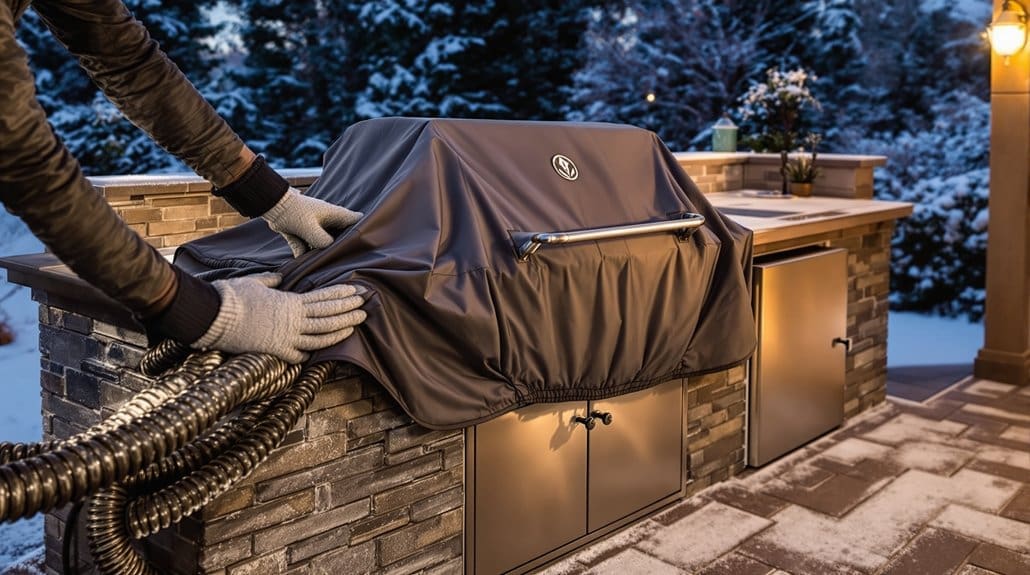
What to expect and where to start: you’ll want to shut off and drain water lines, cap gas or propane, unplug fridges and ice makers, and clean and dry every surface so pipes, pumps, and seals don’t freeze or mold; scrub and oil grates, seal stone counters, and use vented covers and desiccants to stop rust and critters. Do major work before repeated freezes, label valves, and aim for progress over perfection — there’s more practical steps ahead.
Some Key Takeaways
- Shut off and disconnect gas and propane, cap lines, and store portable tanks upright outdoors to prevent leaks and damage.
- Drain and power down refrigerators, ice makers, and water lines; blow out lines and add propylene‑glycol antifreeze to traps.
- Clean and dry grill interiors and burners, coat cooking surfaces with oil, then cover with a vented, weatherproof cover.
- Insulate or remove exposed plumbing, label shutoffs, flip appliance breakers, and prop doors open to ventilate units.
- Complete sealant and countertop repairs on dry days above 50°F and schedule winterizing 48–72 hours before the first hard freeze.
What Winter Damage to Expect in Outdoor Kitchens
Even if you think your outdoor kitchen shrugged off last winter, don’t be surprised to find new chips, rust, or busted pipes once the thaw hits—freeze‑thaw cycles force water into tiny cracks in stone and grout, and when that water expands about 9% as ice, those cracks grow into spalls and crumbling joints over successive winters. You’ll notice chipped countertops, grout falling out, and mortar joints opening, and that’s just the start. Water lines and drain lines left with standing water can freeze and burst, wrecking pumps or valves in ice‑maker and fridge appliances. Unprotected grill parts and stainless steel finishes pit and flash rust, especially with trapped grease or humid covers. Take small steps now, you’ll protect the things you love, not chase perfection. A few thoughtful upgrades like installing built-in grills and weatherproof cabinetry will make maintenance and winterization easier.
When to Start Winterizing Your Outdoor Kitchen
When to start depends on your climate and your gear, but a good rule is to begin winterizing plumbing and appliances before the first hard freeze—usually when night temps regularly hit about 32°F, often mid-to-late October in many temperate areas. For milder regions you’ll still want to tackle major steps by late November to keep pests and moisture out, and for specific items like ice makers or fridges, plan to drain and shut them off at least 48–72 hours before a long cold snap so lines can fully dry. If you use propane or need to reseal stone, do those sooner rather than later—move tanks and finish sealants while temperatures and humidity still let things cure properly. Also consider protecting seating and adjoining outdoor living features common around patios, including propane fire pits, before winter sets in.
Before First Freeze
Since you’ve still got some warm days left, start planning your outdoor kitchen winterizing about 2–3 weeks before your area’s first hard freeze so you’ve got time to drain lines, clean appliances, and sort any repairs without racing the cold. Heading into fall, check your 10-day forecast, pick a stretch when overnight lows stay above freezing, and book any pro help now, they get busy. Turn off the water at interior valves, open drain valves, and bleed water supply lines so pipes don’t burst, and don’t forget ice makers and refrigerators that need draining. Tackle sealant and countertop touch-ups on a dry day above 50°F. You’re protecting your investment, and a little prep now saves headaches later. Progress over perfection. Consider adding a retractable awning to extend the life of your outdoor kitchen by shading appliances and countertops from sun and weather, a smart option for patio protection.
Timing By Appliance
If you want to avoid frozen pipes, rusted burners, and a spring full of repair headaches, start winterizing each appliance on its own schedule — not all at once — so you’re not scrambling when the first hard freeze shows up. Timing by appliance matters. For your gas grill and side burners, shut off gas lines, disconnect propane, clean interiors and coat with oil once use ends and temps fall below about 40°F, before hard freezes hit. For outdoor refrigerators and the ice maker, power down, unplug, drain lines, prop doors open and store shelves indoors before repeated nights under 32°F. Turn off water to the outdoor sink, open faucets to drain, use air or RV antifreeze in traps, and seal stone countertops, then cover. Progress beats perfection. Consider designing your layout with durable materials and proper ventilation to make winterization easier and protect components in the long run, especially when planning a grill island.
Regional Climate Considerations
You’ve already set up your appliance-by-appliance timing, now let’s match those steps to your climate so you don’t get caught off guard. In colder Northern areas, start to winterize as early as mid-September when forecasts show temps below 50°F and frequent nights under 32°F, protect the plumbing system and electronics early, don’t wait. Around Raleigh and similar zones, begin in late October when daytime highs drift toward the mid-50s°F and nights near freezing, so you finish before the first hard freeze. In milder Southern or coastal spots, you can delay full work until several nights forecast below 35–40°F, but still drain and cap lines before any freeze. Monitor local forecast, and winterize outdoor refrigerator and ice makers once daily temps drop below 45°F. Also remember to winterize surrounding seating and decor, and consider a covered storage area for patio furniture to extend their life.
Shut Off, Drain, and Protect All Plumbing Lines
Start by shutting off the water to your outdoor kitchen and letting the lines breathe, so you don’t come back in spring to cracked pipes or a surprise flood. First, find and close the indoor shutoff valve, then open outdoor faucets and sink to relieve pressure and drain lines, you’ll feel better knowing it’s done. Disconnect appliance supply hoses and remove P-traps, drain them completely, and use compressed air to blow out stubborn low spots and bends. Pour a cup of non-toxic propylene-glycol antifreeze into drains and traps to protect against residual moisture, odors, and pests. Leave valves slightly open or prop doors ajar as recommended, and insulate exposed pipes with foam or heat tape — progress over perfection, you’ve got this. Consider adding simple patio drainage products like channel drains to keep water away from your outdoor kitchen and prolong appliance life by preventing pooling and excess moisture in the area, which pairs well with winterization steps and overall patio drainage.
Winter Steps for Built-In Gas Grills and Burners
Now that the water lines are taken care of, let’s give the gas side the same attention so you don’t come back to a rusty, clogged, or unsafe grill in spring. Winter Steps for Built-In Gas Grills and Burners — first, turn off the gas at the dedicated shutoff, disconnect or cap the line, and store any removable propane tanks upright outside, ventilated, so everyone’s safe and included in the care. Clean and dry all burners, grates, flame tamers, and drip trays, check tubes and vents for nests, test igniters, then lightly oil cast‑iron to prevent rust. If you have side burners with water, purge lines and pour antifreeze only per manufacturer instructions, and finally cover the grill with a vented, secure cover. Progress over perfection. For homeowners who love their patios, consider keeping essential grill accessories organized and protected for the winter months.
Preparing Refrigerators, Ice Makers, and Power‑Connected Appliances
Preparing your outdoor fridge, ice maker, and any plugged-in appliance starts with turning off power (or gas where applicable) and emptying the contents, then giving everything a good clean with mild soap so you’re not fighting mold later. Make sure you shut off and fully drain the water lines, blow them out if you can, and stash removable shelves and drawers inside with a desiccant to keep things dry. Check cords, seals, and fittings for cracks or damage, cap exposed water connections, and follow the manufacturer’s winter instructions — progress over perfection, fix what’s broken now and you’ll save headaches come spring. Also consider investing in a weatherproof outdoor refrigerator designed for patio use to minimize winter damage.
Power And Gas Shutdown
Power and gas shutdowns are the first real step to protect your outdoor kitchen gear from winter, and you’ll feel better once the big risks are off the table. Head inside, shut off the dedicated interior water and flip the appliance circuit breaker, then unplug refrigerators and ice makers so they can’t accidentally start. Close the gas supply at the main valve for built‑ins, disconnect or cap exposed propane connections, and store tanks upright outdoors away from the house. Label valves and breakers, prop panels slightly for ventilation, and follow manufacturer winter instructions so compressors and pumps stay safe, warranties stay intact. You’re not aiming for perfection, just careful steps—do this, and you’ll cut most winter damage risks.
Drain Water Lines
Drain the lines before the cold gets a chance to surprise you — it’s one of those small, careful jobs that keeps bigger headaches away. Head inside, find and close the dedicated shutoff valves for your outdoor fridge and ice maker, then open the appliance inlet or outdoor faucet to relieve pressure and let water run out. Disconnect water line fittings or remove the ice maker line, run a cycle to push out lingering water, then use a wet/dry vacuum or low‑psi air to clear supply and drain lines. Flush and cap the feed, pour a cup of non‑toxic propylene-glycol RV antifreeze into drain traps to protect P‑traps, and empty drain pans so nothing sits and freezes. Tag valves, note dates, you’ve got this.
Clean, Dry, Store Parts
Start by unplugging the fridge and ice maker (or flip their breakers) and take everything out—food, ice, shelves, drawers, bins—so you can clean properly and avoid surprises later. Quick heading: prep and clean. You’ve unplugged refrigerators, shut off and drain water lines, now pull removeable components and clean interiors with mild soap and water, scrub drain pans and ice housings, rinse and dry every surface so moisture doesn’t hide. Heading: dry and protect. Blow out lines or use RV antifreeze as needed, then leave doors propped a bit to keep air moving and gaskets happy. Heading: store smart. Store indoors metal parts in a dry spot, coat cast iron with cooking oil or mineral oil to stop rust, and relax—you’re doing fine.
Cleaning, Seasoning, and Rust‑Proofing Cooking Surfaces
You’ll usually want to tackle your cooking surfaces right after the last fall cook, because cleaning, seasoning, and rust‑proofing now saves you headaches come spring; scrub away grease and char with a stiff brush and a degreaser, rinse and dry thoroughly, then apply a thin coat of high‑smoke‑point oil and heat briefly to set a protective layer. Start with grill grates and cast iron, remove and store small pieces indoors wrapped in paper toweling with a desiccant, or if you leave them, tuck moisture absorbers inside the grill body. For cast‑iron pans, repeat seasoning at 400–450°F to build that durable patina. Lightly oil stainless steel surfaces to reduce oxidation, don’t overcoat, and check burner ports before reassembly. Progress over perfection.
Protecting Cabinets, Countertops, and Masonry Surfaces
Protecting cabinets, countertops, and masonry is the next practical step after you’ve cared for the cooking surfaces, because the hardscape and storage areas take the brunt of winter weather and any trapped moisture now will show up as bigger problems come spring. Heading: Counters and stone — re‑seal natural stone with a penetrating sealer in fall, follow dwell time, test with 5–10 drops of water so it beads for 10–15 minutes, repeat where needed. Heading: Cabinets — empty and dry cabinet interiors, remove shelves for indoors, tuck in desiccant packs to keep humidity below about 50% and cut mold risk. Fix hairline cracks with a flexible masonry sealant before freeze/thaw. Rub exposed metal with stainless steel polish, then use a breathable, vented cover. Check monthly. Progress over perfection.
Covers, Ventilation, and Critter‑Proofing Strategies
Covers, ventilation, and critter-proofing all work together, and if you handle them right now you’ll save yourself headaches in spring—think of it as a few smart moves that stop water, mold, and unwelcome guests from turning into big repairs. Heading: covers and airflow. Use manufacturer-recommended breathable appliance covers with vents, or add 2–3 screened vents, to let moisture escape while keeping rain out; leave cabinet doors ajar a bit, or fit vent spacers, so air circulates and humidity drops. Heading: secure and anchor. Fasten covers with secure cover straps and add 4–6 anchor points like clips or bungee loops so wind and critters can’t pry gaps open. Heading: critter defenses. Cap gas lines, plug exposed pipes with rodent-proof mesh, stash desiccant packs nearby, and check monthly. Progress over perfection.
Seasonal Checklist and Troubleshooting for Spring Startup
When spring rolls around and the days start warming, it’s worth taking a calm, methodical pass through your outdoor kitchen before you fire anything up, because a little prep now keeps small problems from becoming big, expensive headaches later. Seasonal checklist and troubleshooting: first, confirm you winterize steps reversed safely — close the main shutoff, reconnect propane tanks upright outdoors, and give gas lines a soapy-water leak test, per NFPA, so you and your neighbors breathe easy. Reconnect power to fridges and ice makers only after you open and flush water lines, pressure-test, and clear ice-maker drains. Inspect and clear sink and appliance drain P-traps of antifreeze or debris, run hot water, check valves and unions. Remove covers, run appliances, note weak flames, odd noises, or cracks, and schedule fixes. Progress over perfection.
Some Questions Answered
How to Winterize Outdoor Kitchens?
You winterize by sealing, insulating, and prepping each element so things last. Seasonal sealants on seams and stone, insulation strategies for pipes and cabinets, ventilation considerations to avoid trapped moisture, and gas line safety—shut valves, disconnect tanks—are key. Do countertop care, clean and store appliances indoors, protect lighting, and tuck in covers with vents. You’ll feel better seeing progress, small steps add up, not perfection.
Should You Shut Water off to an Outdoor Kitchen During a Freeze?
Yes — shut the indoor shutoff valves before a hard freeze, and then drain lines so you won’t wake up to burst pipes. Walk through the sink, open faucets, blow out lines if you can, add pipe insulation and prop handles up, and pour RV antifreeze in traps. Consider freeze sensors, pressure relief steps, remote monitoring, and seasonal signage so everyone knows what’s off. Progress over perfection — do what you can.
How Do You Winterize an Outdoor Refrigerator?
You winterize an outdoor refrigerator by emptying and unplugging it, defrosting fully, and drying every surface, so the defrost cycle and door seal won’t trap moisture. Remove shelves and the ice maker parts, pour RV antifreeze into drains if needed, and store components indoors. Check compressor maintenance and temperature control before storage, leave ventilation clearance and a breathable cover for energy efficiency and corrosion prevention. Progress beats perfection.
Should You Cover an Outdoor Kitchen in Winter?
Yes — you should, but do it smartly. Start by cleaning and drying appliances, remove shelves, check gas and power, then use form-fitting covers with vents to prevent moisture, and secure them against wind, adding weights or wind barriers. Keep seasonal decor and patio furniture stored or covered, clear snow promptly, consider awning storage, review insurance for winter damage, and add rodent prevention measures — progress over perfection, you’ve got this.