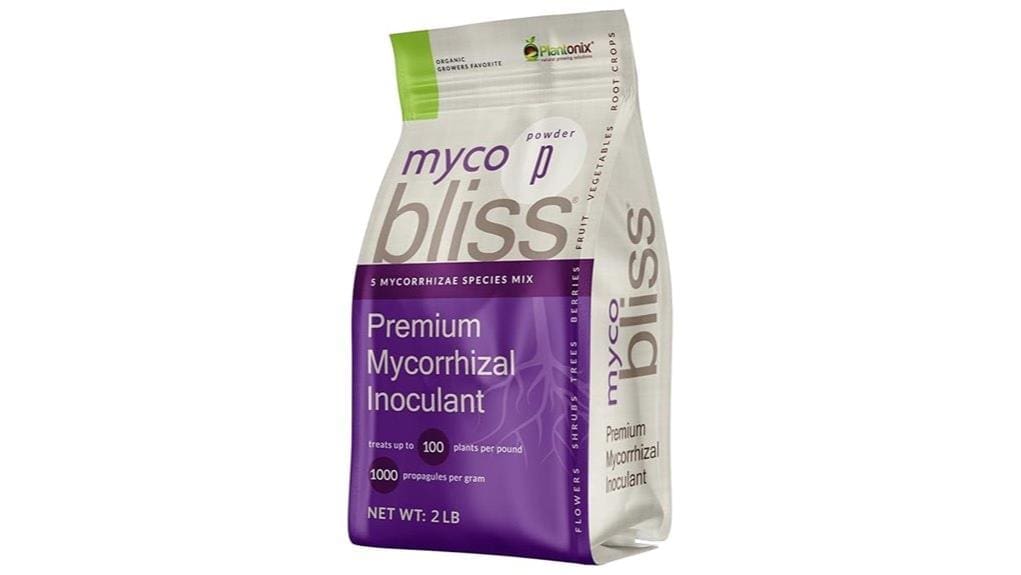
You’ll find Myco Bliss Powder a concentrated, no‑nonsense five‑strain mycorrhizal inoculant that’s worth buying if you want stronger roots and lower fertilizer needs. It’s sold as a 2 lb dry powder with labeled potency (1,000 propagules/gram per strain) and works best applied at planting or transplanting to boost colonization, moisture retention, and early growth. Use labeled rates, keep soil moist, and pair with good soil practices—keep going to see detailed application tips and comparisons.
Some Key Takeaways
- Concentrated 2 lb powder contains five mycorrhizal strains at 1,000 propagules per gram for reliable root colonization.
- Best applied at planting or transplanting: mix into root zone, potting media, or use as seed dressing for optimal establishment.
- Users report faster transplant recovery, improved nutrient uptake, steadier moisture retention, and consistent yield benefits.
- Recommended rate: 1–2 tablespoons per gallon of soil or up to one pound per 100 plants; keep soil moist after application.
- Suits gardeners and commercial growers seeking non-synthetic inoculants; compare propagule counts and strain diversity when choosing alternatives.
My Quick Verdict: Is Myco Bliss Powder Worth Buying?
While not a miracle cure, Myco Bliss Powder is worth buying if you want a concentrated, no-nonsense mycorrhizal inoculant to boost root performance and reduce fertilizer needs. You’ll get five fungal strains at 1,000 propagules per gram, which supports nutrient and water uptake when applied correctly. Pay attention to application timing—use at planting or transplant to maximize colonization. Expect measurable improvements in establishment and stress resilience; long term effects include reduced fertilizer dependence and improved soil structure when used consistently. You’ll join practical growers valuing data-driven solutions that integrate with existing feeding and watering routines. It’s a good match for homeowners who enjoy outdoor spaces and use tools like compost tumblers to improve soil health and organic matter with compost management.
What’s Inside the 2 Lb Bag: Ingredients, Potency, and Specs
If you liked the verdict on overall value, you’ll want to know exactly what comes in the 2 lb bag: Myco Bliss Powder contains five mycorrhizal fungal strains at a labeled concentration of 1,000 propagules per gram, packaged as a dry, highly concentrated powder (model PLANMBPW200GM, UPC 691035538714). You’ll see no synthetics; the label emphasizes ingredient sourcing from controlled cultures and clear potency metrics. Specifications list 32 ounces per unit and usage rates. Independent assays should confirm propagule viability and storage stability over time. The product aligns with common regulatory standards for microbial soil amendments, fostering confidence and community among users. Many home gardeners find these products complement their existing lawn and landscape tools and help promote more vibrant blooms.
Real-World Performance: Nutrient Uptake, Moisture, and Transplant Results
Because mycorrhizal fungi form symbiotic networks that directly expand root surface area, Myco Bliss Powder often increases measurable nutrient uptake and improves soil moisture dynamics when applied at recommended rates. You’ll see faster root colonization in trials and home gardens, with clearer nutrient profiles and steadier moisture retention in potting mixes and beds. Transplants establish quicker, showing reduced shock and earlier growth milestones. Data and user reports point to consistent yield increase across vegetables and ornamentals when combined with good cultural practices. You’ll join a community of growers who value predictable, verifiable benefits from a concentrated, multi-strain inoculant. Many homeowners also integrate these products into their care routines alongside robotic mowers to maintain healthier outdoor spaces.
How to Use Myco Bliss: Application Rates, Mixing Tips, and Coverage
When you’re preparing potting mix or planting beds, apply Myco Bliss at the recommended 1–2 tablespoons per gallon of soil (or up to one pound per 100 plants) to guarantee effective root colonization and coverage. You’ll mix thoroughly into the root zone for new transplants, incorporate into potting media, or use seed dressing by lightly coating seeds before sowing. For established plants, create a slurry for root soaking or side-dress into planting holes. Measure consistently, avoid overapplication, and keep soil moist after application to encourage colonization. These steps follow concentration and coverage guidance to maximize benefits and community-tested results. A soil test can help determine baseline nutrient levels and soil pH to optimize Myco Bliss application for your garden soil.
Who Should Buy It and Alternatives to Consider
Although you may already use fertilizers and soil amendments, Myco Bliss is best for gardeners and growers who want a concentrated, no-synthetic mycorrhizal inoculant to boost root colonization and improve nutrient and water uptake across a wide range of plants. You’ll benefit if you’re a hobbyist, beginners gardeners seeking reliable establishment, or commercial growers aiming to reduce fertilizer inputs and improve drought resilience. It’s ideal for container growers, transplant operations, and community gardens. Alternatives include multi-strain granular inoculants, liquid mycorrhizal concentrates, or biofertilizer blends; compare propagule counts, strain diversity, and application method to match your scale and goals. For best results, integrate Myco Bliss into ongoing soil health practices like regular compost additions to support overall garden soil life.
Some Questions Answered
Is Myco Bliss Safe for Edible Vegetable Crops?
Yes — you can safely use it on edible vegetable crops. Evidence shows mycorrhizal inoculants enhance nutrient uptake without introducing synthetic residues, supporting food safety when you follow gardener precautions: apply as directed, avoid contamination with composted manure or untested amendments, and wash harvests. You’ll join others using it to boost plant health and yield; it’s compatible with food production when handled responsibly and per label instructions.
How Long Do the Mycorrhizae Remain Viable in Storage?
Viability generally lasts 1–3 years if you store the powder cool, dry, and dark; manufacturers often quote a shelf life around 2 years. You shouldn’t assume constant potency—viability testing by plating or qPCR is the only way to confirm propagule counts over time. Keep batches sealed, avoid heat/humidity, and document purchase dates so your community of growers can share test results and maintain consistent performance.
Can I Use It With Beneficial Bacteria or Compost Tea?
Yes — you can use it with beneficial bacteria and compost tea, but do compatibility testing and stagger application timing. Many mycorrhizae work synergistically with bacteria; avoid mixing concentrated teas directly with inoculant. Apply mycorrhizae at planting or to roots, then introduce compost tea or bacterial amendments later (days to a week) to reduce competition. This evidence-based approach helps you build a supportive microbiome while fostering inclusive gardening success.
Is This Product Pet- and Child-Safe When Applied Outdoors?
Yes — it’s generally safe for pets and children when applied outdoors as directed, since it contains no synthetic chemicals and works biologically through fungi. You should still minimize chemical exposure by keeping kids and pets off treated areas until soil is settled and avoid direct contact with the powder. Also consider wildlife interactions; limit broadcast use where small animals forage and follow label guidance to reduce unintended exposure and disturbance.
Does It Contain Any Allergens or Gluten-Containing Substrates?
No, it doesn’t list common allergenic ingredients or gluten sources. You can expect only the five mycorrhizal fungal strains and no synthetic additives; manufacturer information emphasizes a pure, soil-based powder without grain-derived carriers. If you or your household have severe mold, fungal, or gluten sensitivities, test a small area or contact Plantonix for batch-specific details. You’re welcome to request a certificate of analysis to confirm absence of specific allergens.