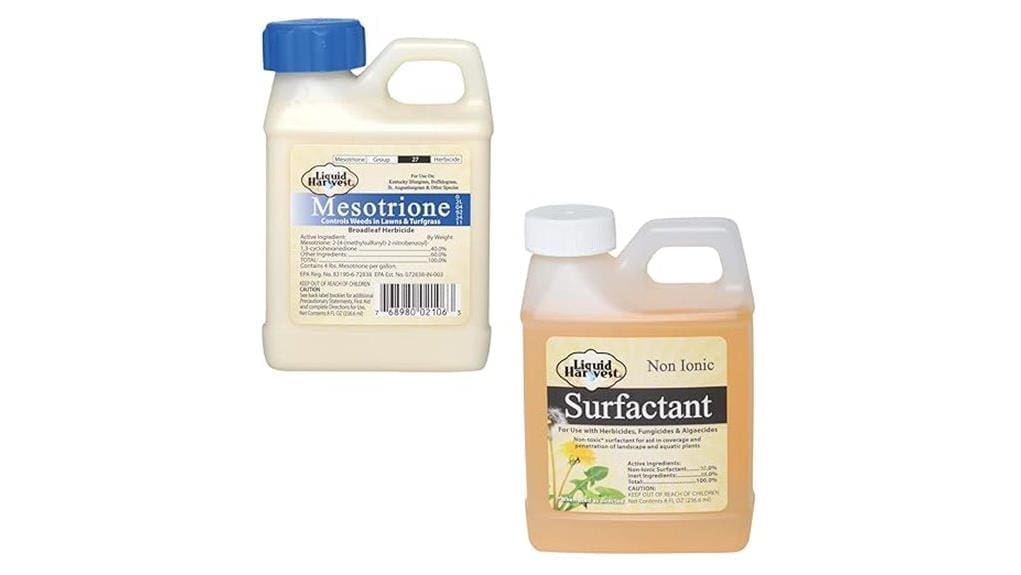
You’ll get an 8 fl oz mesotrione concentrate plus 8 oz surfactant designed for systemic photosynthesis inhibition and root/foliar translocation; it targets dandelion, clover, chickweed and suppresses crabgrass pre- and post-emergence on labeled turfs like Kentucky bluegrass and fescue. Activation needs 0.15″ rain/irrigation within ten days; expect control in 2–3 weeks. Follow label rates, calibration and PPE; note turf restrictions and limited volume. Continue for application specifics, timing and safety details.
Some Key Takeaways
- Systemic mesotrione concentrate plus surfactant offers pre- and post-emergent weed control, including crabgrass suppression.
- Activation requires 0.15 inches of rain or irrigation within ten days for effective translocation and control.
- Labeled for specific turfgrasses (Kentucky bluegrass, tall/fine fescue, ryegrass, centipede, buffalo, St. Augustine); avoid unlabeled species.
- Expect visible weed mortality in 2–3 weeks after proper application, mixing, and activation with supplied adjuvant.
- Pros: included surfactant and 2,000 sq ft coverage per unit; cons: species restrictions and dependence on timely activation.
Is Liquid Harvest Mesotrione Bundle Right for Your Lawn?
If your turf falls within the labeled species and you need both pre- and post-emergent control—especially against crabgrass and common broadleaf weeds—Liquid Harvest Mesotrione Bundle can be an effective choice because mesotrione systemically inhibits photosynthesis and translocates through roots and foliage. You’ll assess suitability by matching turf type (Kentucky bluegrass, tall fescue, centipede, perennial/fine fescue, buffalo, St. Augustine sod) and excluding sensitive grasses. Expect 2–3 weeks to observe mortality; plan application frequency per label and irrigation-triggered activation (0.15″ within 10 days). This data-driven approach protects lawn aesthetics while aligning with peer practitioners’ standards. Homeowners who cherish their outdoor spaces will appreciate product options tailored for Kentucky bluegrass.
What’s in the Bundle and How Mesotrione Works
Open the Liquid Harvest Mesotrione Bundle and you’ll find an 8 fl oz mesotrione concentrate paired with an 8 oz surfactant, packaged by Sanco Industries (Liquid Harvest brand; UPC 768980888932, part no. 88893). You get a clear ingredient breakdown: mesotrione active ingredient formulated for systemic uptake and an 8 oz adjuvant to optimize leaf coverage. Activation mechanics depend on water—either rainfall or 0.15 inches applied within ten days—to move the compound through foliage and roots. You’ll apply to labeled turf at specified rates for predictable uptake. This technical, community-minded kit supports consistent, data-driven turf management. It’s a practical option for homeowners focused on pre-emergent herbicide selection and lawn protection.
Performance: Real Results, Target Weeds, and Turf Compatibility
With the contents and activation requirements established, you can assess how the Liquid Harvest Mesotrione Bundle performs in real turf situations. You’ll observe consistent suppression of targeted broadleaf weeds and pre-emergent control of crabgrass when applied per label; turf recovery typically follows 2–3 weeks. Data show effective control of dandelion, clover, chickweed, carpetweed, and barnyard grass across labeled grasses (Kentucky bluegrass, tall fescue, perennial/fine fescue, ryegrass, centipede, buffalo, St. Augustine sod). Respect application timing and integrate rotation for resistance management. Avoid unlabeled species to maintain turf health and community trust in results. For homeowners maintaining outdoor spaces, proper drainage can support turf vigor and herbicide performance by reducing water stress and runoff, which helps root health and application efficacy for drainage and turf.
How to Use It Safely and Get Activation, Timing, and Coverage Right
Because activation, timing, and coverage determine efficacy and turf safety, you should follow label rates, mixing procedures, and irrigation requirements precisely when applying the Liquid Harvest Mesotrione Bundle. You’ll measure product for 2,000 sq ft, perform spray calibration to guarantee uniform deposition, and add the supplied surfactant per label. Use application PPE—gloves, goggles, and a respirator as specified—and practice safe storage for concentrate and surfactant in original containers. Apply pre- or post-emergent per species timing; expect 2–3 weeks for control. If no rainfall within 10 days, deliver 0.15 inches via irrigation—adhere to watering timing for activation. Choose selective herbicides that match your lawn type and target weeds to protect desirable turf and improve results.
Pros, Cons, and Final Buying Recommendation
Having covered activation, timing, and coverage, we’ll now quantify the product’s strengths and limitations to help you decide whether it fits your turf management goals. You’ll get systemic mesotrione action, 2,000 sq ft coverage, and an included surfactant—metrics that favor targeted broadleaf and grassy weed control with documented 2–3 week mortality. Pros: precise label rates, reduced repeat applications, clear application notes. Cons: turf species restrictions, activation dependence, limited volume per unit. In your cost comparison, factor application frequency and treated area; consult user testimonials for real-world efficacy and community confidence before you commit. Consider also compatible lawn fungicides and other lawn care tools available from specialty retailers to build a complete turf protection plan.
Some Questions Answered
Can I Mix This Mesotrione With Other Herbicides or Fertilizers?
Yes — you can tank mix mesotrione with some herbicides and fertilizers, but you’ll confirm tank compatibility first and follow label restrictions. Check application timing: avoid mixing with products that alter uptake or need different activation windows. Run a small jar test, follow surfactant and water requirements, and don’t mix with unlabeled turf types. If unsure, consult the label or extension service so you’ll stay compliant and effective.
Is This Product Safe Around Pets and Children After Application?
Yes — you should restrict access until surface residues dry and irrigation has activated the product. You’ll want to keep pets and children off treated turf until spray deposits are dry and any required 0.15″ activation water has been applied. Mesotrione is systemic and can translocate, so pet exposure risk is reduced once residues dissipate, but follow label re-entry intervals and limit contact with treated clippings or wet surfaces for safety.
How Should I Store Leftover Concentrate and Surfactant Long-Term?
Store leftover concentrate and surfactant in cool storage, tightly sealed in original containers; label containers with product name, concentration, and date. Keep them locked in a ventilated, dry area away from children, pets, ignition sources and food. Maintain 40–77°F (4–25°C) if possible, monitor for separation or degradation quarterly, and follow disposal regulations for any unusable product. You’ll belong to a safety-minded user group by doing this.
Will Mesotrione Harm Nearby Ornamental Plants or Vegetable Gardens?
Yes — mesotrione can harm nearby ornamentals or vegetables if it reaches them. You’ll manage drift meticulously, using low-drift nozzles, calm conditions, and buffer zones. Prevent root uptake by avoiding runoff onto rooting zones and by following labeled rates; mesotrione translocates systemically and inhibits photosynthesis. Monitor exposed plants for chlorosis over 2–3 weeks. You’re advised to follow label restrictions and use physical barriers to protect sensitive species.
Are There Any State-Specific Restrictions or Required Permits?
Yes—state regulations vary, and some jurisdictions may require application permits for restricted-use herbicides. You should check your state regulations and local extension office for permit thresholds, recordkeeping, buffer zones, and licensed applicator requirements. Track application rates, treated acreage (2,000 sq ft per unit), and activation timing. Join local applicator networks to share compliance data and make certain your practices meet state-specific licensing, reporting, and environmental protection standards.