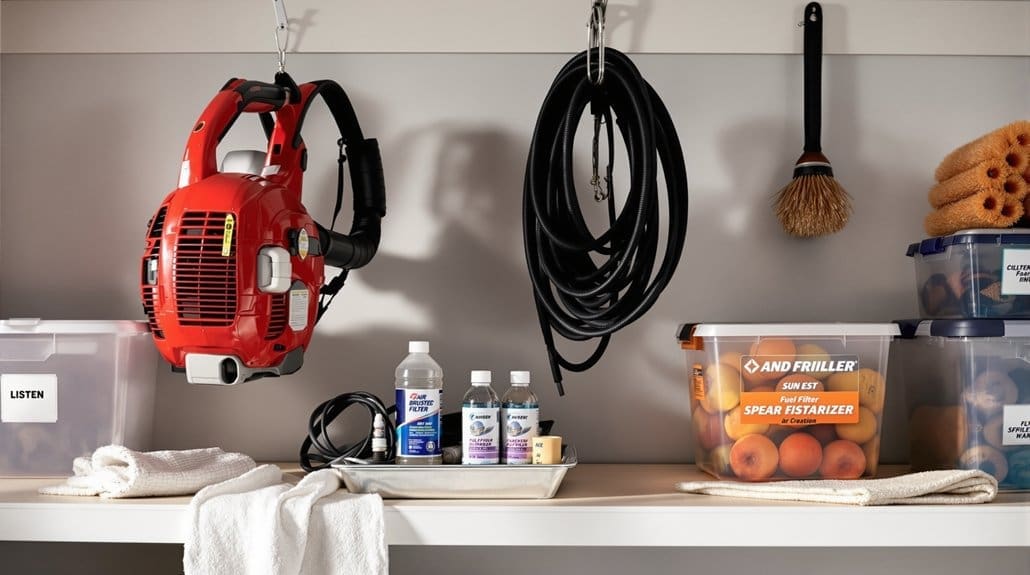
Quick Prep: You’ll want to clean the intake and nozzle, wash or replace the air filter and dry everything, then either add stabilizer and run the engine a few minutes or fully drain fuel for long storage. Remove and charge batteries to about 40–60% and store them separately in a cool, dry spot. Tighten fasteners, swap a worn spark plug, inspect fuel lines, and cover the blower; do a simple tune-up now and it’ll start easier next season—keep going for step-by-step tips.
Some Key Takeaways
- Drain fuel or add stabilizer and run the engine several minutes to circulate treated fuel through the carburetor.
- Clean and dry the blower, including intakes, nozzle, and cooling fins, before storage to prevent corrosion and pests.
- Remove and store batteries at about 40–60% charge in a cool, dry place, checking and topping up every 1–3 months.
- Inspect and replace air and fuel filters, fuel lines, spark plug, and worn fasteners before putting the blower away.
- Cover the unit, keep it in a dry climate-controlled area, and label accessories and service reminders for next season.
How-To Prep Your Blower Before Storage (Quick Checklist)
Get your blower ready for downtime, and you’ll thank yourself next season—seriously. You’ll feel good joining the crew who cares for tools, so start by draining the fuel tank or adding a fuel stabilizer and running the engine a few minutes to circulate it, which prevents gumming. For cordless models, remove the battery, fully charge it, then store it on a plastic or wood shelf at about 40–60% charge, per your manual. Take time to clean the air intake gently, and while you’re at it replace the filter if it’s disposable or wash and dry a reusable one. Tighten fasteners, check lines and parts for wear, then store in a dry location, labeled accessories nearby. Progress beats perfect. Remember that keeping related cleaning tools like a wet dry vacuum on hand can help remove stubborn debris before storage, protecting the blower and surrounding surfaces for next season (wet dry vacuum).
Clean and Protect the Air Intake, Filter, and Cooling Fins
You’ll want to pull off the air filter cover and give the filter a good look—wash foam or fabric filters with mild soap and warm water, squeeze out the excess, and only put them back when they’re bone dry, or replace them if they’re torn or oil-soaked. While you’re at it, clear leaves and grass from the intake housing and vents after each use so airflow stays steady and the engine doesn’t overheat, and use a soft brush or compressed air to gently clear and straighten any clogged or bent cooling fins. It’s not a perfect science, but doing this simple routine, especially before long storage, cuts corrosion and carburetor gunk, and keeps your blower starting when you need it. Also consider protecting your stored blower with a sturdy grill cover to keep moisture and debris off when it’s not in use.
Air Filter Care
Air filter care is something you’ll want to make a regular habit, because keeping the intake, filter, and cooling fins clean lets your blower breathe easily, run cooler, and last longer. Quick heading: check the air filter often — remove dirt and debris from the cover, inspect the filter for tears or oil, and replace the filter if cleaning won’t restore it. If it’s reusable, wash with mild dish soap and warm water, rinse well, squeeze gently, and let it dry completely before reinstalling to keep clean air flowing. Protect the intake during storage with the filter and cover installed, and keep spare filters dry. Small efforts now prevent big headaches later. For related outdoor-equipment products and accessories, consider checking our selection of pressure washer gear to help maintain your drive, walkways and patio.
Cooling Fins Cleaning
Cooling fins and the surrounding shrouds get filthy fast, and if you don’t keep them clear they’ll choke airflow, make the engine run hot, and shorten the blower’s life—so it’s worth a little regular care.
Why it matters: blocked air intake or packed fins leads to overheating, reduced power, and repairs. Action steps: after each use and again for seasonal maintenance, remove debris with a soft brush or low-pressure compressed air, clean oil and grime from gas-engine fins and fan housing with mild detergent and warm water, rinse and dry thoroughly. Inspect for bent or damaged cooling fins, carefully straighten with a small flat tool, note problems for repair. Keep intake and exhaust vents clear. Progress over perfection—regular small efforts protect your blower, and you’ve got this.
Fuel System Steps for Gas Blowers: Stabilize, Drain, and Inspect
Fuel system care might seem fiddly, but take it step by step and you’ll save yourself headaches down the road. Quick steps: add a fuel stabilizer to fresh gas, follow the label, then run engine to circulate treated fuel for 5–10 minutes so the carburetor gets coated and won’t gum up. If you’ll store long-term, either drain the fuel tank and run until it stalls to empty the carb, or keep stabilized fuel and run briefly. Inspect fuel lines, primer bulbs, and the in-tank filter for cracks, hardening, or debris, replace damaged parts, and clean the fuel cap vent. Use gasoline with no more than 10% ethanol, buy it fresh, and check the tank for sediment—clean and dry if needed. Consider keeping a small maintenance kit on hand with spare filters and replacement parts for quick repairs.
Battery Care for Electric Blowers: Charge, Remove, and Store Safely
Battery care’s simple but matters: before you put the blower away for a while, charge the battery to the maker’s recommended level, remove it safely, and set it aside instead of leaving it in the tool. Store batteries in a cool, dry, climate-controlled spot—on plastic or wood, not metal—and check them now and then so they don’t fall below about 20–30% charge. Clean the terminals, use only the right charger, and don’t keep any battery that’s swollen, damaged, or corroded; small checks save bigger headaches later. Proper battery care also helps protect your home and family by reducing the risk of fire from faulty batteries and supporting overall home safety.
Charge Before Storage
Charge your blower’s battery fully before you stash it away, because a full charge helps stabilize the cells and keeps them healthier over months of downtime. As you prep, use the right charger, then remove the battery and set it aside so it won’t drain or touch metal, that little extra step protects your investment. Store batteries on plastic or wood shelves in a cool climate-controlled area, away from sunlight and moisture — a stable spot makes a big difference. Check them a few times during winter, and recharge at 20-30% if they dip, that prevents deep discharge damage. You’re not chasing perfection here, just steady care; small, regular checks keep your pack ready, and you’ll feel confident when next season rolls around. Also consider integrating your blower storage into your home’s overall security plan, including security systems, to help keep tools safe and organized.
Remove Batteries Safely
Before you put the blower away for the season, go ahead and remove the battery—doing this stops parasitic drain, lowers fire risk, and makes it easier to store the pack in a safe spot. Headline: Remove the battery with care. You’ll want it charged to about 40–60% before storage, so charge it first with the manufacturer’s charger, unplug when done, and then remove the pack.
Headline: Storage and safety tips. Keep batteries off metal, cover terminals, check for swelling or damage, and recharge every 3–6 months per guidance. Watch temperature limits, avoid extremes while charging or storing, and if a battery leaks or bulges, recycle it—don’t retry. Small steps, less worry. You’ve got this. Also, keeping your equipment and accessories clean helps extend the life of outdoor tools and creates a more enjoyable patio space.
Store In Climate-Controlled Location
When you're putting your blower away for a while, pick a cool, dry spot in your home where the temperature won't swing wildly, because storing lithium packs in a steady, climate-controlled place—around 50–77°F (10–25°C)—really slows down capacity loss and lowers risks of swelling or failure. Store batteries removed from the tool on plastic or wood shelves, away from metal and direct sun, and keep them at about 40–60% charge for best long-term storage. Clean terminals gently before storing, label each battery with date and charge, and plan to peek every 1–3 months, topping up if they fall toward 20–30%. Always use the manufacturer’s charger, unplug when done, and avoid extreme temperature ranges below freezing or very hot. Progress over perfection. Many homeowners also find it helpful to pair their outdoor power gear storage with secure keyless home access solutions to keep tools safe and accessible.
Inspect, Tighten, and Replace Wear Items (Spark Plug, Lines, Fasteners)
Get your hands dirty a little—this is the part where you’ll look over the bits that take the most abuse and nip small problems before they turn into big headaches. Quick check: remove the spark plug, look for carbon fouling or wear, gap it or replace with the manufacturer-specified part, usually NGK, if it’s out of spec. Feel fuel lines, bend and squeeze them, swap any that’re hard, cracked, or seeping for fuel-rated hose of the same size. Walk around fasteners and snug screws, nuts, and bolts, use torque specs if you have them, thread-locker on high-vibe joints. Check choke linkage, throttle movement, vibration isolators, and air intake grommets, lubricate pivots, replace worn pieces. Progress over perfection.
Organize Storage: Where to Store, Accessory Care, and Service Reminders
Storage matters more than most folks think — tuck your blower and batteries into a cool, dry, well-ventilated spot like a garage, shed, or a climate-controlled room, keep them out of direct sun and away from flammable stuff, and you’ll cut down on corrosion, battery harm, and surprise failures. Heading: Prep and place. You’ll clean and dry the unit, clear debris from intakes and nozzle, then cover or bag it to keep dust and pests away. Heading: Battery love. For long-term leaf blower storage, remove batteries after fully charging, store on wood or plastic at about 40–60% if advised, avoid metal shelves. Heading: Accessories and reminders. Do accessory care, label bins, note fuel stabilizer use, and set service reminders so you’re ready next season. Consider keeping spare parts and propane-related supplies in a separate labeled bin to support outdoor equipment and patio gatherings.
Some Questions Answered
How to Store a Leaf Blower for Winter?
Store it by draining or stabilizing fuel, running the engine briefly, then cooling and stowing; remove and charge batteries, keep battery care at 40–60% in a dry spot. Clean and dry the unit, check the spark plug, protect hoses and hose protection, seal dust-prone openings, and route cables neatly for cable routing and to avoid kinks. Put it off the floor in a ventilated space, label with service notes. Progress, not perfection.
What Maintenance Does a Leaf Blower Need?
You’ll need regular upkeep: change the air filter, swap the spark plug if it’s fouled, and clean the carburetor kit or rebuild it if you notice rough idling. Add fuel stabilizer for gas models, inspect the throttle cable and recoil starter for wear, and tighten loose parts. For battery versions, remove and charge batteries before storing. Small steps now prevent big repair days later — progress over perfection.
Do I Need to Winterize My Leaf Blower?
Yes — you should winterize it. Start by adding fuel stabilizer and running the engine so treated gas reaches the carburetor, then clean or replace the air filter and inspect the spark plug and recoil starter for wear. Remove or charge batteries, control moisture by storing in a dry spot, and consider carburetor cleaning or service if you see varnish. Small steps now save headaches later. Progress over perfection.
What Is the Preventive Maintenance of a Blower?
You prevent problems by doing regular engine inspection, airbox cleaning, and spark gap checks, and by balancing the impeller and confirming ignition timing and throttle calibration, so the blower runs smoothly. Do these steps monthly, tighten fasteners, clean vents, and care for batteries or fuel systems, and you’ll avoid surprise breakdowns. Progress over perfection — small, steady checks keep the tool reliable, and you’ll feel more confident using it.