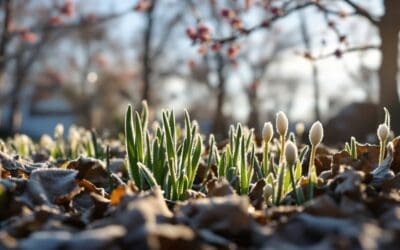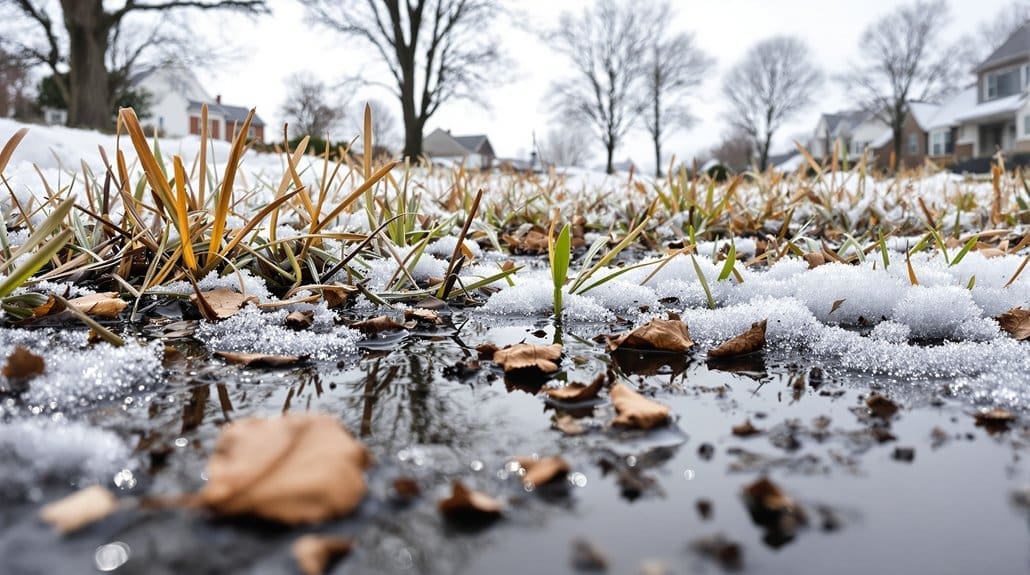
Inspect now, especially low spots, edges and where snow lingered, because you’ll spot snow mold, salt injury, vole runways, or soggy crowns early and act fast. Do a few tug tests—if blades pull out it’s likely dead, if crowns stay firm it’s dormant. Gently rake matted patches, flush salted soil with water, and wait until soil warms before light slow‑release feeding or overseeding. Fix small holes with seed, big ones with sod, and keep at it—there’s more guidance ahead.
Some Key Takeaways
- Scan low spots, edges, and areas where snow lingered for matted, discolored patches indicating snow mold or standing water damage.
- Perform tug tests in sunny, shady, high, and low spots to distinguish dormant (firm roots) from dead turf (pulls out easily).
- Check crowns and blades: firm, pliable crowns mean life; soft, hollow crowns or brittle blades indicate replacement needed.
- Gently rake matted turf after thaw to expose true damage, but avoid yanking crowns; discard fungal or dead clumps (no compost).
- Identify salt injury or vole runways and flush salt-affected areas with deep waterings once soil thaws; mark hollows for reseeding or resodding.
Inspect Your Lawn Immediately After Snowmelt
Inspect your lawn as soon as the snow melts, because the first look tells you a lot and lets you act before small problems get bigger. Head out and inspect low spots and edges where snow lingered, scanning for snow mold—circular or irregular matted patches of gray, white, or pink on blades. Gently rake matted areas after the thaw to let things dry and reveal true damage; don’t yank up crowns yet. Look for patches of dead, straw-colored turf in soggy spots or near salted driveways, that often needs reseeding or resodding. You’ll want to plan overseeding where recovery is possible, but use the tug test later to tell dormancy from death. You’re not alone in this — small fixes add up. Consider protecting lawn edges with gravel edging to reduce salt splash and improve drainage.
Do the Tug Test: Tell Dormant Grass From Dead Grass
Do the tug test — it’s simple, quick, and will save you from ripping out grass that just needs time. First, pick several spots—sunny, shady, low, high—because dormant grass can hide in pockets. Gently start tugging blades; if the roots hold firm and the blade is tan but pliable, you’ve got dormant grass. If the blade pulls out easily, or the blade is brittle and crumbles, that’s likely dead grass. Do a crown inspection after pulling a blade: a firm, intact crown means life, a soft or hollow crown means loss. If you’re unsure, try a short watering trial, wet the area, wait a week, and watch for green returning. Progress over perfection — you’ve got this. Consider checking nearby patios with interlocking pavers to see how surrounding hardscapes affect drainage and lawn recovery.
Spot Snow Mold: Gray vs. Pink Signs and What They Mean
When snow melts, check patches of grass where snow lingered or leaves piled up, you’ll often find two looks. Gray snow mold shows matted, whitish-gray fuzz in circular patches, usually under long-lasting snow, and it rarely kills crowns, so most areas bounce back. Pink snow mold looks pale pink to salmon, with webby mycelium and pink halos, it can stay active in cool, soggy thawing conditions and cause real crown damage, even root loss. Do the tug: if grass pulls out easily, you may need overseeding or replacement. Prevent with less late nitrogen and remove debris. Progress over perfection.
Find Vole and Rodent Tracks: How to Distinguish Runways From Disease
Curious how to tell a vole runway from a fungal patch? You’ll notice vole runways are narrow, about ½ inch, sinuous surface trails that link grassy spots, while snow mold shows irregular, discolored, matted grass, sometimes with gray or pink fungal film. Walk the lawn, look for burrow openings and chewed crowns near those thin paths, that’s a strong sign of rodents. Try a simple tug test: if turf pulls up easily, roots were eaten; if it resists and blades are matted, disease is more likely. Rodent runways often lift grass but leave crowns mostly intact, disease won’t have bite marks. Take small actions, patch gently, you’ll see steady recovery, and you’re not alone in this. Many homeowners also find that a well-organized firewood rack protects wood and keeps outdoor spaces tidy.
Check for Crown Hydration and Freeze–Thaw Damage in Low Spots
Check the low spots right after the snow melts, because that’s where meltwater pools and crowns can sit soggy long enough to die; you’ll often see straw-colored, waterlogged turf in those hollows while the rest of the lawn starts to green up. Heading: What to look for — in low-lying areas you’ll spot irregular patches that won’t green, that’s often crown hydration from repeated freeze–thaw cycles causing ice inside crowns, killing centers while outer blades linger. Action: gently do a tug test, if blades pull out easily the crown’s gone, don’t stomp or rake frozen ground. Note and mark those spots, plan to replace damaged turf with seed or sod when soil’s workable. Progress over perfection. Consider using landscape fabric around patio planting beds to help manage excess moisture and reduce future lawn stress.
Recognize Winter Desiccation and Salt Injury Along Hardscapes
You’ll often find two different winter wounds along driveways and walkways — one is uniform, straw-colored grass on exposed slopes or windward sides where dry, freezing winds sucked the moisture out of blades, and the other is patchy, dull, scorched turf hugging hardscapes from de-icing salts. Recognize winter desiccation versus salt injury by look and feel: desiccated turf is brittle but stays rooted, while salt-killed grass pulls out easily and soil may show white crust. Do a simple tug test, then scrape soil to check for crystalline residue. If salts show up, flush with repeated deep waterings once the ground thaws to start leaching salts, rake dead material later, overseed if needed. You’re not alone — small steps help your lawn recover. Consider protecting adjacent paver joints and sand from salt splash to preserve paver sand and hardscape edges.
Rake and Remove Matted or Diseased Turf Without Hurting Dormant Grass
When the soil’s thawed and no longer frozen, you can gently rake with a light, stiff tool to lift matted or crusted turf without yanking up dormant crowns. Use soft, even strokes and do a tug test—if a clump pulls out easily it’s dead and toss it, but leave blades that resist so you don’t remove living grass; discard anything with pink or gray fungal growth. After you’ve cleaned things up, let it dry, then consider a light, slow‑release feed and overseed bare spots to help recovery—slow and steady wins here. Also take the opportunity to tidy up nearby hardscape and concrete edges to keep your yard looking its best and protect curb appeal.
When To Rake
Late winter is a good time to take a close look at your lawn, but don’t rush in with a rake while the ground’s still frozen — press a finger into the soil to make sure it’s tender, because raking frozen turf can pull up crowns and do more harm than good. When to rake matters: wait until the soil thawed, grass blades are pliable, and frozen ground has softened, then you can gently rake to lift snow mold and fungal mats without ripping living crowns. Work on a dry day, use a light touch, remove only loose, dead crust and disease, and don’t dig into resistant turf. Collect debris for disposal, plan overseeding and a light spring feed once temps stay steady. Progress, not perfection. Consider also addressing any uneven or compacted areas with a leveling compound suited for lawn edges and patio transitions to improve drainage and prevent future turf damage.
How To Remove Debris
You’ve already checked the soil and waited for it to thaw, so now it’s time to carefully lift away the dead, matted stuff that’s smothering your lawn, without tearing into the still-dormant crowns. Gentle approach: use a light, flexible leaf rake, stroke with the grain of the grass, make several light passes, don’t yank. Do the tug test—if a clump pulls out easily it’s dead, toss it. Remove debris that’s shredded or shows pink/gray snow mold, don’t compost that stuff, it spreads disease. Let loosened turf dry for a few days to breathe, then feed lightly with starter or spring nitrogen and overseeding on bare patches to help recovery. Progress over perfection—small careful steps will save crowns and rebuild your lawn. For patios and yard areas that stay wet, consider improving surface runoff with simple drainage solutions to keep adjacent lawn healthier.
When Should You Fertilize, Water, or Wait? Timing for Spring Recovery
When you’re eyeing the lawn, wait until the soil thaws and reads around 45°F before you put down a light, slow‑release nitrogen feed, that way you’ll nudge growth without wasting nutrients. Don’t rush fertilizing if the ground’s frozen or soggy from snowmelt, and only water in the morning when soils are dry and turf shows stress, aiming for about half to one inch a week. If you’ve had snow mold or wet damage, focus on raking and a gentle recovery feed first, then seed later when soils warm into the mid‑50s for reliable germination — progress over perfection.
Wait For Soil Thaw
If the ground’s still frozen or squishy, don’t rush to feed, water, or scramble to reseed—your lawn can’t take it yet, and you’ll just waste product or make things worse. Wait for soil thaw: check soil temperatures at 2–3 inches, and wait until daytime readings reach about 45°F before you wait to fertilize or overseed bare patches. Action step: test the soil, then hold off until it’s workable. Avoid heavy watering while the ground’s frozen or waterlogged, only irrigate when soil soaks it up, not pools. When soil’s thawed, lightly rake matted snow mold to help drying, then seed or apply a light slow‑release feed as growth resumes. Progress over perfection—one steady step at a time.
Light Spring Feeding
Light spring feeding usually means holding back a bit, watching your lawn wake up, and then giving it a modest boost once it’s actually growing. Timing matters: wait until soil temperatures sit near 45°F and you see new growth, because you don’t want to apply fertilizer to dormant grass or feed fungi. When you do act, use a light spring feeding of slow-release nitrogen, about 0.5 lb actual N per 1,000 sq ft, to encourage roots without pushing too much top growth. Avoid quick-release or high rates early on; save heavier feeds for warmer days. If big dead patches remain, rake and reseed or resod first, then feed, so nutrients go to new plants. Progress wins over perfection.
Watering Schedule Tips
You’ll usually want to hold off on regular watering and heavy feeding until the lawn’s actually ready, because watering frozen or soggy soil just invites problems like crown rot or fungal rebound; wait until daytime temps are consistently above about 45°F and the soil has thawed and dried a bit.
Watering Schedule Tips
If your yard was soggy after snowmelt, don’t water for at least a week, rake matted turf to improve air flow, and let surface moisture go. When you see steady green-up and soil temps hit about 50°F for several days, you can consider a light, slow‑release feed—otherwise hold off on spring fertilizer. For overseeds, keep topsoil lightly moist until seedlings appear, then water less often, deeper. Spot snow mold or crown damage? Remove dead material, wait for visible recovery, then act. Progress beats perfection.
Reseed Small Bare Patches vs. Resod Large Dead Areas: How to Decide
When you’re sizing up winter damage, think of reseeding as the budget-friendly fix for small wounds and resodding as the fast, no-nonsense repair for big failures; you want clear choices, not overwhelm. Heading: Choose based on area and health. If bare patches are small, under a couple square feet each, and remaining turf looks alive, reseeding makes sense—seed is cheap, cool-season grasses germinate in 2–6 weeks when soil warms, and you’ll rebuild density without breaking the bank. Heading: When to resod. If crowns pull out, patches are large, or drainage and compaction mean regrading, resodding gives instant cover and weed control, roots in fast. Action: weigh budget, patience, and visual needs, aim for steady progress over perfection.
Test Soil pH and Structure, and Quick Fixes to Improve Germination
Now that you’ve decided whether to seed or sod, take a minute to check the ground under your feet — soil pH and structure are the hidden story that’ll make or break germination. Start by testing soil pH with a kit or lab sample; cool-season grasses like 6.0–7.0, and seed germination falls fast outside that range, so adjust if needed. Dig a 3–4 inch core to feel for compacted soil; dense clay resists roots. If it’s tight or thatch-bound, core aerate to 2–3 inches or try liquid aeration to boost oxygen and contact. Before overseeding, loosen the top quarter to half inch, spread a thin starter compost, keep it evenly moist, and remember — steady care beats perfection.
Plan Prevention: Fall Mowing, Leaf Management, and When to Use Fungicide
You’ll want to drop your final fall mow to about 2–2.5 inches so the turf dries faster under snow and doesn’t trap moisture, and then rake or remove leaves and debris so they don’t form a damp mat that invites gray or pink snow mold. Aerating or dethatching in fall and overseeding thin spots will help drainage and crowd out fungi next winter, and skip high‑N boosts—use a low‑nitrogen winterizer instead to avoid tender, disease‑prone growth. If you’ve had repeat snow mold problems, plan a late‑fall preventive fungicide application before the ground freezes, because spring treatments won’t fix it.
Final Fall Mow Height
Think of your final fall mow as a small, smart investment in next spring’s lawn—cut cool-season grasses a bit shorter than summer, around 2.0–2.5 inches, and you’ll cut down on snow mold risk and make your yard less attractive to voles.
Final fall mow: aim for that height, then follow with fall aeration and dethatching if thatch exceeds 0.5 inches, because thatch reduction improves drainage and cuts disease chances. Before snow, remove leaves and light debris within a week of heavy drop, you’ll thank yourself later. Avoid high-nitrogen feeds late in the season; choose low-nitrogen, slow-release options. If snow mold’s been a repeat problem, plan a labeled preventative fungicide in late fall. Small steps, consistent care — progress over perfection.
Leaf And Debris Removal
Fall mowing to the right height sets you up for easier leaf work, so once you’ve given the lawn that final 2–2.5 inch haircut and cleared clippings, tackle leaf and debris removal promptly as snow melts. Heading: Why it matters — Leaf litter holds moisture, it creates moisture traps that invite gray and pink snow mold, and thatch makes things worse by keeping turf damp. Action: rake and remove leaves right away, remove debris promptly, and consider light dethatching or aeration so the soil breathes and dries faster. Tip: mow lawns shorter for that last cut, avoid heavy late nitrogen, and if you’ve had repeat mold problems, plan a late‑fall fungicide. Progress over perfection — do what you can.
Some Questions Answered
Is 2.5 Inches a Good Cutting Height for Winter?
Yes, 2.5 inches is a good cutting height—your blade length and mower setting should leave enough leaf for photosynthesis, while protecting root depth and reducing vole habitat. Mow before hard freezes, keep blade sharpening regular, and avoid late cuts that invite spring scalping. This height helps turf density without stressing crowns, so aim for steady care, not perfection, and you’ll see healthier grass come spring. You’ve got this.
What Does Snow Mold Look Like on Grass?
You’ll see gray patches and straw colored areas where grass mats down, with cottony mats and fuzzy mycelium clinging to crowns and leaf sheathing, and discolored blades that pull out easily. Check edges for a pinkish rim, but mostly expect gray, crusty growth and stuck blades. Don’t panic — pull back debris, let sun and air in, and treat worst spots; small fixes add up. Progress, not perfection.
Does Snow Provide Moisture to Grass When It Melts?
Yes — melting snow gives your grass steady moisture, it’s a melting benefits thing, and the insulation effect helps roots stay warmer while the snowpack timing controls water delivery. You’ll see uneven moisture distribution at first, soil saturation only near the surface, and possible nutrient leaching or salt concentration in low spots. Take gentle action — aerate if compacted, avoid heavy traffic, and trust gradual recovery. Progress over perfection.
How to Tell if Fescue Is Dormant or Dead?
Short answer: you test the crown and roots to tell dormancy from death.
Head in, gentle flex test and tug test—if brown blades bend but crowns stay firm, root health looks good, and you see seedling presence or green recovery at the edges, it’s dormant. Scrape a bit, check soil temperature, slice a blade for green tissue. If crowns are mushy, roots pull easy, it’s likely dead. Progress over perfection.