You can cut grocery bills by growing a high‑yield 100 sq ft plot focused on kale, spinach, peas and fast succession greens, using vertical trellises to save ground space. Build a cheap raised bed with recycled wood or metal, mix compost with quality potting soil, and capture rainwater. Save seeds, compost kitchen scraps, and swap tools and seeds with neighbors to slash recurring costs. Track expenses and harvests to measure ROI, and keep going to learn detailed schedules and tricks.
Some Key Points
- Prioritize high-ROI crops (kale, spinach, peas) and succession planting to maximize pounds harvested per square foot.
- Build a raised bed with recycled materials and quality compost to reduce annual soil and infrastructure costs.
- Save seeds from top-performing plants and join seed swaps to cut yearly seed expenses.
- Compost kitchen scraps and install a rain barrel to lower waste and irrigation costs.
- Track expenses and harvests with a simple spreadsheet to optimize plant choices and maximize cost savings annually.
We Thought You'd Like This:
Plan a 100 Sq Ft Garden That Fits Your Plate and Budget
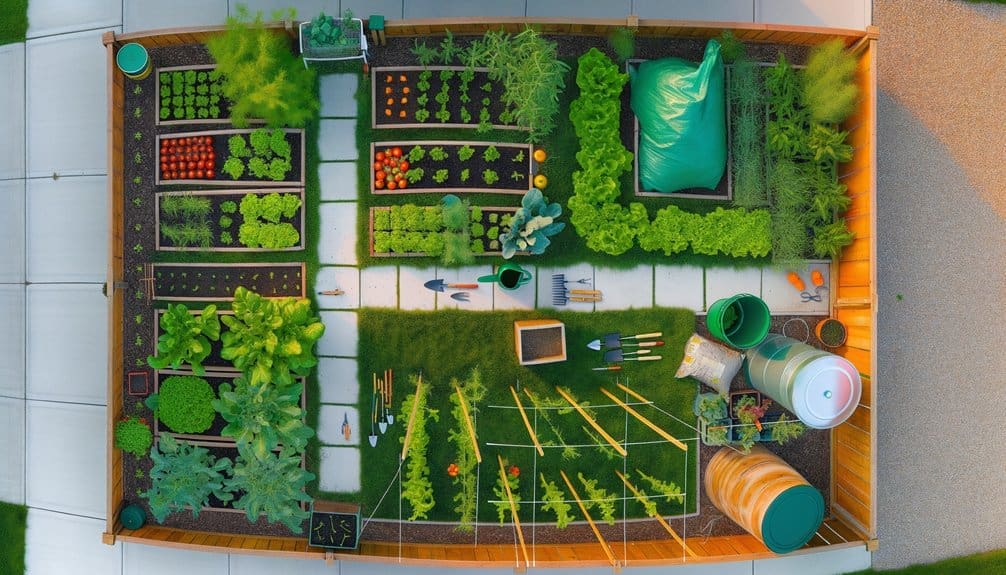
Anyone can get a surprisingly large share of their weekly vegetables from a well-planned 100 sq ft garden, but you’ll need to prioritize what fits your plate and budget. You’ll use square foot gardening principles to map raised beds, allocating space to high-return crops like kale, spinach, and peas to maximize harvests per square foot and save money on groceries. Plant quick growers—radishes, baby greens—in succession between slower crops to keep yields steady and lower shopping costs. Train tomatoes and cucumbers up trellises to free ground for more vegetables. Budget for good soil and organic fertilizer; that investment boosts productivity more than fancy seeds. Share plans and seed swaps with neighbors so your community benefits from reliable homegrown produce.
Build the Lowest‑Cost, Highest‑Yield Bed and Soil Mix
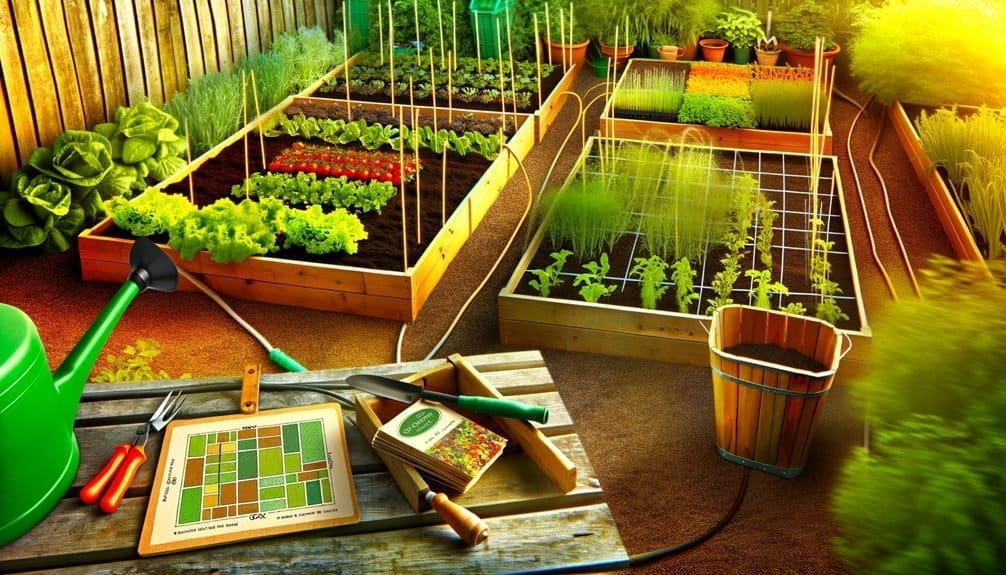
You’ve planned the 100 sq ft layout; now focus on building a bed and soil mix that delivers the biggest harvest for the least cash. Use a raised bed from galvanized steel or reclaimed wood—initial investment runs $50–$500 depending on size and materials. For a 10x10, budget about $250–$500 setup and expect $150–$250 yearly gardening costs for amendments and maintenance.
Mix high-quality compost (home-made to cut costs) with potting soil to create nutrient-rich soil; organic materials like compost and leaf mold boost long-term yields. Test pH and nutrients periodically so you adjust precisely rather than guess. Community swaps for wood or soil and sharing tools reduce spending, increase access, and make saving money a collective effort.
Choose High‑ROI Crops and a Planting Schedule for Year‑Round Harvests
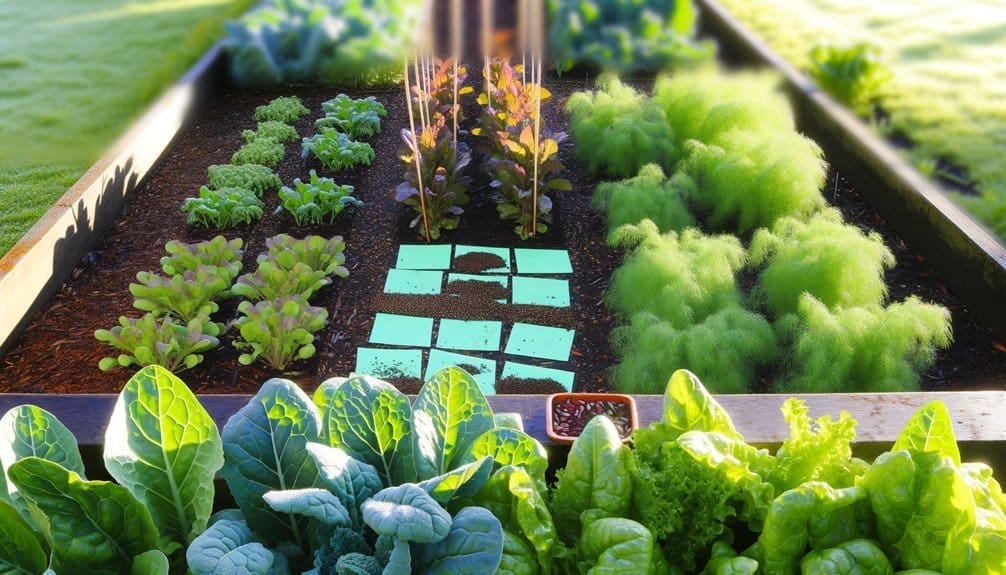
When you prioritize high‑ROI crops like kale, spinach and bush beans and map them into a tight succession plan, your 100 sq ft can produce far more calories and nutrition than an equivalent space planted to low‑yield ornamentals. Choose high-ROI crops that give pounds per square foot and nutritional bang for your time. Build a planting schedule that staggers sowing—succession plant lettuce, spinach and radishes every 2–3 weeks, intercropping fast growers with slower ones to maximize yield. Use vertical gardening for vining tomatoes and cucumbers to save up to 75% ground space. Add cold-tolerant crops in early spring and fall to extend seasons and secure year-round harvests. Share schedules with neighbors; community-tested calendars boost reliability and reduce risk.
Cut Recurring Costs : Seed Saving, Compost, Water, Pest Control
Cutting recurring garden costs starts with a few routine habits that pay back every season: saving seed from your best performers, feeding beds with homemade compost, capturing rainwater, and using simple cultural controls for pests. You’ll cut annual seed purchases by selecting vigorous plants, collecting, drying, and labeling seeds so your saved seed reflects local success. Compost kitchen scraps and yard waste to supply nutrients inexpensively; a cubic yard of compost replaces costly bagged amendments. Install rain barrels to lower municipal water use — even modest capture reduces irrigation bills. Use mulch and companion planting (marigolds, herbs) to retain moisture and deter pests, minimizing chemical inputs and maintenance time. These practices boost community resilience, reinforce shared gardening knowledge, and leave more saved money for tools or seed swaps.
Track Expenses and Harvests to Improve Savings Each Year
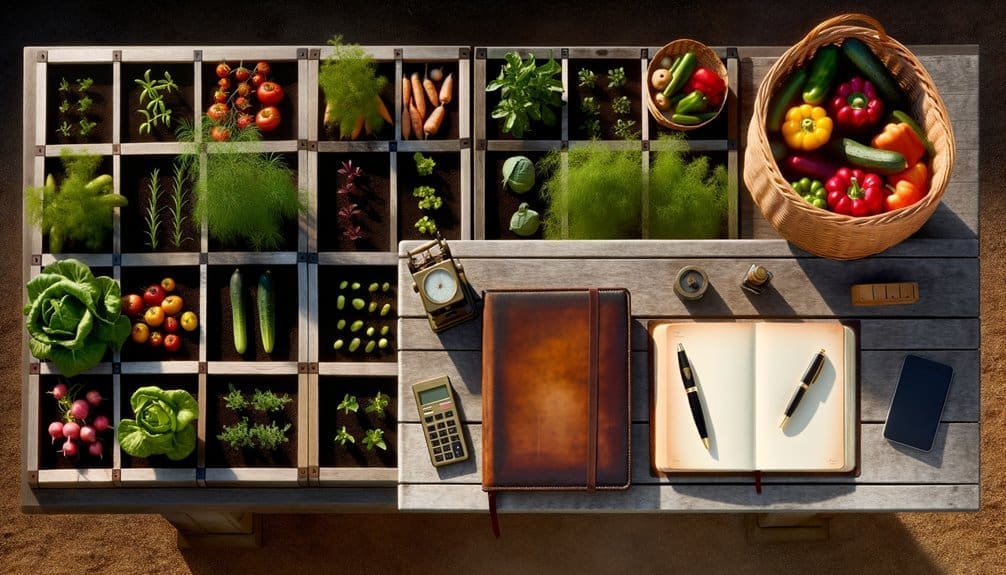
Those habits—saving seed, making compost, capturing rain—bring costs down, but to keep improving your savings you need to measure what’s actually happening in the garden. You should track expenses for seeds, soil, tools, and amendments so trends pop out over seasons. Log harvest quantities by crop to calculate ROI against grocery prices; that data tells you which beds are most cost-effective. Use a spreadsheet or gardening app to centralize entries, share templates with neighbors, and compare results—community feedback sharpens planting strategies. Each winter, review past years’ costs and yields, adjust budgets, and choose higher-yield varieties for 100 square feet. When you monitor consistently, small adjustments compound into meaningful savings and collective learning.

What Is the 70/30 Rule in Gardening?
Planted plainly: the 70/30 rule means you dedicate 70% to high-yield crops and 30% to experimental or decorative plants. You’ll prioritize soil health, crop rotation, companion planting and seasonal planting in the productive 70% for reliable harvests. Use the 30% to test varieties, try container gardening and improve pest management strategies. You’ll share data, swap tips and support neighbors, creating confident, community-driven growth that saves money yearly.
How Many Plants Can You Grow in 100 Square Feet?
You can grow roughly 50–100 plants in 100 square feet depending on plant spacing and vegetable selection. Use square-foot garden layout, companion planting, and seasonal crops to boost yield estimation and fit more in. Plan garden layout with community-minded sharing of tips, track spacing data, and rotate crops for continual harvests. You’ll get higher yields by choosing compact varieties, staggering plantings, and leveraging vertical supports for vine crops.
What Is the Gardening 3 Year Rule?
The gardening 3 year rule says you’ll usually see real savings after about three to five years. You’ll invest early in soil health and seasonal planting, then reap benefits as crop rotation, companion planting, pest management, and yield optimization kick in. You’ll track costs and harvests, learn from your community, and watch returns grow as your practices improve. Be patient — your small plot will reward steady, data-driven care.
What Is the 3-Hour Gardening Rule?
The 3-hour gardening rule says you’ll spend three focused hours weekly on tasks that boost yields. You’ll prioritize soil health, smart plant selection, seasonal crops and companion planting, plus efficient watering techniques and pest management. You’ll split time for planting, weeding and monitoring so problems get nipped early. This practical, data-driven rhythm builds community wisdom, reduces overwhelm, and helps you consistently grow more food in limited space.