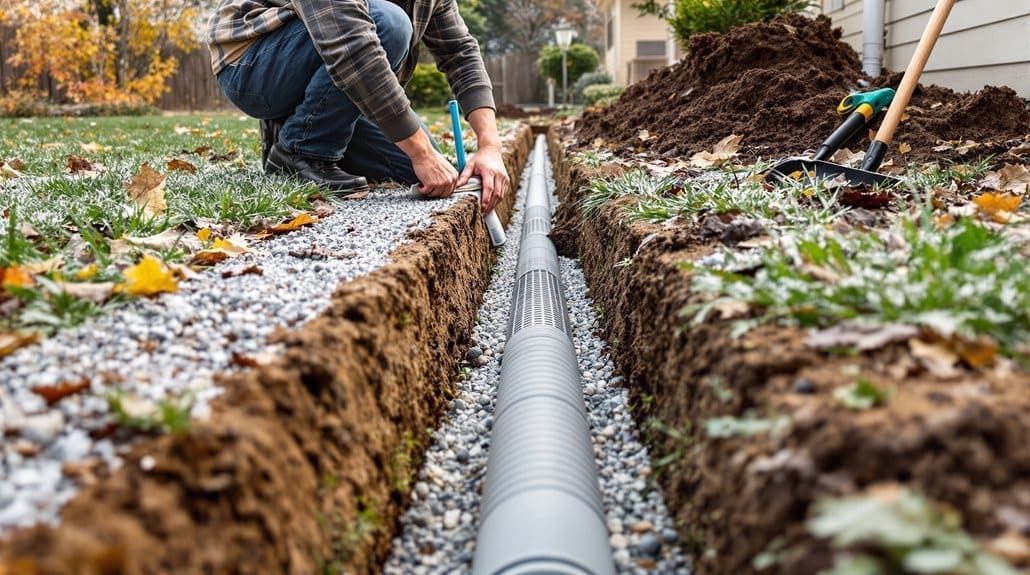
Spot trouble on a thawing day: walk the yard, note puddles that stick around, low spots, clogged downspouts, or basement damp, and you’ll know where to act. Plan your French drain at or below the frost line when you can, keep a steady 1–2% slope, use sturdy perforated PVC wrapped in filter fabric and lots of angular gravel, and insulate or sleeve outlets above frost. Add a dry well or pop-up outlet and clear snow around inlets—progress beats perfection, and there’s more practical detail ahead.
Some Key Takeaways
- Install the perforated drain pipe at or below the local frost line to keep main flow from freezing.
- Maintain a consistent slope of at least 1% (1.5–2% ideal) so water keeps moving during freezes.
- Surround pipe with 6–12 inches of clean angular gravel and wrap with geotextile to prevent ice-clogging.
- Insulate any pipe segments above frost line with closed-cell foam or heat tape and protect outlets.
- Terminate into a dry well below frost line or use a flared/pop-up emitter with overflow and positive grading away from foundations.
Identify Winter Drainage Problems on Your Property
Start by scouting your yard on a thawing day, because that’s when winter drainage problems show up the clearest: if puddles stick around more than a day or two after melt or rain, something’s not moving water like it should. You’ll want to do a gentle inspection, walk low spots near foundations and swales, and note standing water or ice that hangs on after a warm spell. Check downspout discharge areas and grate covers for debris, watch the drain outlet and pop-up emitters for any flow, and listen for sluggish movement — clogged pipes or a freeze often hide in plain sight. Basement moisture after melt usually signals exterior failure, so act sooner, small fixes add up. Consider installing simple drainage solutions like French drains or surface channels to keep patios and foundations dry.
Choose the Right French Drain Depth and Slope for Frost Conditions
You’ve already seen how meltwater and puddles point to trouble, so now you’ll want to make decisions that keep your French drain working when temperatures drop. Start by setting the perforated pipe depth at or below your local frost line, that way the main flow stays unfrozen and reliable, even in long winters. Keep a steady slope—minimum 1% and ideally 1.5–2%—so water moves and resists freezing; moving water helps. If you can’t bury deep because of utilities or soil, add insulation around exposed segments and protect the trench with extra gravel and geotextile, then terminate into a dry well placed below frost. Grade and compact backfill to preserve slope, avoid low spots, and prioritize progress over perfection. Consider using a leveling compound to help stabilize and finish patio surfaces surrounding drain installations.
Select Pipe, Gravel, and Insulation That Resist Freezing
When cold weather’s coming, choosing the right pipe, gravel, and insulation can make the difference between a reliable drain and a frozen mess; think of it like building a little highway for water that stays open even when the ground tries to close it. Pick a sturdy perforated PVC pipe, Schedule 40 or SDR35, 4–6 inches, so walls resist crushing in frozen soil. Surround it with 6–12 inches of clean angular gravel to keep voids clear and limit ice. Wrap the gravel with geotextile filter fabric so fines don’t clog the system. Where the outlet sits above the frost line, sleeve the pipe with closed-cell foam insulation and bury it. Size the terminus to avoid pinch points, consider a dry well—freeze prevention matters. Use the same attention to durable base materials and installation techniques you’d use for a patio to ensure a long-lasting drainage system and proper performance paver base.
Design Endpoints and Overflows (Dry Wells, Pop-Up Emitters, Flares)
Designing the end of your French drain is where the system either keeps working through a hard freeze or turns into a frozen paperweight, so let’s make smart choices now that will save you headaches later. Endpoints matter: aim for a dry well at least 20 feet from the house and below the local frost line so meltwater disperses instead of freezing solid. If that’s not possible, use a pop-up emitter set on gravel bedding with a weephole, or a flared outlet to slow flow and cut ice clog risk. Always pitch outlets on a positive slope away from foundations, size them for expected runoff, and provide an overflow outlet or air gap for sump pump discharge. Small steps, big gains. Consider pairing your endpoint with concrete paint products designed for outdoor use to protect nearby patio surfaces from moisture damage.
Winter Maintenance Plan: Monitoring, Snow Management, and Thawing Techniques
Winter brings hassles, but a simple, steady winter maintenance plan will keep your French drain doing its job and spare you big headaches come spring. Monitoring: check the outlet and pop-up emitter monthly and after thawing, if you never see flow or spot standing water, a section may freeze. Snow management: keep 3–6 ft clear around inlets and final outlets, regular snow removal prevents surface blockage so melt reaches the pipe. Prep: inspect insulation and protective sleeves above your frost line before freeze-up, repair or add foam where needed. Thawing: use warm water or a heat gun on exposed terminal pipe and gravel, consider heat tape for repeat spots. After thaws, clear clogging debris from low points and catch basins. Progress beats perfect. Also, consider regular cleaning of nearby patio drains and surfaces to prevent debris from entering the system and to maintain clean outdoor spaces.
Some Questions Answered
Will a French Drain Work in Winter?
Yes — a French drain can work in winter if you plan for it. You’ll focus on drainage slope, pipe insulation, outlet clearance and soil composition, do seasonal maintenance, and watch for frost heave. Use underground pumps or deeper outlets if needed, and consider winterproofing techniques like heat cable. Pick a contractor who knows local frost, manage meltwater, and remember progress over perfection, you’ll reduce winter soggy messes.
When Should You Not Use a French Drain?
You shouldn’t use a French drain when soil chemistry or clay prevents percolation, when frost depth rules out burying pipe, or when high water tables keep it saturated. If root intrusion, existing utilities, property zoning, or local permits block proper placement, walk away. If maintenance costs, material sourcing, construction noise, or neighbor disputes will overwhelm you, choose a different fix. Progress over perfection—pick a solution that’s practical and lasting.
What Will Soak up Standing Water in the Yard?
Plants and systems can soak up yard water: soil amendments and compost topdressing speed infiltration, native grasses and rain gardens absorb and evapotranspire, and absorbent mulch helps surface wet spots. You can add swales installation and permeable pavers to guide flow, use turf aeration or a temporary sump to relieve pooling, and install dry wells to hold runoff. Progress beats perfection, you’ll get drier spots with steady small steps.
How to Keep French Drains From Freezing?
You keep French drains from freezing by combining deep burial, insulated piping, and active circulation so water keeps moving, and you add subsurface insulation or a thermal blanket where pipes must sit shallower. Use heated trench or a solar loop for low‑energy warmth, or antifreeze glycol in closed systems, add warm backfill and soil amendments to retain heat, and remember, progress over perfection — small upgrades really help.