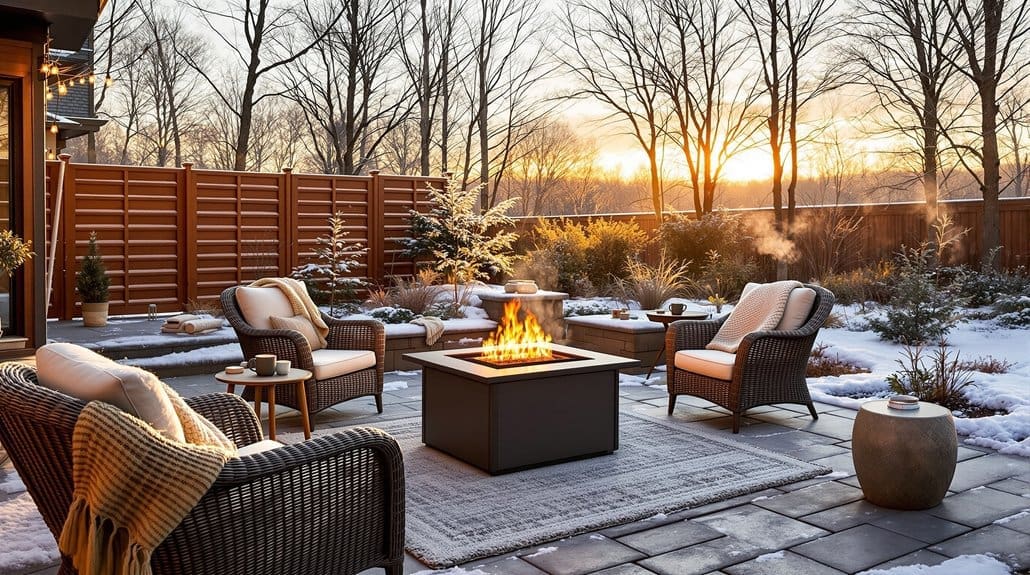
Extending Patio Season: Heating Solutions for Late Winter Use — You can keep your patio cozy by mixing heat sources and blocking wind: use electric or infrared ceiling panels for covered spots, propane or freestanding gas units for open terraces, and a fire pit or tabletop heater for close-up warmth; add thermal curtains, thick rugs, and throws to trap heat, aim radiant heaters at seating, and stagger multiple smaller units for even coverage. Start small and add layers, and if you want more setup tips, keep going.
Some Key Takeaways
- Match heater type to space: propane for open windy terraces, electric/infrared for covered patios, and fire pits for ambiance and group heat.
- Size heaters to area: use roughly 20–30 W per sq ft for permanent electric infrared or one 1500–3000 W unit for ~100 sq ft.
- Place heaters to hit people directly: mount infrared 6–10 ft high, line panels every 6–8 ft for long seating, or center a freestanding unit for circular seating.
- Reduce heat loss with wind barriers and thermal curtains, plus thick outdoor rugs to retain up to 30–50% more usable heat.
- Combine layers: permanent fireplace or pergola heaters, underfoot radiant heat, and localized pads or tabletop units for efficient, comfortable warmth.
Choose the Right Heater for Your Patio (Propane, Electric, Infrared, Fire Pit)
When you’re picking a patio heater, think about how you actually use the space—are you out in the open, under a covered porch, or sitting around a fire-ready conversation area—because that’ll steer you to propane, electric, infrared, or a fire pit. Start by picturing where friends gather, then match the heater to that rhythm. If you want big, movable warmth for open patios, propane patio heaters give serious BTUs, just keep spare tanks and ventilation in mind. For semi-enclosed spots, electric units are efficient and safer, no combustion worries. If wind’s an issue, infrared heaters warm people and things directly, and mount low to reach 6–10 feet. And don’t forget fire pits—wood for ambiance, gas for clean, instant flames. Trust small choices; they add up. Consider your budget and maintenance preferences when choosing a heater for your space, and remember that patio heater products can vary widely in features and price.
Match Heater Type to Patio Layout and Weather Conditions
Match your heater to the size and layout of your patio, because what warms a cozy nook won’t cover a wide, windy terrace. If your space is open and gusty, you’ll want a high‑output propane or large radiant gas unit placed centrally to push heat across the area, but for covered or semi‑enclosed spots, wall or ceiling electric/infrared heaters heat people and furniture directly and avoid ventilation headaches. Think in zones for big decks, use multiple smaller overhead panels spaced evenly, and add rugs or wind barriers where the ground or drafts steal warmth—small fixes, big comfort. Also consider pairing heating with cooling options from outdoor fan specialists to balance year‑round comfort and airflow, especially for larger patios with varied sun and shade outdoor fans.
Patio Size And Coverage
Because patio shape, size, and the weather around it all change how heat moves, you’ll want to size and place heaters with the layout and wind in mind so you don’t end up with toasty heads and frozen feet. Patio size matters: small, semi‑enclosed spaces (about 100 sq ft) usually need just one 1500–3000 W electric infrared or tabletop unit to warm people within a 6–8 ft radius, while larger, open areas often need multiple sources so heaters provide even warmth. If your seating is long and narrow, line infrared panels every 6–8 ft; if it’s circular, center a freestanding unit or fire pit. For covered patios, pick electric infrared sized roughly 20–30 W per sq ft, and prioritize safe mounting. Electric patio heaters make it easy to enjoy cozy evenings outdoors with friends and family, whether you choose wall-mounted panels or portable units for flexible placement, and our shop focuses on electric patio heaters suited to homeowners and outdoor gatherings.
Wind Exposure And Layout
Wind and layout change everything about how a patio feels, so start by thinking like heat does: it wants a clear path to people, not lost to gusts or open sky. Heading: read the space. If you’ve got an open, wind-exposed patio, pick high-output propane freestanding heaters, they shine radiant warmth straight at you, and they beat drafts. For semi-enclosed or covered spots, go wall- or ceiling-mounted infrared, they heat surfaces and bodies, not the air. Action: position directional heaters downwind of seating, within 6–10 feet, so warmth hits where you sit. Add wind barriers—glass panels or heavy curtains—on the prevailing side, and you’ll boost range and cut fuel needs. Small units spaced evenly win over one giant heater. Progress, not perfect. Consider also pairing heaters with outdoor ceiling fans to improve airflow and distribute warmth more evenly.
Create Heat Retention: Curtains, Wind Barriers, and Rugs
Start by thinking of your patio like a small room you want to keep cozy: hang outdoor-rated thermal curtains—clear vinyl or insulated fabric—and you’ll block drafts and hold in a surprising amount of radiant heat, often 30–50% more than leaving things wide open. Headline: seal the edges. Fit curtains to within 6–12 inches of the ground, pair them with tempered glass or acrylic wind barriers, and you’ll cut wind speed dramatically, which helps any heater work smarter. Practical move: lay a thick outdoor rug, half- to one-inch pile or layered polypropylene, to keep feet warm and stop heat draining into stone or concrete. Choose UV- and mildew-resistant fabrics, keep clearances for safety, and remember, small steps add up. Consider also coordinating curtain styles and materials to complement your patio and create a cohesive, cozy outdoor space.
Add Localized Warmth: Tabletop Heaters, Heated Furniture, and Fire Bowls
Localized warmth makes a big difference on cool nights—think of it as bringing a little campfire to your table, not trying to heat the whole yard. You can pull people closer, add tabletop heaters or a small fire bowls to create a cozy focal point, and everyone feels included. Start with safe placement, stable surfaces, and outdoor-rated gear, since propane, bioethanol, or electric tabletop heaters give directional warmth quickly, while gel or ethanol fire bowls add ambiance and a few hours of heat. Add heated furniture or USB/rechargeable seat pads for direct, low‑energy warmth, they’re portable and practical, and work with your seating. You don’t need perfect warmth, just pockets of comfort. Progress beats perfection. Consider enhancing the space further with wall-mounted patio heaters as a reliable localized heating option tied directly to your outdoor seating area.
Permanent Options: Outdoor Fireplaces, Pergolas With Built‑In Heaters, and Heated Floors
You’ll get the biggest, most reliable warmth from a permanent setup, whether that’s a central outdoor fireplace for big gatherings or a pergola with built‑in infrared panels that warms people directly on windy nights. Think about how a warm floor or fireplace can change nighttime use, and plan for power, gas lines, and weatherproofing so you’re not surprised later. Start with what you need most—consistent heat, ambiance, or quick warmth—and build from there; it won’t be perfect at first, but it’ll get you outside more. Consider products that enhance those evenings, like gas fire pits designed for patios and small gatherings.
Outdoor Fireplace Benefits
Outdoor fireplaces, pergolas with built‑in heaters, and heated floors each give you real, usable warmth so your patio stops being a fair‑weather-only space and starts feeling like an extension of your home. Outdoor fireplace benefits are practical: as a permanent heating option, a gas unit gives instant, low‑maintenance heat for seating areas up to 10–20 feet, while wood brings ritual and character. You’ll keep your patio warm more efficiently if you combine a fireplace with wind barriers or insulated curtains, and underfoot radiant heating cuts cold toes and icy slabs. Think of it as layering warmth — overhead, radiant, and source — so your group stays comfortable, conversations flow, and you use the space more often. Progress beats perfect. Consider adding stylish wall-mounted fans to improve airflow and comfort on your patio.
Integrated Pergola Heating
Integrated pergola heating gives you a way to turn a nice patio into a truly usable room, and when you plan permanent options like a fireplace, built‑in ceiling heaters, or underfoot radiant heat, you’ll get dependable warmth that lasts beyond a few chilly nights. Heading: Where to start — think about electricity or gas capacity, clearance, and local rules, because infrared heaters need safe mounting heights and fireplaces need venting. Action: combine insulated panels or curtains with mounted heaters to cut heat loss, so a smaller unit does the job, and consider heated patio floors if you hate cold feet — radiant heating keeps surfaces comfy. Progress over perfection: start with one upgrade, enjoy it, then add more.
Safety, Ventilation, and Placement Best Practices
Safety should be your first move, because a cozy patio can go sideways fast if heaters aren’t placed or ventilated right. Safety, ventilation, placement — start there. Think three feet clearance around freestanding propane or electric units, follow ceiling minimums for mounted heaters, and never run combustion heaters in fully enclosed spaces, you’ll avoid big risks. Aim radiant or infrared heaters at seating, keep line-of-sight clear so heat reaches people, not curtains. Secure wall or ceiling units, screen windy spots with glass or heavy curtains, and check fuel lines and cords often, that small smell of gas is not normal. Keep a Class B/C extinguisher handy, have CO detectors inside, and shut fuel off at the first sign of trouble. Progress beats perfection.
Quick Cozy Upgrades: Lighting, Textiles, Hot Drinks, and Layered Color
Lighting, textiles, hot drinks, and a few warm colors can completely cozy up your patio without a major overhaul, so start small and build from there—swap in warm-toned bulbs for a soft glow that makes the space feel several degrees warmer, keep a basket of sturdy fleece or wool throws and insulated cushions for instant comfort, and set up an insulated carafe with hot drinks and thermal mugs so guests can grab warmth whenever they want. Heading: Quick tweaks. Swap string lights to 2700K–3000K, it tricks the eye, adds perceived heat. Action: keep weather-resistant throws (20–30 oz) and outdoor cushions, add a durable rug to insulate feet. Color: layer red, orange, ochre pillows and rugs for an inviting focal point. Progress over perfection.
Some Questions Answered
How to Make a Patio Usable in Winter?
Make your patio usable in winter by layering warmth and blocking wind. Start with insulated curtains, add an outdoor fireplace kit or propane heater for quick, cozy heat, and use heated flooring or electric mats for steady warmth underfoot. Throw down thick rugs, blankets, and seat pads to trap heat, and set up glass or vinyl wind barriers. You’ll stay comfortable longer, and small upgrades really add up. Progress over perfection.
How Long Will a Patio Heater Run on a 20 Lb Tank?
You’ll get about 10–22 hours from a 20 lb tank, depending on heater size and propane efficiency. If your heater’s 40,000 BTU/hr, expect ~10–11 hours; at 20,000 BTU/hr, ~20–22 hours, and low-output units can reach 28–42 hours. Check regulator maintenance, because a faulty regulator or cold temps cut burn duration, so carry a spare tank, keep fittings tight, and aim for steady settings—progress over perfection.
How to Keep an Outdoor Patio Warm in Winter?
You can keep your patio warm by combining infrared panels for direct, efficient heat with wind barriers like clear roll-up curtains or glass to stop drafts, and heated flooring for steady, cozy warmth underfoot. Place heaters near seating, add rugs and blankets to trap heat, and use portable table fire bowls for extra ambiance. You’ll feel more comfortable sooner, spend less on fuel, and enjoy evenings that actually last.
What Is the Cheapest Way to Heat a Patio?
The cheapest way is layering insulation and personal heat, not big propane alternatives. Start with thick outdoor rugs, insulated curtains, and blankets to trap warmth, then add portable fireplaces or small infrared panels aimed where you sit, they’re efficient and friendly on bills. You’ll save most by warming people, not air; try a heated cushion for personal comfort. Progress over perfection—small changes add up, and you’ll stay cozy together.