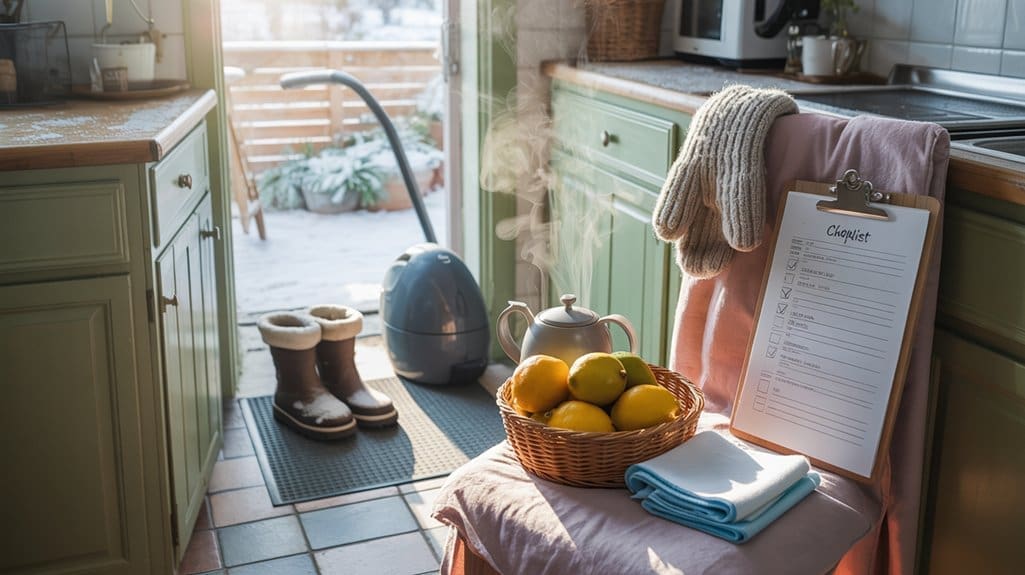
Plan a short winter cleaning day, then keep it simple: swap and launder seasonal clothes and bedding, tackle one high‑traffic zone (entry, kitchen, or bath), and finish with vents and a HEPA pass to cut dust and allergens. Do five quick daily tasks—make beds, wipe counters, sweep, spot‑vacuum, one laundry load—and one rotating weekly deep task. Progress over perfection; small, regular habits prevent marathon cleans, and there’s more practical tips ahead.
Some Key Takeaways
- Block one short, high‑impact winter cleaning day monthly and gather supplies in advance to avoid marathon sessions.
- Build a daily five‑task rhythm (make bed, wipe counters, quick clutter sweep, spot‑vacuum, one laundry load).
- Schedule a 15‑minute focused sprint after breakfast or before wind‑down to prevent clutter buildup.
- Rotate one deeper weekly task (oven door, a closet shelf, wash throw rugs) to distribute chores evenly.
- Prioritize top‑to‑bottom cleaning: launder heavy bedding first, finish with HEPA vacuuming and dusting fans.
Plan One Short, High‑Impact Winter Cleaning Day
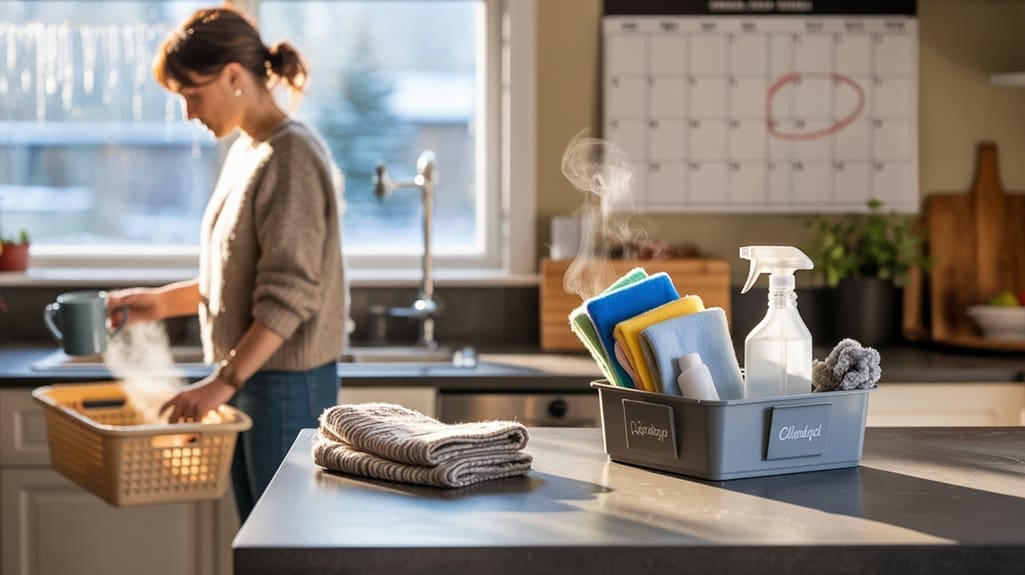
Start by deciding to Block a full day, gather supplies, and invite a friend or family member if you want company. Begin top-to-bottom: rotate seasonal swaps and launder heavy bedding first so quilts are ready, then tackle kitchen and HVAC zones, HEPA-vacuum mattresses and vacuum returns, and change filters to cut allergens. Finish with a whole-home HEPA pass and dust Ceiling Fans so disturbed dust gets removed once. Schedule any pro inspections, and remember: progress over perfection — you’ve got this. Use premium cleaning cloths like microfiber for best results and gentle care for surfaces premium cleaning cloths.
Swap and Store Seasonal Clothes and Bedding
Swap and store seasonal clothes and bedding by first evaluating what you actually own, trying things on and setting aside anything you haven’t worn in a year so your closet only holds what you use. Clean everything—wash duvet covers and blankets, follow care labels for bulky comforters or take them to a laundromat or pro—then pack items into airtight, moisture-resistant containers with silica gel or cedar to keep things fresh. Keep a “seasonal swap” box or a few labeled bins within reach for things you might need, so you can rotate bedding and clothes easily, avoid re-cluttering, and remember: progress over perfection. Consider using a garment steamer to refresh fabrics and reduce wrinkles before storing steam care to maintain fabric quality.
Assess What You Own
Evaluating what you own can feel a little intimidating, but you’ll thank yourself once winter layers have room to breathe and you can actually find your favorite sweater. Assess what you own with kindness: try things on, separate your wardrobe into keep, donate, store, and repair piles, and aim to remove 20–30% of spring and summer pieces so winter has space. Launder sweaters, duvet covers, and inserts before packing to avoid moths and mildew. Use vacuum-seal bags or labeled bins for off-season items to save space, but store heavy wool and down in breathable cotton with cedar or lavender for airflow. Add a “try-on/declutter” box for seasonal-shift items, reassess after two weeks, and remember: progress beats perfection. Consider adding eco-friendly tools like dryer balls to your routine for fresher, fluffier linens and reduced drying time dryer balls.
Clean Before Packing
Now that you’ve sorted and pared down, it’s time to clean before you pack so what goes into storage is ready to wear next season. Quick Steps: launder seasonal items like duvet covers, pillow shams, and lightweight blankets, treat stains right away, and mend seams or replace buttons as you go, so nothing needs fussing later. Use vacuum-sealed bags or labeled luggage to store off-season garments, compressors can shrink bulky pieces and free closet space. For moth prevention, tuck in breathable cedar blocks or lavender sachets, they’re gentle and effective. Rotate bedding after washing, putting heavy quilts where you can reach them during cold snaps. You’re not aiming for perfect, just clean, organized, and ready — progress over perfection. Refresh your home with all-purpose cleaner tips to keep stored items smelling fresh and your spaces cozy.
Store For Easy Access
Make room in your closet by bringing the pieces you’ll actually wear to the front, and pack the rest away so getting dressed is quick and low-stress. Store for easy access means you’ll swap seasonal clothes now—move summer items into vacuum-sealed storage or luggage, bring winter layers forward, and you’ll see less crowding, less stress. Wash and rotate bedding as you go, machine-washing duvet covers, pillowcases, and throws, then rotate in heavier blankets. Keep a labeled donation box in your closet to toss things that didn’t fit or weren’t worn, it speeds decluttering. Store off-season bedding under the bed or in clear bins, mend or pre-treat stains first, and remember: small steps now save time and headaches later. Consider using under-bed storage to maximize space and keep off-season items organized and accessible.
Tackle High‑Traffic Zones: Entryway, Kitchen, and Bathroom
Entryway first: clear a single drop zone for coats, keys, and shoes so you’re not tracking piles of wet gear through the house, shake or wash mats weekly and mop or vacuum near the door twice a week to stop salt and grit from abrading floors and bringing in germs. In the kitchen, focus on the sink and food-prep areas—wipe handles and counters daily, deep-clean the sink and disinfect high-touch spots at least twice a week when colds are around. Small, regular habits—five to fifteen minutes—keep these zones functional and prevent the long, exhausting clean-ups later; progress over perfection. Consider reinforcing frequently used entry doors with door reinforcement to protect your home and keep these high-traffic zones secure.
Entryway Declutter & Mats
Tackle the mudroom chaos by starting small—clear a path, pull up the mats, and you’ll immediately see what needs work—because winter brings salt, grit, and wet shoes that double the dirt load and can wreck floors if you ignore them. Entryway first, you’ll remove and shake out doormats weekly, then set an outside scraper and an indoor microfiber mat to catch most debris. Create a simple drop zone with a waterproof tray and a ventilated boot rack so boots dry upright, less mold, less mess. Keep a small caddy with a microfiber towel and shoe brush for quick fixes, and declutter by assigning one hook or basket per person, rotating extras into a donation box. Progress, not perfection. Consider adding a quality rug pad under outdoor mats to protect floors and keep mats from slipping.
Kitchen Sink & Food Prep
Kitchen sinks and food-prep areas usually get the worst of it in winter, so start simple and steady—you’ll want a routine that keeps germs, salt, and soggy messes from spreading. Head: quick daily care. Wipe and disinfect the kitchen sink and faucet with warm soapy water, then an EPA disinfectant or 1:10 bleach when you handle raw meat, because cross-contamination climbs in colder months.
Head: weekly reset. Empty and sanitize drains and disposals with baking soda, vinegar, then boiling water to cut odors and bacteria. Keep an entryway drop zone near prep areas, use a washable mat and bin to catch salt and wet gear. Launder towels, dishcloths, and mop heads twice weekly at 60°C when possible. Declutter under sink, label cleaners, and breathe easier. Progress beats perfection. A simple regular schedule can help maintain a fresh home and protect high-traffic areas with cleaning routines that fit winter lifestyles.
Dust, Vents, and HVAC: Improve Winter Air Quality
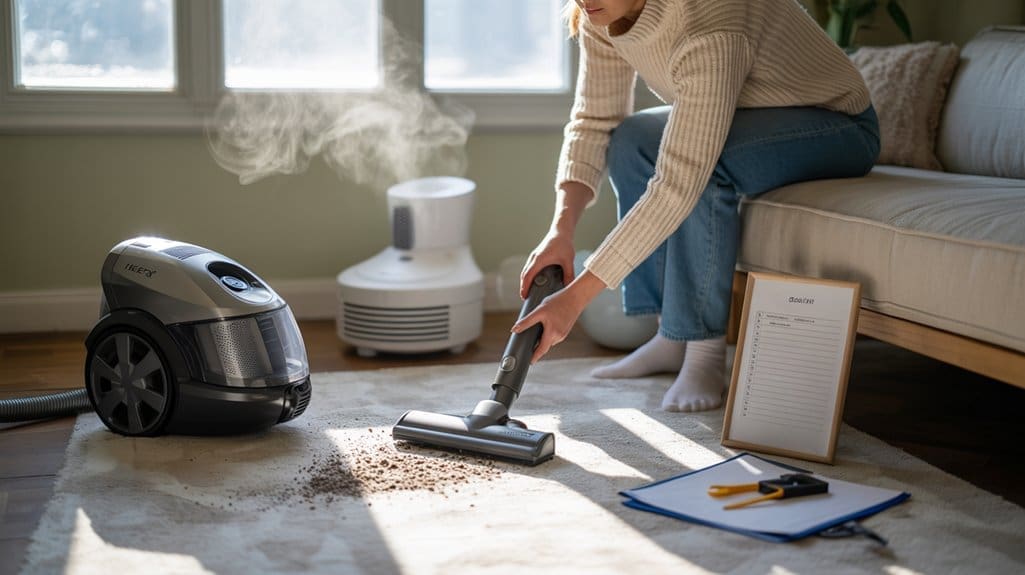
You’ll probably notice the air feels heavier once you shut the windows for winter, and that’s a good cue to focus on vents, filters, and dust—small steps here really change what you breathe. Quick wins: replace HVAC filters every 1–3 months, monthly if you’ve got pets or allergies, so airflow stays strong and PM2.5 doesn’t keep circulating. Vacuum vents and return grates with a HEPA-equipped vacuum and soft brush each season to catch settled dust before the furnace blows it around. Run a HEPA air purifier sized for the room, it’ll pull fine particles and VOCs while windows are closed. Dust fans and fixtures at the end of your cleaning day, and aim for indoor air humidity between 30–50% — comfort and fewer dust mites. Consider adding stylish smoke alarms to your home to protect your family and complement your decor, since safety and aesthetics can go hand in hand with beautiful spaces.
Deep‑Clean Big Appliances, Fireplace, and Radiators
Moving from air quality to the big stuff, let’s look at the appliances and heating gear that actually make winter livable, since they can hide a surprising amount of dust, grime, and efficiency loss. Deep cleaning those heavy hitters helps you feel settled, and keeps the house working. For your fireplace, wait 24 hours after the last fire, scoop ash, sweep soot, then wipe the firebox with equal parts white vinegar and warm water; schedule a chimney sweep yearly if you burn wood. Pull appliances forward, vacuum coils, and soak oven racks to cut grease. Shut off heat, brush radiators or use compressed air between fins, then HEPA-vacuum debris to improve indoor air and heat flow. Also, include a regular dryer vent check to prevent lint buildup and reduce fire risk, since proper dryer maintenance is key to home safety and efficiency dryer vent cleaning.
Smart Scheduling: 10–15 Minute Daily Tasks and Weekly Focuses
Often, a few short habits are all you need to keep a winter home from feeling sluggish and cluttered, and you’ll save yourself from one giant, exhausting deep clean later. Start by carving out five daily tasks—make beds, wipe counters, quick clutter sweep, spot-vacuum high-traffic floors, and one laundry load—to prevent buildup and keep momentum, you’re not doing everything at once. Build a weekly rhythm so heavier chores land on set days, and block a time after breakfast or before wind-down, set a 15-minute timer, and go. Add one rotating task each week—oven door, a closet shelf, wash throw rugs—so deeper jobs happen without marathon sessions. Track it on a simple checklist, celebrate progress, not perfection.
Declutter, Donate, and Safe‑Store Toxins for Better Indoor Health
Start by tackling one room at a time, and you’ll find decluttering feels way less overwhelming than it sounds — set out three boxes labeled KEEP, DONATE, and TRASH, and make quick calls as you go so decisions don’t pile up. You’re not alone in this; invite a friend or family member to help, chat as you sort, and celebrate small wins. Wash or launder textiles before you donate, wipe and test electronics, and pack seasonal clothing in breathable bags or acid‑free boxes with cedar or desiccant to prevent mold and moths. Remove toxic cleaners, swap to gentler products, and store hazardous materials in original containers in a cool locked spot, checking local disposal options to cut indoor VOCs. Progress beats perfection.
Some Questions Answered
Can I Safely Use Humidifiers Alongside My Heating System?
Yes — you can, but don’t go overboard; think of your house as a plant, not a sauna. Room humidifiers often play nicely with heating, but check steam compatibility with your furnace, keep filter maintenance regular, and use humidity monitoring to stay between 30–50%, or you’ll invite mold. Balance ventilation too, open a window sometimes, fix damp spots, and remember, small steady steps beat frantic fixes. You’ve got this.
How Do I Prevent Ice Melt Chemicals From Damaging Floors?
Start by sealing floors with a good sealant application so melt won’t soak in, then add entryway mats and protective runners to catch grit and moisture, they’ll save you time. Place a shoe scraper placement near the door, encourage scraping outside, and do immediate salt removal after walks to prevent stains and corrosion. You’ll protect surfaces, reduce headaches, and remember—it’s progress over perfection, small steps add up.
Should I Change Cleaning Routines for Pets in Winter?
Yes — you’ll tweak pet care for winter. You might test whether short haired care really needs less brushing, and find seasonal shedding still happens, so keep steady grooming, indoor play to burn energy, and boot matting at doors to catch grit. Use paw balm regularly, it prevents cracking, and wipe paws after walks. You’ll adapt routines slowly, expect mess, focus on progress over perfection, and feel less alone.
What Cleaning Products Are Best for Frozen Pipes Prevention?
Use pipe insulation and heated tape first, they’re your core defenses, and add plumbing sealant around joints to stop drafts and drips. Spray anticorrosive sprays on exposed metal, they’ll slow rust and failures, and keep non toxic antifreeze in traps or rarely used drains to prevent freeze-ups. You’ll feel better knowing you’ve layered protections, small steps add up, and you don’t have to be perfect to keep pipes safe.
How Often Should I Launder Winter Hats, Scarves, Gloves?
Aim to wash hats and scarves every 2–3 weeks, gloves every 1–2 weeks if you wear them daily. Picture a frosty porch where you hang things to dry, daily airing helps cut odors and mildew, keep up stain treatment right away, follow material care labels, and stash clean items with smart storage tips. Spot-clean when needed, don’t over-wash, and remember progress over perfection—fresh, comfy, belonging.