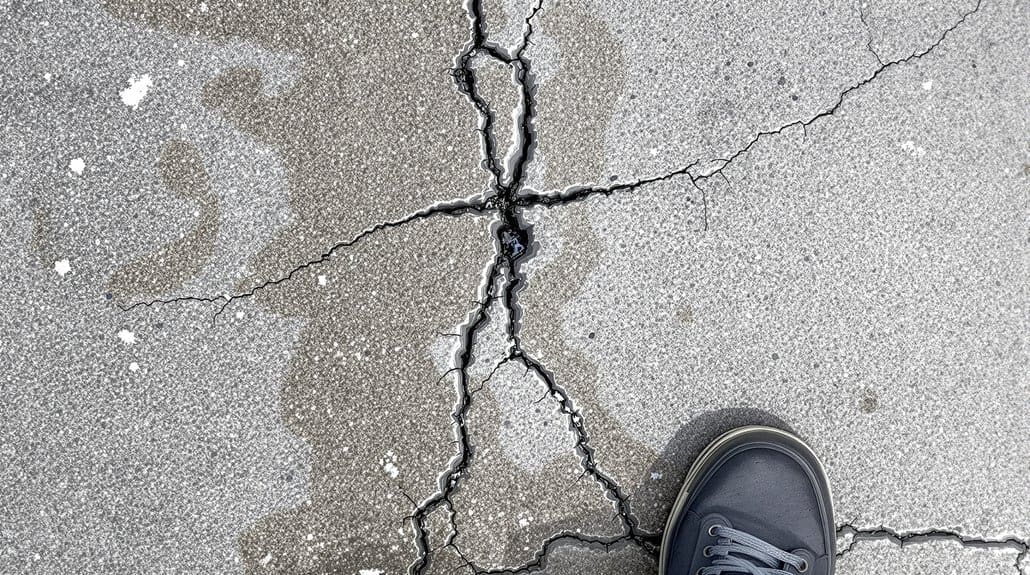
Quick check: look for flaky scaling, pitted spots, widening cracks, spalled edges, or hollow sounds when you tap the slab—those mean freeze‑thaw and salts are working inside the concrete. Measure cracks (hairline <1/8"), note patterns, and pour a little water to see if it soaks fast, which signals deep pathways. Fill tiny surface cracks and divert pooling now; big spalls, sinking, or delamination need a pro. Keep going for fixes and prevention.
Some Key Takeaways
- Look for surface scaling, pitted spots, spalling, and exposed aggregate as common signs of freeze‑thaw winter damage.
- Measure crack width and pattern: hairline (<1/8"), small, linear versus alligator cracking to judge severity and repair type.
- Tap the slab for hollow sounds and pour water into cracks; hollow or rapid wicking indicates delamination or connected pores.
- Inspect joints, edges, and downspout/wheel‑path zones for missing sealant, crumbling edges, and deicer pooling that accelerate damage.
- Use moisture meters, chloride tests, and drill probes for depth and salt intrusion when cracks are deep or repair urgency is unclear.
How Freeze‑Thaw Cycles Damage Concrete
Understanding is half the battle: when water gets into concrete and freezes, it doesn’t just sit there — it expands about 9%, and that expansion can push so hard it starts tiny cracks inside the slab. You’ll learn the Freeze‑Thaw Cycle, how water expands and pries at concrete as freezeing temperatures come and go, and why that matters to your place. Think of repeated cycles like a slow jackhammer, each freeze increasing porosity, opening paths for more moisture, salt, and damage. Small, untreated cracks let water reach deeper, where future freezes widen them, leading to spalling and loss of support. Take it step by step, patch small cracks early, and you’ll keep problems manageable, not overwhelming. For lasting results, consider using a quality leveling compound designed for outdoor concrete repairs to restore surface integrity and prevent further freeze‑thaw deterioration.
Signs of Winter Damage to Look for on Driveways and Walkways
When cold weather’s done its work, you’ll spot the giveaways if you know where to look, and catching them early saves headaches later; start by scanning the whole surface for things like small flakes or scaling where the top layer’s coming off, then look closer for pitted spots that show the rocks underneath—those mean the concrete’s lost material, often sped up by deicers. Head outside and walk slowly, note surface scaling, spalling, and cracks that seem to widen, and pay special attention to joints, edges, and corners where water pools and deicers sit. Frost heave or uneven slabs, white efflorescence, and signs of water infiltration point to Freeze-Thaw Cycle damage. Don’t panic—repair steps exist, progress beats perfection. Consider using a quality paver sealer to protect surfaces and slow future winter damage.
How to Classify Cracks by Size, Pattern, and Severity
If you want to get a clear read on your driveway or walkway, start by looking closely at each crack and asking three simple questions: how wide is it, what pattern does it make, and how deep does it go—because those three things tell you what kind of repair you’ll need. Start by measure crack width: hairline under 1/8 inch is usually cosmetic, larger ones mean stronger fillers. Note the crack pattern, whether isolated linear lines or spiderweb/alligator surfaces, and mark through-cracks that go full depth. Check depth and extent, shallow versus those reaching the base, and rate severity by consequences — light, moderate, severe. Record nearby signs and where water penetrates, since location and context change urgency. You’ve got this. Consider installing proper patio drainage to prevent future damage by directing water away from cracks and joints with simple drainage solutions.
Detecting Surface Scaling, Spalling, and Delamination
You’ll often spot surface problems by sight and sound before you worry about structure, so walk your slab slowly, look for flaky patches, missing chunks, or areas that don’t quite “ring” when you tap them, and trust your eyes — small, thin flakes are different from chunks that show the rock beneath. Spotting surface scaling is usually simple — thin, peeling layers, light to severe depending on area affected. Spalling shows as deeper pits or chunks, exposed aggregate, often from freeze-thaw cycles or corroding rebar. Delamination hides below a sound-looking top, it’ll thunk hollow when tapped and may lift when probed. Document size, location, percent affected, and note trip hazards. Start small, patch what you can, call pros for big or structural problems. Consider using crack fillers designed for patios to repair minor damage before it worsens.
Checking Joints and Edges for Localized Freeze/Deicer Damage
Checking Joints and Edges for Localized Freeze/Deicer Damage: start by scanning control and expansion joints, and the slab perimeter, where deicer runoff tends to pool and eat away at mortar. If you see powdering mortar, spalled edges, or exposed aggregate within an inch or two of a joint, measure the loss—more than 1/4 inch depth or repeating pitting usually means targeted repair or resealing is needed before more freeze cycles make it worse. Photograph the spots, note drainage and dates, and focus on steady, practical fixes rather than perfection. Homeowners can often handle small localized repairs with basic concrete patch products and a little patience.
Joint Edge Deterioration
When joint edges start to crumble, it’s usually because water and deicers have been doing their work right where the slab meets the joint, and you’ll want to catch it early before hairline cracks become half-inch spalls that expose coarse rock. Heading: What’s happening — You’ll see joint edge deterioration from repeated freeze-thaw, often within an inch or two of joints, and deicers containing ammonium speed the breakdown by eating the mortar. Heading: Look for — missing joint sealant, gaps over 1/8 inch, loose or powdery edges, signs that water ingress is ongoing. Heading: Do this — clear pooled melt, replace degraded joint sealant, apply surface sealer, and check after winter. Small fixes now save big repairs later. For homeowners focused on preserving their spaces, using the right concrete repair products early can keep cracks discreet and prevent costly spalls.
Deicer Pooling Zones
Start by looking where water and melt naturally collect — at driveway edges, next to curbs, under downspouts, and along wheel paths — because those are the spots where deicers concentrate and eat away at joints and nearby concrete. Deicer pools at expansion joints and edges cause localized spalling and mortar loss, so check joint seals after thaw, photograph trouble spots, and mark recurring pooling zones. If you see widened cracks or undermined base near pooled calcium chloride or rock salt, that’s deicer damage speeding up deterioration beyond freeze‑thaw alone. Note the deicer type, avoid ammonium salts, and prioritize sealing or targeted replacement where you can. Small repairs now, better drains later — progress over perfection, you’ve got this. Consider improving drainage and using a proper paver base to help prevent future freeze/deicer damage.
Using Simple Tools to Measure Crack Depth and Width
Measuring a concrete crack’s width and depth doesn’t have to be intimidating, you can do useful, repair-guiding checks with a few simple tools and a little patience. Quick Heading: surface checks. Clean the crack first, because dust or water will fool you, then use a crack gauge or plastic ruler to note crack width, classifying hairline (<1/16"), small cracks (1/16"–1/8") or larger, and for tighter readings bring a caliper, it’ll show hundredths for tricky spots. Next Heading: depth. Gently insert a thin metal probe or awl until it stops, mark and measure, depths under 1/4″ need simple filler, deeper ones need patch mix. If you suspect hidden depth, drill a small test hole nearby and probe. Progress, not perfection. For routine maintenance and cleanup you can also use a pressure washer to remove stubborn debris and prepare the surface for repair, an effective step for outdoor spaces.
Quick Field Tests to Confirm Moisture and Salt Penetration
If you’re worried that moisture or salts are working their way into a crack, there’s no need to panic—simple field checks will tell you a lot, and you can do most of them with stuff you already have or can buy cheaply. Quick check: tap the slab with a hammer, listen for hollow sounds that suggest delamination from freeze-thaw cycles, and mark any suspect spots. Pour a little water into the crack, watch how fast it soaks in; rapid wicking means connected pores and deeper water pathways. Use a concrete-capable moisture meter, take multiple readings across the cracks and nearby concrete, and compare levels. Swab and evaporate samples to look for efflorescence, or use a chloride strip to confirm deicer intrusion. Progress, not perfection.
Triage: Which Winter Cracks You Can Repair DIY and Which Need Pros
When you’re staring at winter cracks in your driveway or slab, think of this as triage — decide what you can do quickly and what needs a pro before things get worse. Friendly check: hairline cracks under 1/8“, surface-only, usually let you handle Concrete crack repair yourself after cleaning and drying, you’ll feel capable and proud. Bigger gaps, routed V-shapes, or visible depth need specialty mixes or an experienced hand, that’s where Concrete Repair—DIY or pro—comes in. If you see spalling, exposed aggregate, sinking, or movement, don’t guess, call a contractor because structural integrity and subbase issues are at stake. In Winter Weather, or below about 40°F, err on the side of pros—safety and longevity matter. Progress over perfection.
Short‑Term Fixes to Stop Freeze‑Thaw Progression Before Repair
Because a little quick work now can keep a small crack from becoming a big, expensive problem, you’ll want to focus on stopping water and salt from getting in and freezing, and you can do most of that with simple, temporary fixes that buy you time until a full repair. Quick inspection: clear loose debris and water, then fill hairline cracks with a solvent‑based or acrylic filler to block moisture, and for wider gaps, pack a fast‑setting polymer patch or use epoxy injection to make a watertight seal within hours. Surface control: divert pooling with sandbags or temporary grading, limit deicers, favor sand or calcium chloride for traction, and top repaired spots with a breathable sealant to reduce freeze‑thaw damage.
Prevention Checklist: Sealing, Drainage, and Deicer Best Practices
Quick fixes buy you time, but real prevention keeps you from repeating the same repairs every year, so let’s walk through a practical checklist that’ll protect concrete from freeze–thaw and salt damage. Sealing: apply a quality penetrating or film-forming sealant every 2–3 years to cut water entry, and fill hairline cracks with a flexible concrete crack filler before winter so small problems don’t grow. Drainage: make sure slabs slope at least 1/8″ per foot, keep gutters and downspouts moving water several feet away, and clear joints so nothing pools. Deicer best practices: skip ammonium salts, favor sand for traction, or use calcium chloride sparingly, and wipe away concentrated deicer solution from joints to avoid local deterioration. Progress over perfection.
Some Questions Answered
How to Repair Frost Damaged Concrete?
You repair frost-damaged concrete by clearing loose material, using epoxy injections or grout repairs for deep cracks, and filling hairlines with surface seals, then packing larger gaps and addressing expansion joints so movement won’t re-open them. Protect fresh work with thermal blankets in cold weather, cure it, then seal and improve drainage. You’ll make steady progress, take it one patch at a time, and it’ll hold up better over winters.
Can You Fill Concrete Cracks in the Winter?
Yes — you can fill cracks in winter if you take care: use cold primers and rapid setting compounds or temporary patches when temps meet product limits, check sealant compatibility, and remove frost and moisture first. Use heating methods or insulated blankets to keep repairs above the minimum, protect cures, and don’t force structural fixes — wait or call a pro. Progress over perfection, one cautious repair at a time.
What Does Frost Damaged Concrete Look Like?
You’ll see surface scaling, freeze discoloration, and spalling edges where chunks or aggregate show, and powdery residue in cracks, that’s the concrete breaking down. Efflorescence patches, white salt streaks, mean moisture’s been working through, so joints or corners often look crumbled or displaced. Don’t panic, you’re not alone—start with cleaning, monitor progress, and patch smartly, small fixes now beat big repairs later.
Can Cold Weather Cause Concrete to Crack?
Yes — cold weather can crack concrete. You’ll see freeze cycles and thermal contraction pull at the surface, while moisture expansion and ice lensing push from inside, and salt scaling chips surfaces, all working together. You can slow it by sealing, fixing small cracks early, and choosing gentler deicers, so you don’t chase bigger repairs later. Progress over perfection — small steps now save heartache and money down the road.