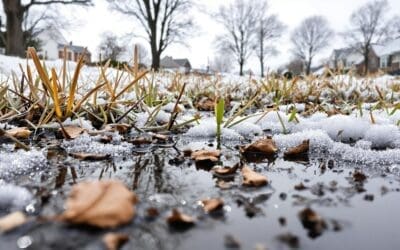
Compacted Soil Under Snow — Quick Plan: You’ll want to aerate once the ground thaws and is moist but not soggy, because packed snow, foot traffic, and freeze–thaw cycles squeeze out air and water, hurting roots and slowing green‑up. Check soil temp (around 50–65°F for cool‑season grass) and try a screwdriver or squeeze test before coring. Mow, flag hazards, aerate with plugs, water and overseed right after, and leave plugs to break down — progress over perfection, and more tips follow.
Some Key Takeaways
- Check for compaction signs (hard ground, puddles, thin turf, or resistance with a screwdriver probe).
- Wait until soil is moist but not soggy and daytime soil temps reach ~50–65°F for cool‑season grasses.
- Core aerate (2–3″ plugs) high‑traffic and former snow‑pile areas, avoiding spike aeration on clay soils.
- Mow slightly shorter 1–2 days before, flag hazards, and water lightly 24–48 hours pre‑aeration for proper plug removal.
- After aeration, overseed, topdress lightly, water to keep the top 1/4–1/2″ moist, and leave plugs to break down.
How Winter Snow and Freeze–Thaw Cycles Create Soil Compaction
If you’ve noticed your lawn looks slow and patchy after the snow melts, that’s often because winter itself did some of the damage: heavy snowpack and repeated freeze–thaw cycles press soil particles together, collapse the tiny air pockets between them, and leave you with a denser, less breathable layer. Heading: What actually happens. When snowpack sits on your yard, its weight and any foot traffic or parked gear add pressure that compounds compaction beneath the melt. Freeze–thaw cycles push moisture into fine pores, ice forms, and particles lock closer, so porosity drops and bulk density rises. The result: compacted soil that chokes air and water movement, slows root development, and delays the green-up you’re counting on. Don’t worry—early, moist aeration helps. Consider addressing this with simple drainage solutions to keep surfaces drier and reduce future compaction.
Signs Your Lawn Is Compacted After Snow Melts
You’ll often notice compaction right after the snow’s gone, when the yard still looks tired and the spring green-up is behind schedule; walk across it and you’ll feel it — a hard, reluctant bounce instead of springy turf — and that’s your first clue that roots and water are getting squeezed. Signs to watch for include soil compaction that makes the ground hard underfoot, a soil probe or screwdriver meeting strong resistance, and puddles or slow-draining areas that hang around after rain. You’ll also see thin, patchy recovery, shallow roots under 2–3 inches, turf that lifts with little soil attached, and the worst spots in high-traffic zones. Notice, target, aerate. Progress beats perfection. For long-term protection of outdoor surfaces and nearby lawn beds, consider using deck sealer products to reduce moisture intrusion and soil disturbance around patios and walkways.
Why Compacted Soil Delays Spring Green‑Up and Root Development
You’ll notice compacted soil under snow chokes off tiny air pockets, so roots get less oxygen, slow their metabolism, and can’t support that quick spring green‑up you want. That same density keeps meltwater from soaking in properly, leaving roots either parched or waterlogged, and it also makes plants work harder for nutrients like nitrogen and phosphorus. It’s frustrating, but with gradual fixes—less traffic, aeration, organic matter—you’ll see steadier, healthier recovery over a few seasons. Consider using leveling compounds in low spots to help restore even surface drainage and protect plantings while you improve soil structure.
Compaction Blocks Oxygen
Because snow and freeze–thaw cycles squeeze soil particles together, you might notice parts of your yard greening up later than you’d expect, and there’s a simple reason: the compaction cuts the tiny air pockets roots need, so oxygen can’t move down into the root zone the way it should.
What happens: compacted soil reduces pore space, cutting air-filled porosity below the roughly 10–15% roots need, so root respiration slows and growth stalls. You’ll see thin turf, shallow roots, delayed green-up, especially where winter traffic packed things down.
What you can do: plan Spring Aeration to break those dense layers, restore gas exchange, and let roots breathe and elongate. Start early, but don’t rush—progress over perfection. You’ll help your lawn rebound, one careful step at a time. Consider adding a decorative surface like pea gravel patios to reduce future compaction in high-traffic areas.
Nutrient And Water Restriction
Nutrient and water restriction is the other side of the same coin: when soil gets packed, it won’t just starve roots of air, it’ll keep the water and food plants need locked away where roots can’t reach. You’ll notice meltwater running off or pooling, that’s reduced water infiltration in compacted soils, so grassroots miss the spring drink they need. Roots struggle, they use more energy to push into dense layers, and nutrient uptake slows because nitrogen, phosphorus and potassium stay near the surface instead of moving into the root zone. Freeze–thaw cycles under snow can make that worse, sealing particles tighter. Take small steps: aerate where you can, topdress lightly, avoid heavy traffic, and aim for steady recovery, not perfection. Consider pairing aeration with landscape fabric to protect patios and reduce soil compaction in high-traffic garden areas.
Which Areas and Grass Types Are Most Vulnerable to Winter Compaction
Often, the spots that give you the most trouble in spring are the same ones that collect traffic and snow all winter, and they’ll show it fast — thin grass, slow green-up, and squishy patches where roots can’t breathe. Heading: Where compaction hits first. You’ll notice compacted soil in high-traffic zones like driveway edges, walkways, and play areas, and where snow piles from shoveling or plows sit long. Clay soils and low, poorly drained spots lock in compression and moisture, starving roots of oxygen. Cool-season grasses, especially tall fescue, Kentucky bluegrass, and perennial ryegrass, thin out and lag when this happens. Action: prioritize those spots for core aeration in spring, focus on progress over perfection, and don’t worry—you can revive them. Also consider protecting those areas with paver sealer or other surface treatments to reduce winter wear and concentrated snow piling.
When the Spring Aeration Window Opens : Soil Moisture and Temperature Cues
So before you pull the aerator out, check the soil moisture by pressing a screwdriver in—if it slides in easily for 6–8 inches you’re in the sweet spot for core removal, but if it’s soggy or plugs at the top, wait a day or two. Keep an eye on soil temperature too; for cool‑season grasses aim for daytime soils around 50–65°F (10–18°C), and for warm‑season types hold off until things are consistently above about 65°F (18°C). If you’ve had recent snowmelt or heavy rain, give the ground 24–72 hours to drain so your gear won’t make compaction worse, and remember, a quick 6–8 inch hole to check roots can tell you whether to prioritize aeration in the next two weeks. Consider scheduling aeration around interlocking pavers if you’re planning patio work so both projects complement each other.
Soil Moisture Check
Getting a feel for your soil before you break out the aerator will save you time and prevent damage, so grab a trowel and go check it—dig down 2–3 inches, squeeze a handful, and see how it behaves. Heading: Soil Moisture Check. In Spring, you’ll want soil moisture levels that are moist and crumbly, not soggy or slick, since wet ground can smear and make soil becomes compacted worse instead of relieving it. Check soil moisture with that squeeze, and try the screwdriver test—if it pushes to 3–4 inches easily you’re good, if not, wait. If unsure, water lightly 24–48 hours before aerating to achieve workable moisture, allowing roots to take advantage of the aeration. Progress over perfection. For long-term patio health, consider proper base preparation and drainage to prevent future compaction and settling, such as using a paver base beneath your outdoor surface.
Soil Temperature Gauge
You’ve already checked moisture with that squeeze and screwdriver test, now keep an eye on soil heat—roots need to be actively growing before you run the aerator, and temperature tells you that. Heading into Spring Lawn Aeration, measure soil temperature at 2–4 inches with a soil thermometer or probe, aiming for about 50–55°F for cool-season grasses, or 65–70°F for warm types. Don’t rush after snowmelt; wait until the soil’s moist but not soggy — it should form a loose ball when squeezed — and daytime temps stay above freezing. If temps swing, take readings morning and afternoon over several days, find a stable warm window, then aerate so roots recover and nutrients move in. Progress > perfection.
How to Assess Soil Workability on Aeration Day (Simple Field Tests)
Before you pull out the aerator, take a few quick field tests to make sure the soil’s actually ready, because timing matters and a wet or rock-hard surface will ruin the job. Quick checks help you and your neighbors get it right, so you’ll feel confident. First, do the squeeze test: grab soil, try to form a ball; a firm ball means either too wet or too compacted, so wait. Next, push a screwdriver in — if it takes strong effort to 2–3 inches, soil compaction is real and aeration will help. Dig a small hole for a moisture test, pinch the plug; it should crumble, not stick. Walk and heel-press the turf; no spring-back means schedule aeration. Progress, not perfect.
Core vs. Spike Aeration : Which to Use for Post‑Snow Compaction?
Core vs.
Core vs. Spike Aeration: Which to Use for Post‑Snow Compaction?
You’ll want core aeration after snowmelt, especially if your lawn shows compacted soil from heavy snow and traffic, because plug aeration removes 2–3″ cores and lets air, water, and nutrients reach roots right away. Spike aeration only pokes holes, and in clay or heavily compacted spots it can actually make compaction worse — so skip spikes for post‑snow compaction. If your turf stays hard and slow‑draining, plan core aeration yearly or more often, but don’t work frozen or saturated ground; wait until the top inch or two is moist enough for proper plugs. After coring, water and, if you’re overseeding, drop seed into those channels for better contact and faster recovery.
Preparing Your Lawn Before Aeration: Mowing, Watering, and Marking Hazards
Preparing for aeration is simple, and doing a few small things will save you time and headaches later. Mow to the right height for your grass a day or two before so the machine can penetrate evenly, water lightly 24–48 hours before so the soil holds together but isn’t muddy, and mark sprinkler heads, shallow lines, and utility boxes so you don’t nick anything with the tines. Clear toys and furniture, jot where compaction’s worst if you plan to overseed, and remember, a little prep now means better results and less scrambling afterward.
Mow To Proper Height
Set your mower to the right height and you’ll save yourself a lot of grief after aeration—cutting cool-season grasses to about 2.5–3 inches the day or two before gives the aerator tines room to work and helps pull nice, intact 2–3″ cores. Heading: Mow To Proper Height. You’ll want to mow the lawn at your grass height, but don’t overdo it; avoid scalping by cutting no more than one-third of the blade in one go. Mowing before aeration makes the machine happier, lets plugs form cleanly, and helps seed or fertilizer touch soil. Prep like a neighbor who cares: flag hazards, clear toys and big clumps, and trust progress over perfection. Small steps, better results.
Water A Day Before
Water the lawn a day or two before aeration so the tines can bite in without turning the soil into a sticky mess—aim for soil that’s moist and holds together when you squeeze it, not pooling water or soggy clumps. Heading into aeration, water your lawn enough to create moist soil that lets tines penetrate easily, but don’t overdo it—avoid heavy watering in the last 12 hours, puddles will gum up equipment and smear soil plugs. You’ll mow first, leave light clippings, and mark hazards so the machine moves smoothly. Think of this as teamwork with your yard: a little timing, a little care, and the aerator will pull tidy soil plugs, easing compaction and helping your grass recover. Progress over perfection.
Flag Irrigation & Utilities
Before you start rolling the aerator over your yard, walk it once and flag anything that could bite back—sprinkler heads, shallow lines, visible utility markers, even recent repair spots—so you don’t risk tearing up irrigation or buried services. Heading out together, you’ll flag irrigation points and shallow utilities with bright flags or stakes, at least 6–12 inches tall, so they’re impossible to miss. Mow and clear debris first, water 24–48 hours before, and the flags will stay upright while the soil is moist for clean plugs. Tell your contractor where you’ve marked things, and if a spot feels risky, lay down plywood as a shield. It’s simple prep, fewer headaches, progress over perfection. You’ve got this.
Immediate Post‑Aeration Steps: Watering, Fertilizing, and Leaving Plugs
After core aeration, give your lawn a careful follow‑through—water well within the first 24–48 hours to settle the soil around those plugs and kick nutrients down where roots can reach them, then apply a light, slow‑release fertilizer at label rates so you’re feeding deeper through the new channels. Immediate steps: water about 0.5–1 inch to settle plugs, then apply fertilizer so nutrients move into the root zone, and leave the plugs— they’ll break down in 1–3 weeks, returning organic matter and microbes. If you’re overseeding, spread seed now and keep the soil gently moist until seedlings take hold. Avoid heavy traffic and don’t scalp the lawn for 7–14 days. Little effort now pays off later.
When and How to Overseed and Topdress After Aeration for Best Germination
When you’ve just pulled cores, seize the moment and overseed right away—those plugs give your seed a ticket to the soil, so spread seed matched to your turf at the recommended rate and lightly topdress with about 1/4 to 1/2 inch of screened compost or a compatible sand/soil mix so the seed stays in contact without getting buried too deep. After aeration, overseed promptly to maximize seed-to-soil contact, work the topdressing gently into holes, and treat this like teamwork with your lawn. Use starter fertilizer if allowed, avoid pre-emergents, and water lightly, keeping the top 1/4–1/2 inch moist until seedlings establish. Be patient, check often, tweak moisture, and enjoy steady progress—not perfection.
Scheduling Tips: Why Book Early and How Often to Aerate for Lasting Results
If you want a smoother, healthier lawn with fewer headaches, book your spring aeration early—late winter or very early spring is prime time, and slots fill fast once the soil thaws. Scheduling matters: when you aerate your lawn affects seed contact, recovery, and whether plugs come out clean, so book spring aeration appointments early, especially if your yard is compacted due to foot traffic or kids. Aim to work when soil moist but not saturated, usually 24–48 hours after a moderate rain, and plan aeration before overseeding or feeding. For most yards, once per year is enough, but high‑traffic spots may need it every 6–12 months; sandy soils can wait longer. Small steps, steady care, results follow.
Some Questions Answered
Should You Aerate Compacted Soil?
Yes — you should aerate compacted soil. Heading: Why it helps. You’ll boost soil respiration, speed root recovery, and improve moisture management so grass actually gets what it needs. Start with compaction testing, then use a core aerator for proper seedbed preparation, overseed right after, and water gently. It’s not perfect first try, but consistent care pays off, and you’ll feel good watching the lawn come back.
Can You Aerate With Snow on the Ground?
No, you shouldn’t aerate with snow on the ground. Heading: quick reality check — frozen or soggy soil will gum up tines and tear turf, spreading winter microbes and causing more harm than good. Action: wait until snow removal and ice melting finish, and foot traffic stops packing soil; then aerate when the surface feels firm, add compost application afterward to help recovery. Progress over perfection — you’ve got this.
How to Aerate Compacted Clay Soil?
You should core-aerate heavy clay, using hollow tines to 2–3″ core depth so roots can reach loosened root zones and microbial activity rebounds. Do it when soil’s moist, not soggy, and topdress with sand or sandy loam to fill holes, lessen re-compaction. Overseed and feed lightly, water to settle things. Progress over perfection — you’ll see slow gains, stick with annual or extra timing for high-traffic spots.
Does Snow Cause Soil Compaction?
Yes — snow can cause soil compaction. Winter settling and repeated freeze thaw cycles squeeze pore space, the weight effects of ice and packed snow make surface crusting more likely, and foot or vehicle traffic over an insulation layer of snow concentrates that pressure. You’ll see slow green-up and thin patches, but you can aerate in spring, focus on high-traffic spots, and prioritize progress over perfect recovery.