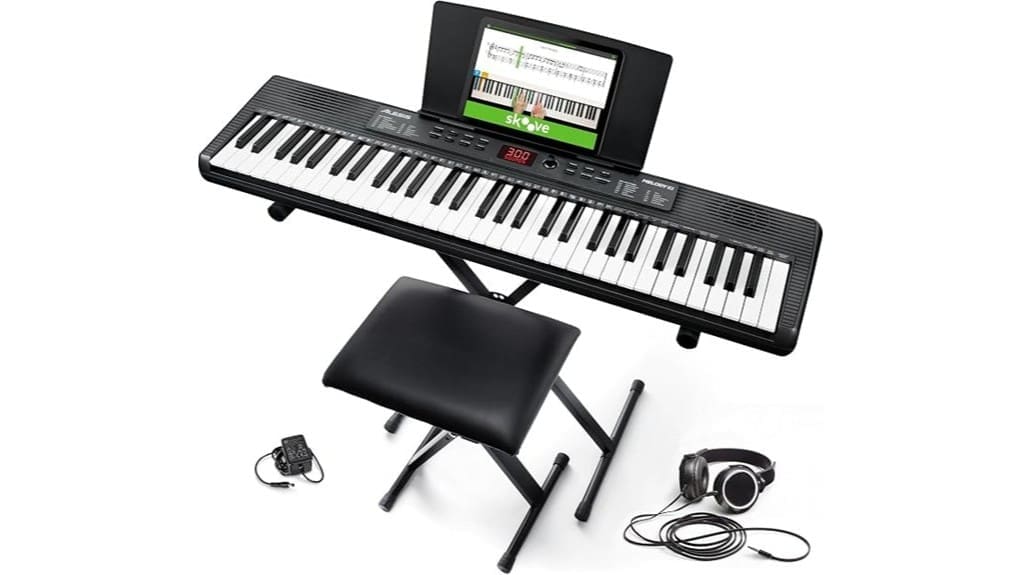

You’ll get a beginner-ready Alesis Melody 61-key setup with a stable stand/bench, headphone-mute monitoring, and easy sustain pedal calibration for cleaner note release. Pick from 300 built-in sounds, use the metronome, and run Split Mode to practice left/right parts with tighter timing. For quiet practice, you can use the headphone jack, 1/8 AUX monitoring, or Bluetooth. USB-MIDI connects to Mac/PC for app feedback via Skoove/Melodics plus lesson tracking—keep going and you’ll spot what fits your routine.
Some Key Takeaways
- Beginner-focused Alesis Melody 61-key setup includes included stand/bench, sustain pedal support, and headphone jack for quiet practice.
- Built-in tools include a metronome, 300 sounds, and split mode for assigning one simple tone per hand.
- USB-MIDI connectivity enables app-based lessons with on-screen tempo and timing feedback, useful for structured rhythm training.
- AUX and Bluetooth options support flexible monitoring and practice in small spaces, reducing reliance on external audio gear.
- Suitable for new players due to guided learning ecosystem access (Skoove/Melodics), lesson tracking, and reinforcement library.
Alesis Melody 61-Key Setup, Included Accessories, and First Sound
Setting up the Alesis Melody 61-Key is straightforward: you start by assembling the included stand and bench, then plug in the included power adapter (or plan to use batteries later for on-the-go practice, sold separately). For beginner setup tips, place the keyboard level, connect headphones, and start with low volume. Tune your expectations by using the built-in controls for volume and tuning, then compare speaker output versus headphone jack for quieter feedback. Next, plug the sustain pedal into the 1/4 input, then perform pedal and sustain calibration so notes don’t hang early. Finally, run first song practice with the metronome on.
How the Alesis Melody 61-Key Sounds for Beginners and Practice
Once your Alesis Melody keyboard is ready, you can start exploring its beginner-friendly voice set—300 built-in sounds that cover everything from piano-style tones to more approachable instrument timbres for practice. Pick a mellow electric piano when you want clear attack, then switch to a softer organ voice to reduce harsh overtones while you hold chords. Use the built-in metronome first at slow tempos, and match right-hand rhythm to left-hand sustain. Compare Split Mode parts: choose one simple tone per hand, then tighten timing as your finger dexterity improves. For small spaces and everyday routines, using a built-in metronome helps you practice consistently without needing extra gear.
Use the Alesis Melody 61-Key Headphones, AUX, and USB-MIDI Options
With the Alesis Melody, you can practice quietly and connect fast—start by plugging your headphones into the dedicated jack to mute the speakers while you work on finger timing and chord changes. You’ll get Headphone practice benefits: tighter dynamics control and less room noise than through built-in speakers. Next, use the 1/8 AUX input with a phone or tablet to monitor backing tracks; it’s faster than routing audio externally through an amp. Bluetooth connectivity can also help you keep audio monitoring and practice setup flexible in small spaces. For app-based training, run the USB-MIDI connectivity setup: connect the keyboard to your Mac/PC, select the Melody as the MIDI device, and test note input before playing.
Lesson Features in the Alesis Melody 61-Key: Skoove, Melodics, and Library
After you’ve verified quiet headphone practice, AUX monitoring, and USB-MIDI note input, you can use the Alesis Melody’s built-in learning ecosystem to guide your hands in real time. You’ll get Skoove and Melodics Premium access, so you can follow Beginner pacing modules with adaptive rhythm drills. Lesson tracking stays transparent: on-screen stages confirm completion, while tempo targets match your metronome timing. Compared with generic tutorial files, the app-based feedback listens via USB-MIDI, then nudges fingering timing immediately. You also tap the built-in library—300 sounds, 300 rhythms, and 30 demo songs—to reinforce patterns between sessions. The device’s built-in learning ecosystem keeps practice structured by tying lessons to progress and guided playback.
Who Should Buy the Alesis Melody 61-Key Keyboard Piano and Why?
If you want a beginner-friendly 61-key keyboard that helps you build technique fast, the Alesis Melody is a strong fit. You should buy it if you’re learning finger dexterity and want quick feedback: headphone jack silences speakers, plus a built-in metronome for timing drills. The 1/4 sustain input and split mode let you pair with a teacher or layer parts. For home studio versatility, you connect via USB-MIDI to run Skoove/Melodics learning apps, and use the aux input for backing tracks. It’s also portable—power options and the accessory bundle help you start immediately. If you’re a small business owner or home user looking for a simple, cost-effective setup, the Melody’s USB-MIDI connectivity makes it easy to integrate with common music learning and production tools.
Some Questions Answered
What Are the Keyboard’s Key Action Feel and Touch Sensitivity Like?
The keys feel fairly responsive, with a springy, light action that suits beginners. You’ll notice consistent key action responsiveness across the range, with no odd drop-off near the upper or lower notes. Touch sensitivity is straightforward: it tracks dynamics for softer versus louder playing, but the touch sensitivity range isn’t deep like weighted stage pianos. If you press firmly, you get clear velocity changes; if you feather keys, it stays controlled.
Does the Alesis Melody 61 Support Recording and Playback Features?
Yes—this keyboard supports basic recording and playback, but it’s limited compared with dedicated DAWs. You’ll typically record through Recording apps using the USB-MIDI connection, then do USB transfer to your Mac or PC for playback. For performances, you can capture your timing and articulation using a Sustain pedal via the 1/4 sustain input. If you want quick practice review, you’ll find the playback workflow straightforward and reliable.
How Loud Is the Keyboard Without Headphones at Normal Volume?
Without headphones, you’ll hear the keyboard at a moderate sound level—typically around typical classroom volume levels, so it’s clear but not piercing. In a quiet room, sustained chords can feel a bit loud at close range (about 1–2 meters), but you still get neighbor friendly practice compared with many full-size pianos. For a hands-on test, play forte, then step into the next room and listen for noticeable leakage.
What Battery Type and Runtime Does It Offer for Portable Practice?
You get battery-powered portability via standard AA cells: insert them in the battery compartment (batteries aren’t included), and you can practice anywhere without relying on power adapter options. Runtime depends on your volume and headphone use, but you should expect “several hours” of typical session play before performance drops. If you need longer stretches, plug in the included power adapter for steady operation and consistent speaker output support. For silent practice, use headphones.
Can I Connect External Speakers or Microphones Using Its Audio Ports?
Yes—you get audio output options, but not mic input. You can plug headphones into the headphone output, and you can use the 1/8 aux input for line-level external audio from a phone/laptop. For external speakers, you’ll need a powered speaker or audio interface with the proper input, and you should set volume safely. For microphones, the keyboard doesn’t provide dedicated mic preamp, so you’ll need a separate mixer/interface.


